8 Candies Once Sold in America That Are Now Banned or Restricted
Candy does not always disappear from store shelves because people stop buying it. Sometimes regulators step in because of packaging, product design, an object hidden inside the candy, or another issue tied to how the product is sold.
In other cases, the restriction applies only to a specific recalled version, not an entire brand. That is why “banned,” “recalled,” and “discontinued” should not be treated as interchangeable terms. From toy-filled chocolate to roller-ball liquid candy, these eight products all have documented histories of U.S. recalls, restrictions, or regulatory action.
Eishindo Mini Cup Jelly
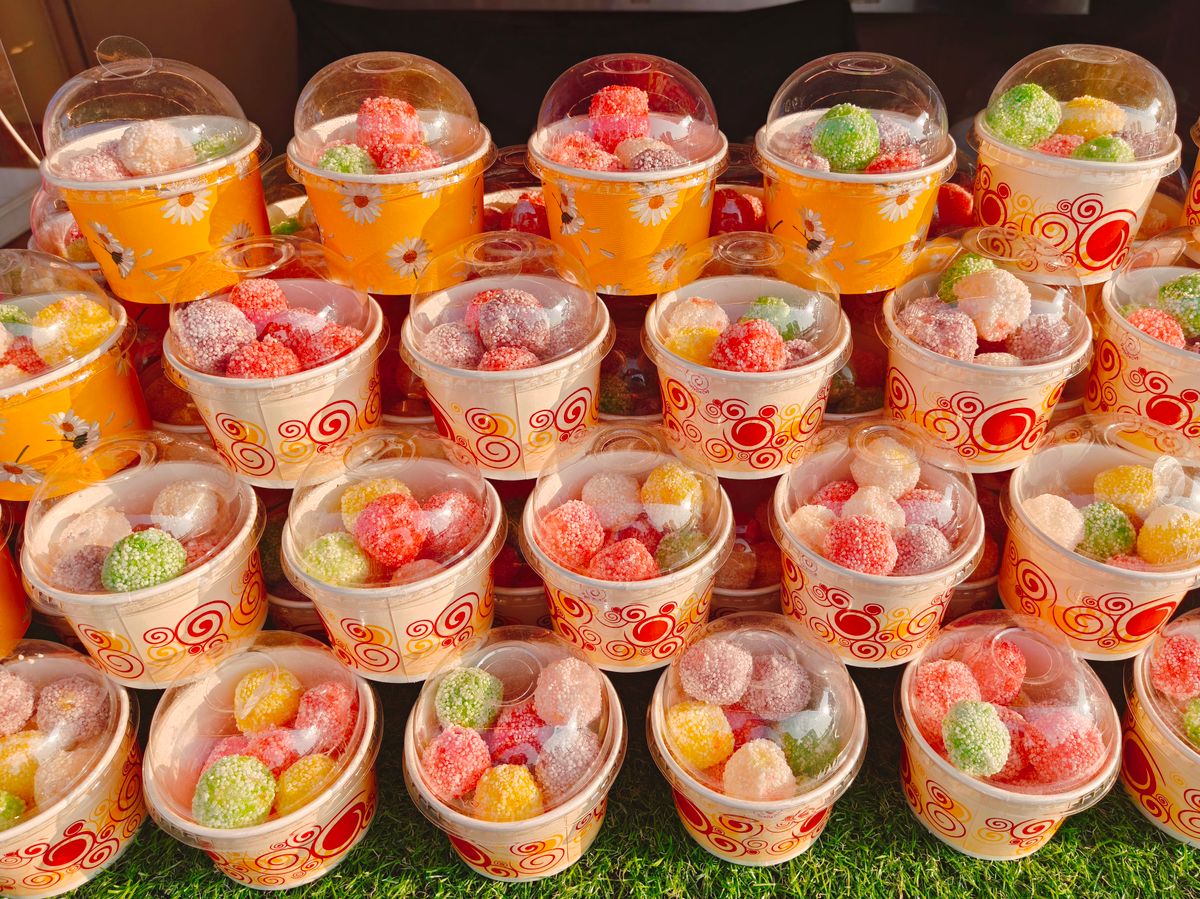
Eishindo Mini Cup Jelly was recalled in 2020 after being distributed to retailers nationwide. The affected product came in 50-piece bags weighing 28.2 ounces (800 grams). The regulatory concern centered on the product’s physical size and consistency rather than a blanket prohibition on jelly candy.
The FDA has also maintained import enforcement involving certain firm mini-cup gel and jelly products. However, that does not mean every Eishindo product is prohibited today.
The strongest claim supported by the available evidence is that the identified 50-piece Mini Cup Jelly product was recalled and became part of broader regulatory scrutiny surrounding small jelly-cup candies.
Related: 5 Foods Banned Overseas That Americans Still Consume Daily
Nestlé Magic Balls
Nestlé Magic Balls arrived in the United States in 1997 as hollow chocolate shells containing a small toy inside a plastic capsule. The problem was not the chocolate. It was the nonfood object inside it.
Federal law restricts confectionery containing embedded nonnutritive objects unless specific exceptions apply. Marketplace reported that the FDA determined the original Magic Balls design conflicted with that rule, and the product was removed from stores within roughly two months.
Nestlé later introduced Wonder Balls, which used candy pieces instead of toys inside the chocolate shell. So the issue was not the chocolate-ball concept itself. It was the original toy-filled configuration.
Tropique Assorted Fruit Jelly
Tropique Assorted Fruit Jelly and some Tropique Jelly Animal Jar products were recalled in 2020. The candies had been sold in New York, New Jersey, Connecticut, and Pennsylvania.
Some came in colorful animal-shaped jars featuring designs such as bears, ducks, pandas, pigs, and cats, with individual jelly cups inside.
The recall followed a New York State Department of Agriculture and Markets inspection and involved the physical characteristics of the small jelly cups.
The FDA later stated that the recall was completed and terminated. That means Tropique should not be described as a currently banned brand. It is better understood as a historical candy recall.
Slime Licker Sour Rolling Liquid Candy
Slime Licker Sour Rolling Liquid Candy became the subject of a major recall in October 2023. Two-ounce and three-ounce bottles were sold from June 2015 through July 2023 at retailers including Walmart and Five Below, as well as online.
The concern involved the rolling applicator ball, which could detach from the container. The recall covered approximately 70 million units.
That does not mean every Slime Licker product is banned. The federal restriction applies to the recalled versions identified by the Consumer Product Safety Commission. Those recalled products cannot legally be resold.
Cocco Candy Rolling Candy
Cocco Candy faced a similar action in October 2023. The affected two-fluid-ounce rolling candies had been sold nationwide from May 2022 through March 2023.
Recalled flavors included Sour Strawberry, Sour Tutti Frutti, and Sour Cola. Once again, the issue involved a rolling applicator ball that could detach from the container.
The recall covered about 145,800 units. The restriction applies to the identified recalled products, not every item sold under the Cocco Candy name.
That distinction is important because a product recall should not automatically be described as a brand-wide ban.
Happiness USA Funtime Roller Ball Candy
Happiness USA Liquid Rolling Candy was recalled in March 2024. Some shoppers may remember it better as “Funtime Roller Ball Candy,” the name displayed on the front of the package.
The candy had been sold at kosher markets nationwide from January 2018 through July 2023. The affected products were approximately one fluid ounce and came in multiple flavors.
The recall again involved the rolling applicator ball, which could become dislodged. Around 290,000 units were included. The recalled versions cannot legally be sold, but the action does not prohibit the importer from selling other products.
Kinder Surprise Eggs
Kinder Surprise is one of the most famous examples of a candy facing U.S. restrictions. The familiar product consists of a chocolate egg containing a plastic capsule with a toy inside.
Federal law restricts confectionery containing embedded nonnutritive objects, which puts the traditional Kinder Surprise design in conflict with U.S. food law. U.S. regulators have documented unauthorized Kinder Surprise imports and past distribution through specialty stores.
The key distinction is that Kinder Surprise should not be described as a candy that was once legally sold nationwide and then suddenly banned. The legal restriction already existed. A different product, Kinder Joy, separates the edible portion from the toy and is structured differently.
Silver Dragees
Silver dragees look like tiny metallic pearls and have long been used to decorate cakes, cookies, and other sweets. But their shiny coating comes with a regulatory complication.
FDA policy does not authorize silver-coated confectionery simply as ordinary edible candy. Silver dragees may be sold for decorative purposes under conditions indicating they are not intended to be eaten.
That means the issue is not that silver dragees were once an ordinary legal candy and then suddenly banned. Instead, food-regulation rules governing silver as a food decoration have long shaped their use.
They are therefore best described as a restricted decorative confection rather than a previously legal candy that later disappeared.
Why the Details Behind These Candy Restrictions Matter
These eight cases show why candy-regulation stories are more complicated than a simple “banned candy” headline suggests. Some products, such as Slime Licker, Cocco Candy, and Happiness USA roller candies, were recalled in specific forms and cannot legally be resold in those recalled versions.
Others, including Magic Balls and Kinder Surprise, ran into longstanding federal rules involving nonfood objects inside confectionery. Eishindo and Tropique jelly cups faced action tied to their product format, while silver dragees occupy a more unusual category involving decorative rather than ordinary edible use.
So while all eight have regulatory stories behind them, the details matter. Sometimes a whole product design conflicts with the law. Sometimes only certain packages are recalled. And sometimes a candy that seems “banned” was never legally approved in the form people remember in the first place.
Other Posts You May Like