10 Truly Evil People Who Used Halloween as the Perfect Cover
Halloween is supposed to be the one night when fear feels safe.
Children knock on doors in plastic masks. Teenagers crowd into parties dressed as monsters. Adults laugh at fake blood, rubber knives, glowing pumpkins, and haunted-house screams. The whole night runs on make-believe danger.
That is exactly what makes the real crimes tied to Halloween so disturbing.
On most nights, a masked person at the door would send a warning through the body. On Halloween, people open the door with a candy bowl in hand. A scream might sound like part of a prank. A gunshot might be mistaken for a staged scare. A stranger in a costume can move through a crowd without drawing much attention.
For most people, Halloween is harmless theater. But in several real cases, criminals used the holiday’s chaos, costumes, and trust as cover for something far darker.
These stories are not frightening because they involve ghosts or monsters. They are frightening because the monsters were real.
A Party Where Murder Was Mistaken for a Prank

In Van Nuys, California, a Halloween costume party turned deadly in October 1967.
Guests at the Valley Country Club Apartments had gathered for a night of music, costumes, drinking, and laughter. In that kind of setting, people expect surprises. They expect loud noises. They expect someone to take a joke too far.
So when Jack Gentry Stearns shot Kenneth A. Lindstrand after seeing him dance with his wife, some witnesses did not immediately understand what had happened. The violence looked, for a brief and terrible moment, like it might have been part of the show.
That delay is the nightmare Halloween can create. Reality and performance blur. People hesitate. They laugh nervously. They wait for someone to say it was only a stunt.
But Lindstrand was not part of an act. He was a real man whose life ended in the middle of a party built around pretend fear.
Stearns was later convicted of first-degree murder. The case became a grim reminder that Halloween’s playful chaos can make real danger harder to recognize.
The Shopkeeper Who Never Made It Home
On Halloween night in 1957, Norton Gregory was working late in Kirkland, Washington.
He was 39 years old and ran Greg’s Grocery, a small gas station and convenience store between Kirkland and Redmond. That evening, he was reportedly preparing for a busy fishing season rush. It should have been the kind of quiet work night a shopkeeper understands well: lock up, finish tasks, go home.
But Gregory never got that ordinary ending.
He was found shot execution-style inside his shop on Halloween morning.
The timing of Halloween added another layer of unease. In a small community filled with costumed children, masked figures, and people moving through the streets after dark, it would have been harder to notice something strange. A person in disguise might not have looked suspicious. A witness might have remembered a costume but not a face.
Decades later, Gregory’s murder remains one of those cold cases that leaves a town with questions it cannot put down.
Who walked into that store? Who left? And did Halloween give the killer just enough cover to disappear?
The Masked Woman at the Door
That same year, Halloween night brought another shocking death in Los Angeles.
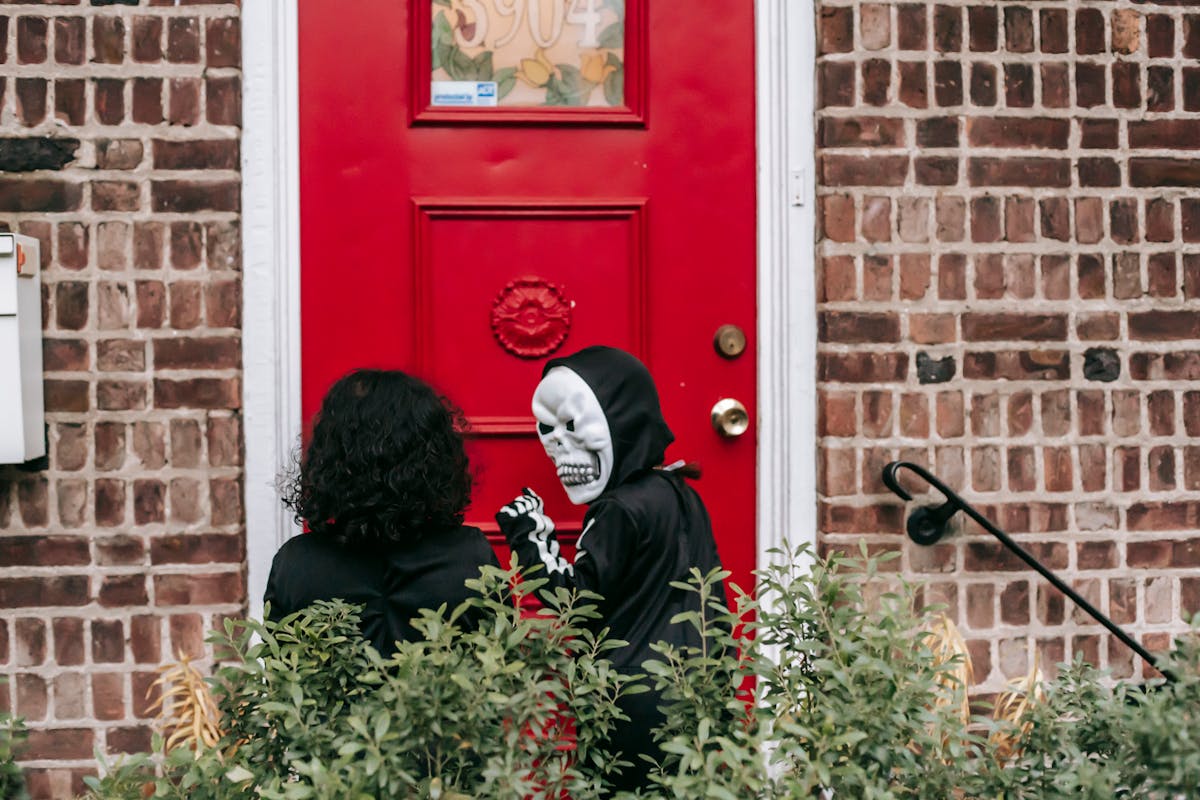
Dr. Peter Fabiano was at home when someone came to his door. The visitor appeared to be a masked woman, the kind of late-night trick-or-treater that would not seem impossible on October 31.
But this was no harmless visit.
The woman raised a gun and shot him.
Investigators later uncovered a twisted plot involving jealousy, obsession, and manipulation. Goldyne Pizer was identified as the shooter, while Joan Rabel, who was infatuated with Fabiano’s wife, was accused of pushing the plan forward.
What makes the case so chilling is how easily the killer approached the home. On any other night, a masked person at the door would have seemed alarming. On Halloween, the mask was part of the invitation.
Fabiano opened the door because the holiday made the strange seem normal.
That small act of trust cost him his life.
A Halloween Party and the Last Victim of the Toolbox Killers
Some Halloween crimes are terrifying because the holiday creates confusion. Others are terrifying because predators know people will be outside late, distracted, and less cautious than usual.
On October 31, 1979, Shirley Lynette Ledford left a Halloween party in Southern California. She was later abducted by Lawrence Bittaker and Roy Norris, the serial killers known as the Toolbox Killers.
Ledford became their final victim.
The details of the case are among the most horrific in American true crime, but even without repeating the worst of them, the emotional weight is hard to escape. She had been at a party. She should have gone home. Instead, she crossed paths with men who had already taken the lives of several teenage girls.
Halloween did not create its cruelty. But the night’s late hours, costumes, parties, and movement made it easier for predators to watch, wait, and vanish.
That is the frightening truth behind some holiday crimes. The night feels crowded, but that does not always mean it is safe.
The Poisoned Candy Fear That Became Real

Parents have worried about poisoned Halloween candy for generations.
Most of the time, that fear has lived closer to urban legend than common reality. But Ronald Clark O’Bryan turned the nightmare into a real crime on Halloween night in 1974.
O’Bryan was a father in Deer Park, Texas. He was also deeply in debt. Prosecutors said he poisoned a Pixy Stix candy tube with potassium cyanide and gave it to his 8-year-old son, Timothy, so he could collect life insurance money.
To make the crime look random, he also gave poisoned candy to other children, including his daughter.
Timothy died after eating the candy.
The cruelty of the crime shook the country because it attacked the deepest trust in the holiday. Parents worry about strangers. In this case, the danger came from the child’s own father.
O’Bryan became known as “The Candyman” and “The Man Who Killed Halloween.” He was convicted of capital murder and executed in 1984.
His crime did not just take a child’s life. It damaged the innocence of an entire tradition.
A Chinatown Door Opened to Monsters
Also on Halloween night in 1974, an elderly couple in Los Angeles faced a horror that began with a knock at the door.
Pok Suey Low, 81, and his wife, who was 71 and nearly blind, were at home in Chinatown when masked men came to the door. They were wearing Wolf Man and Frankenstein masks.
At first, that might have fit the night. Trick-or-treaters. Costumes. A harmless interruption.
But the men forced their way inside during a robbery attempt. When Mr. Low came from the bedroom, one of the intruders shot him in the chest. The killers fled without taking anything.
They left behind masks and a bag of candy, details that made the crime feel even more disturbing. The same costumes used for childhood fun had become tools for violence.
The case showed how Halloween can create a dangerous opening. People answer the door. They lower their guard. They assume the mask is part of the game.
Sometimes, it is not.
Martha Moxley and the Halloween Night That Never Ended
In Greenwich, Connecticut, the death of 15-year-old Martha Moxley became one of the most famous Halloween-linked murder cases in America.
Martha had been out with friends on the night before Halloween in 1975. She was young, social, and living in a wealthy neighborhood where danger likely felt far away. The next morning, her body was found beneath a tree in her family’s backyard. She had been beaten with a golf club.
The case remained unsolved for decades and drew national attention because of its connection to the Skakel family, relatives of the Kennedy family. Michael Skakel was eventually convicted in 2002, but that conviction was later vacated, and the charges were dismissed in 2020.
For Martha’s family and community, the legal twists did not erase the loss.
The Halloween setting gave the case a haunting frame: teenagers out late, neighborhood gatherings, confusion about timelines, and a young girl who never made it home safely.
Some true-crime cases frighten people because the crime scene is strange. This one frightens people because the setting feels familiar. A neighborhood. Friends. A holiday night. A child who should have been safe.
A White Mask in North Dakota
On Halloween night in 2007, 20-year-old Joel Lovelien was outside a party in Grand Forks, North Dakota, when he was brutally attacked.
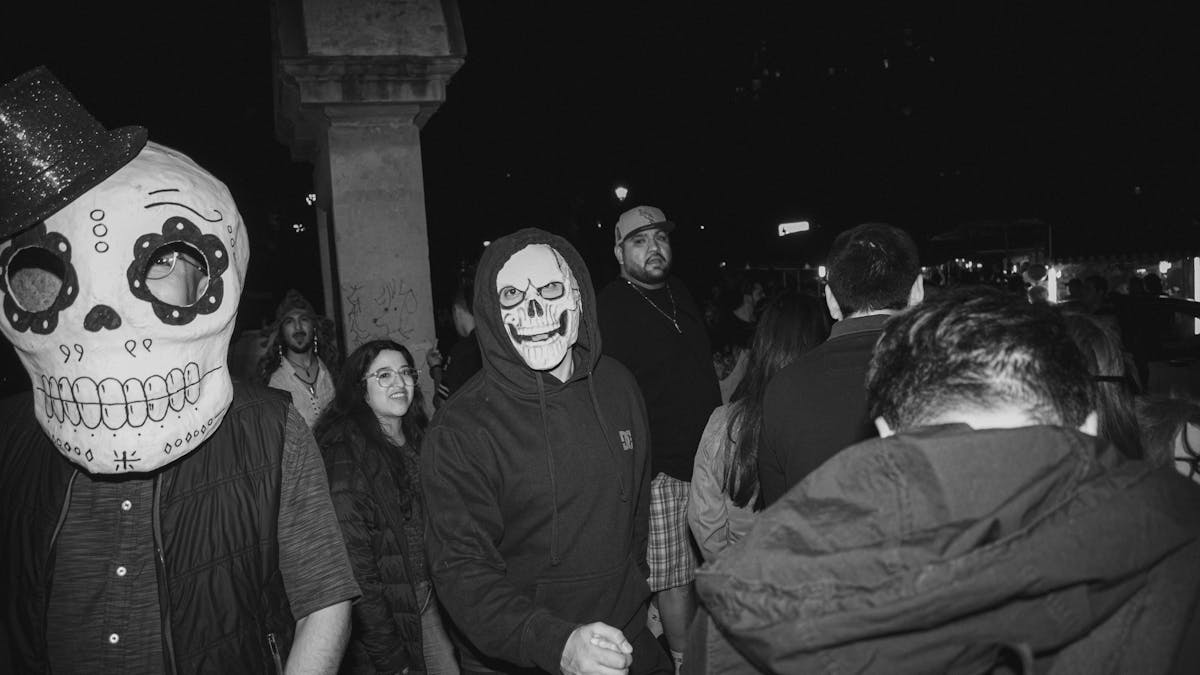
The party atmosphere was crowded and chaotic. Costumes were everywhere. Witnesses had to make sense of violence in a setting already filled with masks and noise.
The attacker was reportedly wearing a white mask, black shirt, and red gloves. In another setting, that outfit might have stood out. On Halloween, it helped him blend in.
Drew Peterson was later convicted of murder.
Lovelien’s death shows how costumes can turn identification into a nightmare. People may remember a mask, a color, or a shape, but not a face. The very thing that makes Halloween fun can become a shield for someone trying to escape responsibility.
For Joel’s loved ones, the holiday did not end with candy or laughter. It became the night everything changed.
The Killer Clown at the Door

Not every Halloween-style crime happens on Halloween.
In May 1990, Marlene Warren opened her front door in Wellington, Florida, to see someone dressed as a clown. The person carried flowers and balloons, including one that read, “You’re the Greatest!”
Then the clown pulled out a gun and shot her.
The image was so strange and disturbing that the case became one of America’s most infamous “killer clown” stories. For years, it remained unsolved. Then, decades later, Sheila Keen-Warren was arrested. She later pleaded guilty to second-degree murder in 2024 and received a life sentence.
The crime occurred months before Halloween, but it used one of the holiday’s most recognizable symbols: the smiling clown face hiding something deadly beneath.
That is what made the case lodge itself in public memory. The costume was supposed to be playful. Instead, it became a disguise for murder.
A Man Who Tried to Hide Behind an Urban Legend
In 2001, Paul Turner poisoned his pregnant wife and daughter in Utah.
According to police, Paul Turner wanted to kill his wife because she would not approve of his pornography habit. But his cover story leaned on one of Halloween’s oldest fears. He made several attempts at poisoning Sarah Turner, but she only became violently ill and survived.
The plan failed. Investigators did not accept the convenient explanation, and Turner was convicted of attempted murder and aggravated assault.
His case is disturbing because it shows how a popular fear can become a criminal tool. He did not need Halloween night itself. He only needed people to believe the old story of a mysterious person poisoning food.
But the truth pointed closer to home.
Again, the danger was not the faceless stranger parents warn their children about. It was someone inside the family circle.
The Real Fear Behind Halloween Crimes
These cases are not frightening because Halloween is dangerous by itself.
Millions of people celebrate every year without harm. Children collect candy. Families decorate porches. Friends throw parties. Neighborhoods come alive for a few glowing hours.
But these stories reveal why Halloween has such a strange emotional power. It is the one night when society allows masks, fear, darkness, and strangers at the door. Most of that is innocent. Most of it is fun.
A criminal only needs to twist that trust once.
A mask can hide a face. A party can hide a scream. A costume can make a witness uncertain. A candy scare can become a false alibi. A knock at the door can feel harmless until it is not.
That is why these crimes linger in public memory. They turn the safest parts of Halloween into warnings.
The mask is not always a joke.
The candy is not always innocent.
The person at the door is not always there to play.