The Microwave Mistake Most Home Cooks Make Without Realizing It
The microwave beeps, the bowl feels hot, and dinner seems ready. But one of the most common reheating mistakes happens right after the timer stops: assuming the food is evenly heated simply because the outside is steaming.
Microwaves can leave cold spots in food, particularly in thick, dense, or mixed dishes. That is why reheating leftovers properly involves more than setting a timer and digging in.
The Beep Does Not Mean Dinner Is Done
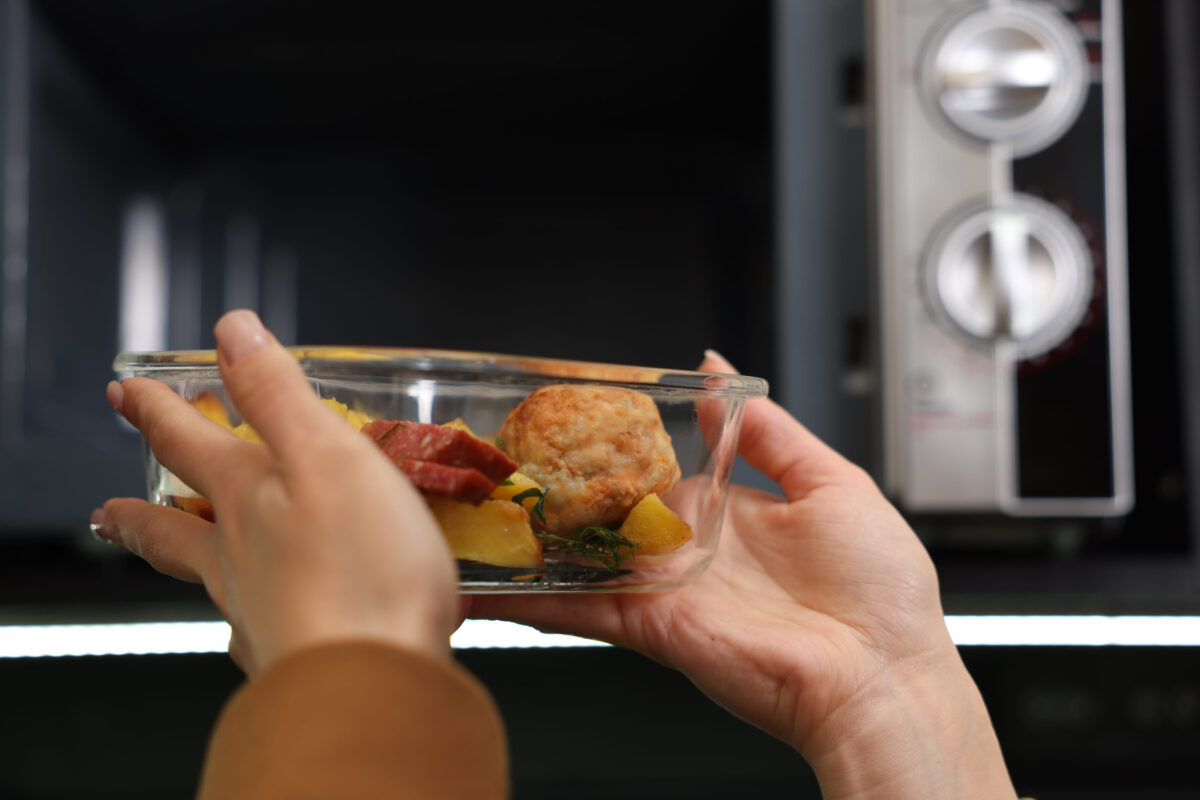
The timer tells you that the programmed heating period has ended. It does not confirm that every part of the food has reached the same temperature.
A casserole can be bubbling around the edges while the middle remains cool. A bowl of rice can have hot sections alongside clumps that are barely warmed. Those differences are more than a texture problem when reheating leftovers because USDA guidance warns that cold spots can allow harmful bacteria to survive.
The better habit is to treat the beep as a signal to check the food rather than an automatic finish line.
Related: Foods You Should Never Reheat in the Microwave
Why Microwave Cold Spots Happen
Microwaves do not heat every part of a dish identically. The thickness, density, shape, and moisture of the food can affect how evenly it warms, while frozen areas and the type of container can also make a difference.
The microwave itself matters, too. Appliances have different power levels, so the same heating time does not necessarily produce the same result in every kitchen.
This is why a deep mound of food can be particularly difficult to reheat evenly. The outer portions may become very hot while the center remains cooler. Simply adding more time can also leave the edges overheated or dried out without necessarily solving the problem as efficiently as stirring and rearranging the food.
The Four Steps That Make a Difference
Cover it. USDA guidance recommends covering food with a microwave-safe lid or wrap that is vented to allow steam to escape. Covering also helps the food heat more evenly and can improve its texture.
Stir or rotate it. Stop the microwave partway through heating and stir liquids and mixed dishes. If stirring is not practical, rotate the container so different areas receive more even exposure.
Let it stand. Food does not necessarily stop heating the instant the microwave shuts off. Standing time allows heat to move from hotter areas toward colder sections, helping the dish finish heating.
Check the temperature. When reheating leftovers, USDA recommends bringing them to 165 degrees Fahrenheit. Use a clean food thermometer and check several places, especially in thick, dense, or mixed foods.
Together, these steps address the uneven heating that a timer alone cannot measure.
Foods That Need Extra Attention
Casseroles and baked pasta can be particularly challenging because they are often thick and contain several ingredients. Spreading the food into a more even layer, rotating it during heating, and checking the center can help avoid the familiar combination of scorching edges and a lukewarm middle.
Rice and mixed leftover meals can also heat unevenly when they are packed tightly into a container. Breaking up clumps, covering the dish, and stirring partway through heating can make the result more consistent.
Soups, sauces, and gravy benefit from stirring because their temperature can vary throughout the container. USDA guidance recommends covering soup, heating it in shorter intervals, and stirring it thoroughly. When reheating soup, the guidance also calls for bringing it to a rolling boil.
Thick servings of meat or poultry deserve particular attention because the center can remain cooler than the outside. A thermometer provides a much better indication of temperature than steam or a hot surface.
Frozen meals should be handled according to their package directions, including any instructions about standing time. Different products and microwave ovens can require different heating approaches.
A Better Reheating Routine
Start by transferring the food into a container labeled microwave-safe. Glass, ceramic, or other properly labeled microwave-safe containers can be used according to the manufacturer’s instructions.
Arrange the food as evenly as possible rather than leaving a large portion piled in the center. If there is a very large serving, dividing it into smaller portions can make reheating more manageable.
Cover the container loosely with a microwave-safe lid or wrap and leave room for steam to vent. Begin heating according to the food’s directions, then stop partway through.
Stir liquids and mixed dishes or rotate the container before continuing. Once the heating cycle ends, allow the food to stand for a few minutes so heat can continue moving through the dish.
For leftovers, finish by checking several areas with a clean food thermometer. The target is 165 degrees Fahrenheit before serving.
What This Fixes in the Kitchen
This simple routine can improve more than temperature. It can help prevent the familiar experience of a meal that is scorching around the rim but barely warm in the middle.
Covering, stirring, rotating, and standing can also help produce more consistent textures. Instead of repeatedly adding time because one section remains cold, cooks can use the microwave more deliberately and adjust for the food being reheated.
The goal is not to treat the microwave as a problem. It is to recognize that the appliance works differently from an oven, and the food needs to be checked accordingly.
The Timer Is Only One Part of Reheating
A microwave remains one of the most useful tools for getting leftovers and quick meals back on the table. The important change is simple: do not let the beep make the final decision.
Cover the food, stir or rotate it, give it standing time, and check the temperature of leftovers. Those few extra steps can make reheated meals more evenly heated while helping them reach the USDA’s recommended 165 degrees Fahrenheit.