6 Food Storage Myths That Refuse to Die, Even Though Experts Say Otherwise
Some kitchen habits are passed down for generations without anyone questioning them. Maybe your grandmother insisted that hot leftovers should never go straight into the refrigerator, or maybe you grew up believing frozen food eventually becomes unsafe to eat.
The problem is that not every food storage rule we learned growing up is actually correct. Some are harmless misunderstandings, while others can lead to wasted groceries, spoiled ingredients, or improper food handling.
According to the U.S. Food and Drug Administration (FDA), confusion over food date labels accounts for an estimated 20% of consumer food waste. That is a considerable amount of food that may be discarded because shoppers misunderstand what the dates mean.
Fortunately, understanding a few basic storage principles can help you decide what belongs in your refrigerator, freezer, and pantry.
Here are six food storage myths that deserve to be retired, along with what food safety experts actually recommend.
Hot Food Must Cool Completely Before Going Into the Refrigerator
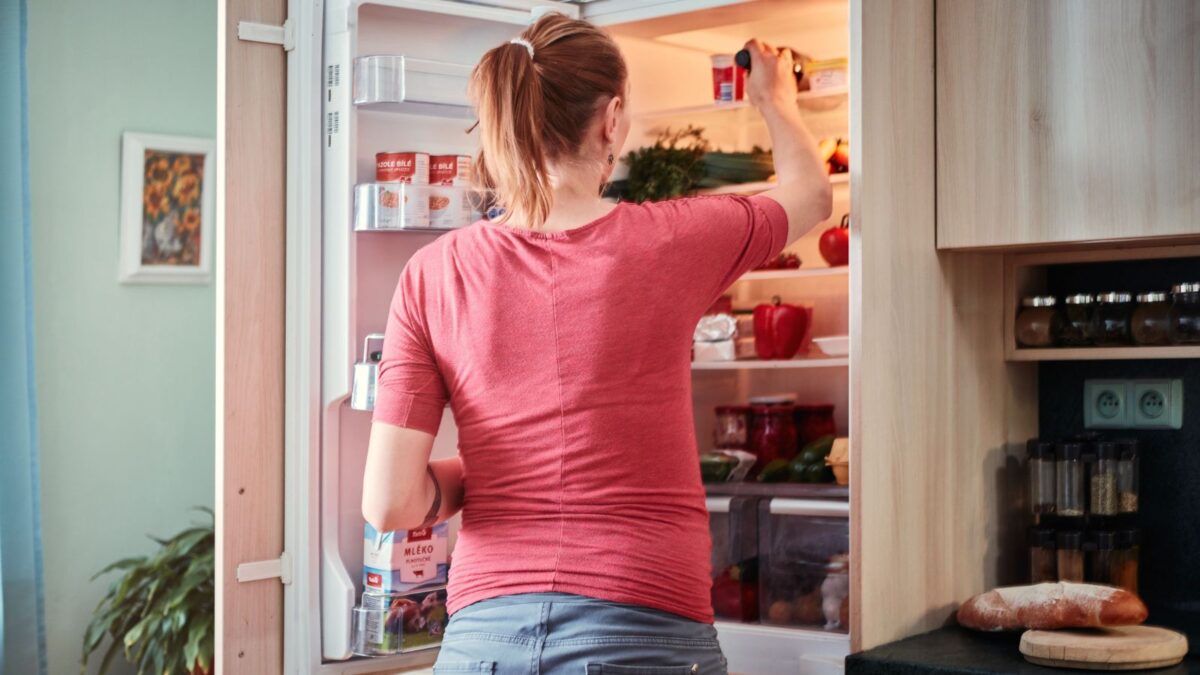
You have probably heard someone insist that putting warm food into the refrigerator will spoil everything around it. As a result, some people leave cooked meals sitting on the counter until they reach room temperature.
However, waiting for food to cool completely is unnecessary and can create a different problem.
The U.S. Department of Agriculture (USDA) says you can put hot food directly in the refrigerator. Divide large quantities into smaller, shallow containers so they cool more quickly and evenly.
Temperature and timing matter much more than whether your leftovers still feel warm.
According to the USDA, perishable foods should be refrigerated within two hours of cooking or being removed from temperature control. If the surrounding temperature exceeds 90 degrees Fahrenheit, that window drops to just one hour.
For example, if you make a large pot of chili, transfer it into several shallow containers rather than leaving the entire pot on the stove for hours.
The idea is to help the food cool quickly without unnecessarily warming other refrigerated items.
What to do instead: Divide large batches into shallow containers and refrigerate them promptly. Keep your refrigerator at 40°F or below.
Food Becomes Unsafe the Moment Its Printed Date Passes
Few kitchen decisions cause as much uncertainty as staring at a package that passed its printed date yesterday. Should you throw it away immediately, or is there still time to use it?
The answer depends on the product, its storage conditions, and the type of date printed on the package.
The USDA explains that most food date labels are intended to communicate quality rather than establish a precise food safety deadline. A “Best if Used By” date generally indicates when the manufacturer expects the product to be at its best flavor or quality.
That means a properly stored package of dry pasta or an unopened shelf-stable product does not automatically become unsafe when its best-quality date passes.
However, that does not mean every food should be kept indefinitely.
Refrigerated perishables have recommended storage limits, regardless of the printed date. Packaging damage, improper temperatures, and other storage problems can also make food unsafe to consume.
One important exception is infant formula, which must be used by its labeled use-by date.
What to do instead: Understand what the printed date means, follow recommended storage periods, and pay attention to packaging instructions. Never assume a future date guarantees that improperly stored food is safe.
Related Post:Freezer Myths Food Experts Wish You Would Stop Believing
Eggs Belong in the Refrigerator Door
If your refrigerator has a convenient little egg tray built into the door, using it probably seems like the obvious choice. After all, why would manufacturers include an egg compartment if you weren’t supposed to use it?
However, the refrigerator door isn’t the best place to store eggs.
According to the USDA, temperatures in refrigerator door compartments fluctuate more than temperatures inside the main refrigerator cabinet. Every time someone opens the door, items stored there are exposed to warmer air.
For eggs, maintaining a consistently cold temperature is important.
The FDA recommends refrigerating eggs at 40 degrees Fahrenheit or below and keeping them in their original carton. It also advises using refrigerated shell eggs within three weeks for the best quality.
Keeping eggs in their carton also makes it easier to keep important package information, rather than transferring them to a decorative container.
This matters especially for American households, where commercially sold shell eggs are generally refrigerated.
What to do instead: Store eggs in their original carton on an interior refrigerator shelf, rather than in the door compartments. Save door space for items that handle temperature fluctuations better.
Frozen Food Eventually Becomes Unsafe Just Because It Is Old
Finding a forgotten package of chicken or vegetables at the back of the freezer often raises an uncomfortable question. If it has been sitting there for several months, should you automatically throw it away?
Not necessarily.
According to the FDA, food that has been properly handled and kept continuously frozen at 0 degrees Fahrenheit can remain safe indefinitely. The important distinction is between food safety and food quality.
Over time, frozen food can lose moisture, flavor, and desirable texture. That is why recommended freezer storage periods often focus on how long an item maintains its best eating quality.
For example, the USDA lists approximately three to four months as a recommended quality period for frozen raw ground meat. Whole uncooked poultry has a recommended freezer storage period of about 12 months.
These recommendations do not mean that properly frozen food suddenly becomes dangerous the following day.
Freezer burn is another commonly misunderstood issue. Those dry, discolored patches may make food less appealing, but the FDA describes freezer burn as a quality problem rather than a food safety problem.
Of course, these recommendations assume food was handled safely before freezing and remained continuously frozen.
What to do instead: Label freezer packages with dates, use airtight packaging, and rotate older items toward the front. Follow recommended storage periods for the best flavor and texture.
You Can Cut Mold Off Any Food and Eat the Rest
Nobody enjoys discovering mold on food they recently purchased. When the affected area looks small, it can be tempting to remove the visible mold and keep everything else.
Unfortunately, that approach does not work for every food.
The USDA explains that mold can penetrate beneath the surface of certain foods, particularly those with high moisture content. That means removing the visibly affected area may not eliminate the problem.
Bread is one example of a food that should be discarded when mold appears. Soft cheeses, yogurt, cooked leftovers, and jams should also be thrown away if they develop unwanted mold.
However, there are exceptions.
For hard cheeses that are not intentionally made with mold, the USDA advises cutting away at least one inch around and below the affected area. The knife should not touch the mold itself.
Certain firm vegetables, such as carrots and bell peppers, may also be salvageable when they have small mold spots, provided the affected portion is properly removed.
The key is understanding that different foods have different structures and moisture levels.
What to do instead: Do not automatically treat every moldy ingredient the same way. Follow USDA guidance for the specific food, and discard moldy items when trimming is not recommended.
Leftovers Are Safe as Long as They Smell Fine
The smell test might be one of the oldest kitchen traditions around. Someone opens a container of forgotten leftovers, takes a cautious sniff, and decides whether dinner deserves another chance.
Unfortunately, smell alone cannot reliably determine whether food is safe.
The USDA warns that perishable food left at room temperature for too long may become unsafe even when it looks and smells perfectly normal.
This is why remembering when you cooked food and how you stored it matters more than relying on your senses.
For most cooked leftovers, the USDA recommends refrigeration for three to four days at 40 degrees Fahrenheit or below. Leftovers that will not be used within that period can be frozen for longer storage.
Consider a container of cooked rice, pasta, or chicken that has sat in the refrigerator for a full week. Even if it smells normal, it has exceeded the USDA’s general recommended refrigerated storage period for cooked leftovers.
Reheating is not a reliable way to rescue food that was improperly stored, either.
The USDA recommends reheating leftovers to an internal temperature of 165 degrees Fahrenheit, but proper reheating does not replace safe storage practices.
What to do instead: Write the cooking date on leftover containers, refrigerate them promptly, and use them within three to four days. When you cannot remember how long something has been stored, the safest decision may be to discard it.
Food storage does not have to be complicated, but it helps to separate familiar kitchen traditions from reliable advice. A few simple changes can help you waste less food, organize your kitchen more effectively, and make better use of the groceries you already have.
Posts You Might Like:
4 Kitchen Storage Tips and Tricks to Save You Time and Money