Trump Announces Voluntary Seafood Label: What Shoppers Need to Know
A new seafood label announced by the Trump administration could give shoppers another way to identify fish and shellfish harvested by American fishermen. However, the proposed “U.S.-Caught Seafood” designation is voluntary, meaning it is not a requirement for every seafood package sold in the country.
The announcement came on October 23, 2026, as part of the administration’s America First Seafood Strategy. According to the White House announcement, the initiative includes a proposed designation intended to help consumers identify seafood caught by American fishermen.
For people shopping for salmon, shrimp, crab, or other seafood, the important distinction is what the designation is designed to communicate, what it does not guarantee, and how it fits alongside existing labeling requirements.
What the “U.S.-Caught Seafood” Label Is Intended to Mean
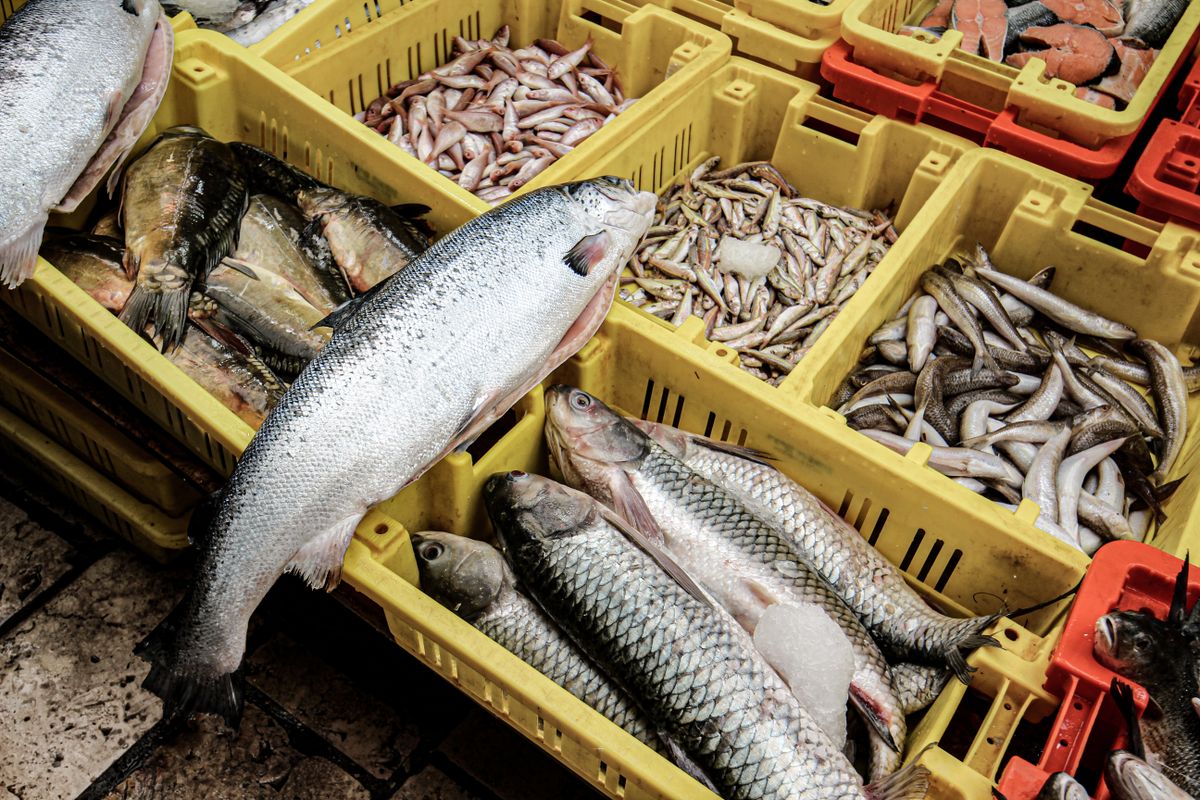
The proposed designation focuses on where seafood is harvested and the conditions under which the catch is managed. The National Oceanic and Atmospheric Administration (NOAA) describes the initiative as a way to identify seafood harvested by American fishermen aboard U.S.-flagged vessels operating under U.S. management.
In everyday terms, the designation is intended to help shoppers recognize seafood associated with American commercial fishing rather than assume that every product sold in a U.S. store was caught domestically.
That distinction matters because a product’s place of sale does not, by itself, establish where the seafood was harvested. The proposed designation could provide consumers with another piece of information to consider when comparing products.
However, shoppers should not interpret the designation as proof that every ingredient, processing stage, or manufacturing step involved in a packaged product took place in the United States. Its stated purpose concerns harvest origin, and the announcement should not be treated as a complete set of finalized eligibility rules.
The designation also does not automatically establish that a product tastes better, is fresher, or is of higher quality than seafood without the label. Its stated purpose is to communicate information about origin, not to serve as a general rating of the product.
Why the Voluntary Status Matters
The word “voluntary” is central to understanding this announcement. The administration has announced a voluntary designation rather than a universal requirement that every seafood package display it.
For shoppers, that means the label may provide useful information when it appears, but its absence should not be treated as evidence that a product was caught abroad. Seafood without the designation could have a different origin or simply not carry this particular voluntary label.
The U.S. Department of Agriculture’s official seafood information page explains that the designation is voluntary and is intended to complement existing country-of-origin labeling requirements. The USDA also describes the designation as one to be established by the FDA in coordination with NOAA and USDA.
These details are important because the announcement does not establish that every seafood seller or packaged product will immediately display the designation. The White House has announced Seafood.gov as an information resource and made the label available for download, but the availability of a graphic does not demonstrate widespread retail adoption.
Consumers should therefore avoid using the new designation as their only way of determining where seafood comes from. Other product information and applicable labeling requirements remain relevant when evaluating a purchase.
Related: 15 Foods to Never Buy at Walmart
How the New Designation Relates to Existing Seafood Labels
The proposed designation is intended to complement existing country-of-origin labeling requirements, not replace them. Shoppers should not assume that the new label eliminates or supersedes other applicable requirements for fish and shellfish.
The USDA provides information about existing country-of-origin labeling through its official seafood page. Its Country of Origin Labeling frequently asked questions also explain the country-of-origin and method-of-production information requirements that apply to covered fish and shellfish commodities.
These existing requirements are separate from the proposed voluntary designation. The new label should not be interpreted as a replacement for information required under applicable rules.
Shoppers should also distinguish between terms describing harvested seafood and those describing farm-raised products. The FDA’s draft guidance gives “U.S.-Caught” and “U.S. Farm-Raised” as examples of possible U.S.-origin statements. They describe different circumstances and should not be treated as interchangeable terms.
For packaged seafood, the practical lesson is to read the wording carefully rather than assume that every statement about American origin means the same thing.
The FDA Guidance Is Still a Draft
Alongside the announcement, the Food and Drug Administration published draft guidance addressing U.S.-origin statements on seafood labels. The document is intended to explain how businesses can make origin statements that are truthful and not misleading while complying with applicable requirements.
The FDA’s October 2026 draft guidance is explicitly marked, “Not for implementation. Contains non-binding recommendations.”
In plain English, this means the document is still a draft rather than finalized guidance. Its recommendations do not, by themselves, create legally enforceable responsibilities.
That does not mean businesses are free to make misleading claims about where their seafood comes from. The FDA explains that U.S.-origin statements must be truthful, not misleading, and consistent with other applicable legal requirements.
The distinction is between the status of the draft guidance and the obligations that already apply under relevant laws. The draft does not make the proposed voluntary designation compulsory, nor does its draft status eliminate existing labeling requirements.
For consumers, this is a reason to pay attention to the wording of origin claims instead of assuming that the announcement represents a sweeping change to all seafood packaging.
Related: 15 Poor People Foods That Even the Wealthy Eat
What Seafood Shoppers Should Remember
The proposed “U.S.-Caught Seafood” designation is intended to help identify seafood harvested by American fishermen on U.S.-flagged vessels under U.S. management. It is voluntary, and the related FDA guidance remains a draft containing nonbinding recommendations.
The USDA’s explanation also reinforces that the designation is intended to work alongside existing country-of-origin labeling requirements, not replace them. Its implementation and eligibility details should not be assumed to be finalized simply because the administration has announced the initiative.
Most importantly, the presence or absence of this particular designation does not tell the whole story about a seafood product’s origin or production. Shoppers should read available labels carefully, distinguish harvest-origin claims from broader claims about where a product was made, and remember that existing labeling requirements remain separate from the new initiative.
The bottom line: Treat the proposed label as one potential source of origin information, not as a universal requirement or a guarantee about every aspect of a seafood product.