A Beloved Frozen Juice Staple From the Boomer Era Is Disappearing From Store Shelves
Remember those little cardboard cans of frozen orange juice concentrate that seemed to live in every American freezer? You’d peel back the metal lid, drop the frozen cylinder into a pitcher, add water, and stir until it turned into a familiar breakfast drink.
For millions of Baby Boomers, that simple routine was part of growing up. But one of America’s most recognizable juice brands has decided that the old-fashioned frozen concentrate has reached the end of the road.
In February 2026, Coca-Cola announced it would discontinue Minute Maid’s frozen juice concentrates in the United States and Canada, ending an approximately 80-year chapter in the brand’s history.
The decision affects frozen orange juice, lemonade, and limeade, products that once occupied a familiar place in grocery store freezers.
It’s another reminder that even the most recognizable household staples aren’t guaranteed to stay on supermarket shelves forever.
Minute Maid Is Saying Goodbye to Its Frozen Juice Cans
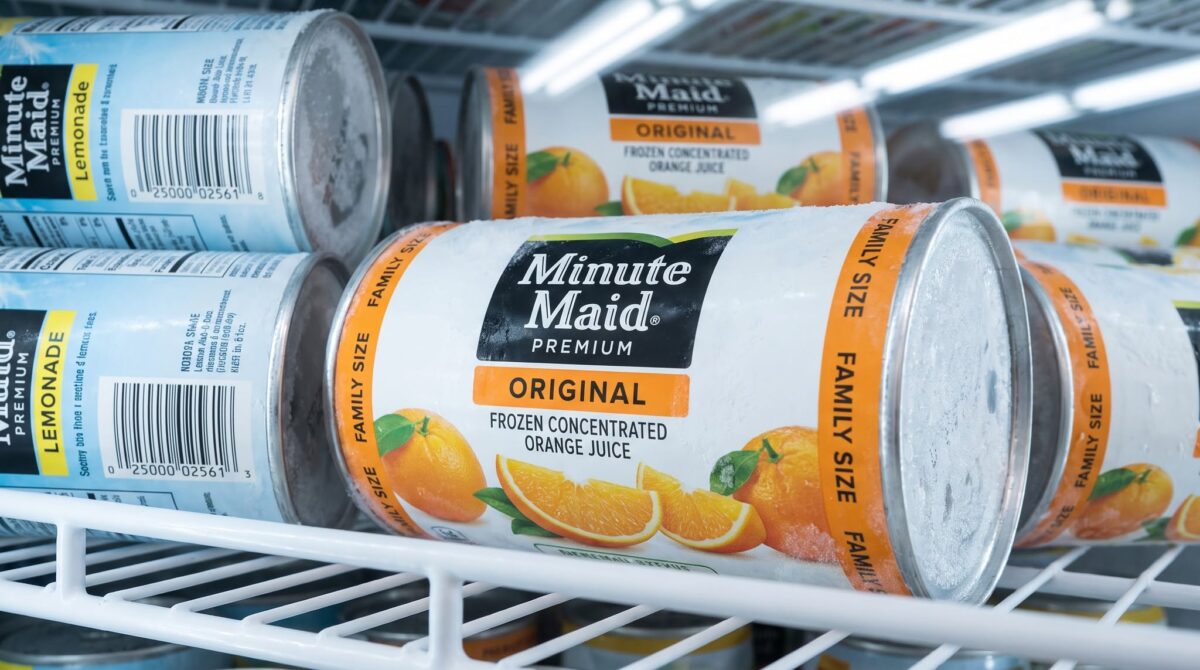
The announcement came on February 4, when Coca-Cola confirmed that Minute Maid would stop producing frozen canned juice concentrates.
The company explained that consumers increasingly prefer other juice formats, particularly refrigerated products that can be poured directly from the container.
In a statement reported by the Associated Press, Coca-Cola attributed the decision to changing consumer preferences.
The company said production would end by April 2026, and existing inventory would remain available until supplies ran out.
That means the familiar Minute Maid cans could continue appearing in some stores after production stopped, depending on remaining stock.
However, their presence wouldn’t mean the company reversed its decision.
The discontinued lineup includes frozen orange juice, lemonade, and limeade varieties.
Importantly, the announcement doesn’t mean Minute Maid itself is disappearing.
The company continues operating in other beverage categories, including ready-to-drink juices.
The frozen canned concentrate business is being retired.
For shoppers who have purchased the same frozen orange juice for decades, that distinction may offer little comfort.
The product they remember is going away, even if the familiar Minute Maid name remains.
Related:15 Foods From the ’60s Most Boomers Loved With a Passion
Why Frozen Orange Juice Was Once a Kitchen Essential
To understand why this change matters, it helps to remember what American grocery shopping looked like in the mid-twentieth century.
Households didn’t always have fresh orange juice available in a refrigerated carton.
Before modern distribution systems became widespread, moving perishable products long distances was a major challenge.
Consumers could squeeze oranges themselves, but that required time, effort, and a dependable supply of fresh fruit.
Frozen concentrate offered a practical alternative.
The product arrived in a small cylindrical container that could be stored in the freezer until needed.
To prepare a pitcher, add water according to the package directions.
For busy families, it was an affordable, convenient way to keep juice on hand without squeezing fresh oranges every morning.
The small cans also occupied relatively little freezer space compared with ready-to-drink containers.
For households with several children, one can could become a pitcher large enough to serve multiple people.
The preparation itself became familiar.
Children watched the frozen concentrate slide into the pitcher, then waited while someone stirred it into the water.
An ordinary kitchen task eventually became a nostalgic memory for an entire generation.
Related:28 Foods We Believe Have Earned Their Fame
The Product’s History Goes Back to World War II
Frozen orange juice concentrate wasn’t originally developed as a nostalgic breakfast product.
Its beginnings were tied to an important food-processing challenge during World War II.
Researchers wanted a practical way to preserve and transport orange juice while keeping the flavor acceptable.
According to the Smithsonian’s National Museum of American History, scientists worked on concentrated-juice technology during the 1940s, with support from federal and Florida citrus interests.
Earlier approaches to preserving orange juice often produced beverages that lacked the flavor consumers expected.
Researchers eventually improved the process by concentrating juice and incorporating fresh juice to restore some of its original character.
The resulting product could be frozen and transported more conveniently than conventional fresh juice.
The United States Department of Agriculture identifies 1945 as a key year in the development of frozen concentrated orange juice.
Commercial production expanded during the years immediately following the war.
In 1946, Minute Maid helped introduce the product to a national audience.
What began as a technical achievement eventually changed how Americans shopped for groceries.
Instead of buying oranges every time they wanted juice, families could keep concentrate in their freezers and prepare it whenever they needed it.
How Minute Maid Became a Household Name
Minute Maid played an important role in making frozen orange juice popular nationwide.
The company began shipping frozen concentrate nationwide in 1946, helping turn orange juice into a familiar year-round product.
Early advertising emphasized convenience.
Consumers no longer needed to squeeze a pile of oranges before breakfast.
They could open a can, add water, and serve.
The product appealed to families who wanted something easy to prepare and store.
By the 1950s and 1960s, frozen concentrate had become a recognizable part of American kitchen life.
The Smithsonian preserves a six-ounce Minute Maid concentrate can in its collection and describes it as representative of how many Americans prepared their morning orange juice during that era.
Some families even put the frozen can in the refrigerator overnight to make it easier to mix the next morning.
In 1960, Coca-Cola acquired Minute Maid.
The brand continued expanding its juice business, eventually moving beyond the frozen concentrate that helped establish its reputation.
And as American shopping habits changed, the same convenience that originally made frozen concentrate appealing began working against it.
Ready-to-Drink Juice Changed Everything
Frozen concentrate was convenient when the alternative involved squeezing oranges by hand.
But once ready-to-drink juice became widely available, shoppers had another option.
Instead of waiting for concentrate to thaw and measuring water into a pitcher, consumers could open a carton and pour.
Minute Maid introduced refrigerated, ready-to-drink orange juice in 1973, helping accelerate the shift.
Other brands also expanded their refrigerated juice offerings.
By the late twentieth century, supermarket refrigerator cases offered shoppers a growing selection of juices that required no mixing.
Some manufacturers emphasized the difference between juice made from concentrate and products marketed as not from concentrate.
That distinction became part of the industry’s advertising strategy.
For consumers prioritizing convenience, the refrigerated cartons were appealing.
Although frozen concentrate still had loyal customers, its original advantage had become less significant.
The product that once simplified breakfast preparation now required more effort than its newer competitors.
Sales Show Just How Much Shopping Habits Have Changed
The disappearance of Minute Maid’s frozen concentrate reflects a broader shift in consumer demand.
According to Associated Press reporting from February 2026, NielsenIQ data showed that U.S. frozen beverage sales fell nearly 8% during the year ending January 24.
The decline wasn’t limited to one brand.
Consumers were increasingly choosing different beverages and formats, including ready-to-drink products.
The report also highlighted rising costs.
A 12-ounce container of frozen orange juice concentrate averaged $4.82 in December 2025, approximately 13% higher than the previous year.
Those figures help explain why manufacturers are reconsidering products that no longer attract the same level of demand.
For Coca-Cola, the decision reflects a business adjustment rather than a sudden disappearance of consumer interest in orange juice.
The company continues selling other juice products while shifting its focus to categories better aligned with current shopping habits.
And for grocery retailers, freezer space is valuable.
Slow-moving products can face competition from frozen meals, desserts, vegetables, and other popular items.
Is Frozen Orange Juice Concentrate Disappearing Completely?
The good news for longtime fans is that Minute Maid’s decision doesn’t mean every frozen concentrate is disappearing.
Other manufacturers can continue producing the product.
The Associated Press reported that Tropicana remained in the frozen canned juice business when Coca-Cola announced its decision.
Some supermarkets also carry private-label frozen concentrate, although selection varies by retailer and location.
That means shoppers who prefer mixing their own orange juice may still find alternatives.
However, availability shouldn’t be taken for granted.
A store that previously stocked several brands might now offer fewer choices, and some locations may no longer carry the product.
Checking local supermarket inventories can help customers determine what’s available nearby.
A brand discontinuation is different from an entire product category disappearing.
Minute Maid’s exit is confirmed.
The complete disappearance of frozen juice concentrate from American grocery stores is not.
Why the Little Frozen Cans Still Matter to Boomers
For people who grew up during the 1950s, 1960s, and 1970s, frozen orange juice concentrate represents more than a beverage.
It’s tied to family breakfasts, grocery shopping with parents, and everyday childhood routines.
Preparing it was distinctive.
You had to open the can, sometimes wait for the frozen juice to loosen, and stir until the mixture was ready.
Those small steps made the drink different from simply pouring juice into a glass.
Some families used the concentrate to prepare frozen treats or homemade summer drinks.
Others kept several cans stored away for weekends, visitors, or busy mornings.
The disappearance of familiar products can bring back memories of the kitchens where people first encountered them.
It’s the same feeling some shoppers experience when a favorite cereal, dessert, or old-fashioned candy disappears.
The product itself might seem ordinary, but the memories attached to it are anything but.
Another Piece of Grocery Store History Is Fading Away
Minute Maid’s decision marks the end of an era for a product that helped transform American breakfast habits.
Frozen orange juice concentrate was once a remarkable convenience, making it easier for families to enjoy juice year-round.
But the grocery industry kept changing.
Refrigerated beverages became more accessible, ready-to-drink options expanded, and consumers gradually moved away from products requiring preparation.
By 2026, Coca-Cola decided Minute Maid no longer had enough reason to stay in the frozen can category.
The broader category isn’t gone, and other brands may continue supplying customers who prefer the old-fashioned approach.
Still, Minute Maid’s familiar cans disappearing closes a memorable chapter in American grocery history.
For Baby Boomers who remember waiting for a frozen cylinder of orange juice to dissolve in a pitcher, it’s one more reminder of how much everyday life has changed.
Other Posts You Might Like:
Annoying Grocery Store Habits Boomers Can’t Stand
Boomer Cooking Habits That Younger Generations Don’t Get
6 Cheap Frozen and Canned Foods That Can Be as Healthy as Fresh Produce