10 Things You Should Never Ever Pay For
Nobody enjoys paying bills, but some expenses are especially frustrating because you could have avoided them altogether. We’re talking about those sneaky little charges that seem perfectly normal until you discover there’s a free way to get the same basic service.
From banking fees to software subscriptions, plenty of companies charge for things you can access without opening your wallet.
Of course, sometimes paying extra gets you convenience or additional features. But if all you need is the basic service, why spend money unnecessarily?
Here are 10 things you should think twice about paying for, along with the free alternatives worth knowing.
Credit Reports

Checking your credit history shouldn’t require another monthly subscription.
Some credit-monitoring services bundle credit reports with scores, alerts, and additional features. For example, Experian Premium advertises a membership costing $24.99 per month after a seven-day trial.
But here’s what many people don’t realize: You can get free credit reports from all three major credit bureaus every week.
According to the Federal Trade Commission, consumers can access their Equifax, Experian, and TransUnion reports through AnnualCreditReport.com.
Simply visit the website, select the reports you want, and verify your identity.
Keep in mind that free credit reports don’t necessarily include credit scores or continuous monitoring. Still, if you’re just checking your credit history, there’s no reason to pay for access.
Monthly Checking Account Fees
Paying a bank to hold your money feels a little backward, doesn’t it?
Yet monthly maintenance fees remain common. Chase Total Checking, for example, lists a $15 monthly service fee unless customers meet certain requirements.
That adds up to $180 annually if you never qualify for a waiver.
Fortunately, you have options.
Some banks waive monthly fees when customers meet qualifying deposit or balance requirements. Others, including Capital One 360 Checking, offer accounts without monthly maintenance fees.
Before switching banks, ask whether your current account qualifies for a fee waiver.
Just remember that no monthly maintenance fee doesn’t automatically mean every banking service is free. Check charges for things like wire transfers and cashier’s checks.
Basic Tax Preparation

Tax season is stressful enough without paying more than necessary to file a straightforward return.
Many Americans purchase tax software or hire professionals without checking whether they qualify for free preparation.
FreeTaxUSA offers free federal filing for supported returns, although state filing costs $15.99 under its published pricing.
The IRS also supports Volunteer Income Tax Assistance (VITA) and Tax Counseling for the Elderly (TCE), which provide free basic preparation to qualifying taxpayers.
IRS Free File was another option during the 2026 filing season, although that season’s program ended October 15.
Professional help can be worthwhile for complicated situations. But if your return is relatively simple, check the free options before paying.
Tax Refund Transfer Fees
Imagine paying extra just to receive money that’s already yours.
That’s essentially the situation some taxpayers encounter when choosing optional refund-transfer services.
These services allow tax-preparation fees to be deducted from an expected refund rather than paid upfront.
For example, H&R Block lists a $42 Refund Transfer fee, separate from regular preparation charges.
The alternative?
Pay any preparation charges separately and choose ordinary refund direct deposit into an eligible account.
You can also avoid preparation charges altogether if you qualify for a free filing service.
Refund transfers can be useful when paying upfront isn’t practical. But if you can cover the preparation fee separately, there’s usually no reason to purchase this additional service.
Passport Application Forms
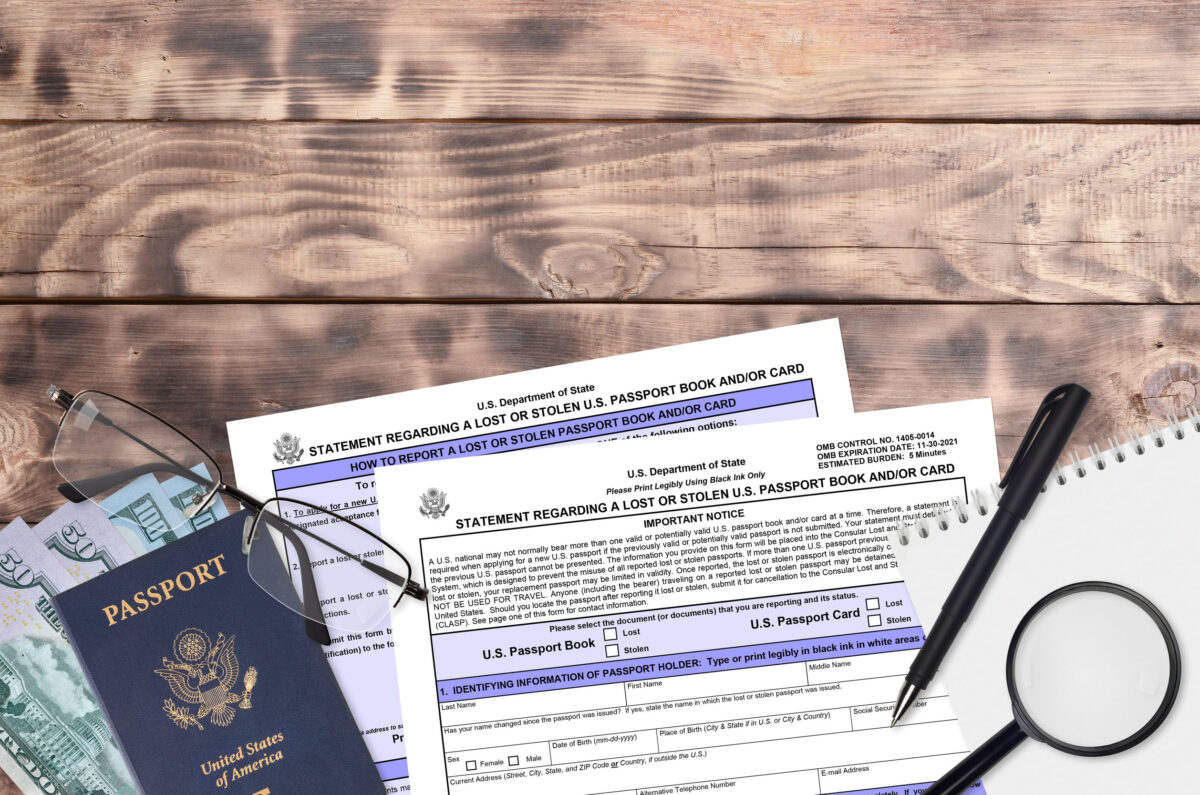
Planning an international trip? Don’t let a flashy third-party website convince you that passport application forms cost money.
The U.S. Department of State provides official passport forms at no charge.
You can download them or use the government’s online Form Filler to prepare the necessary paperwork.
The FTC has warned about websites that charge consumers for passport-related assistance while resembling official government services.
Here’s the important distinction: passport forms are free, but obtaining a passport generally involves legitimate government fees.
Start with the State Department’s official website instead of paying someone merely to access paperwork.
USPS Priority Mail Boxes and Envelopes
Shipping something? Before purchasing a box, check whether the Postal Service already provides one for your shipment.
USPS offers free Priority Mail and Priority Mail Express packaging for eligible shipments.
That includes various boxes and envelopes available through its website or at many Post Office locations.
You can browse the USPS free shipping supplies collection and order appropriate packaging.
There’s one important catch: Those free supplies must be used with the designated USPS service.
You cannot treat them as general-purpose moving boxes or use them for unrelated shipping services.
Postage isn’t included, either. Compare the total shipping cost before choosing a service simply because the box is free.
Routine USPS Package Pickup
Dragging packages to the Post Office isn’t always necessary, especially when your regular mail carrier can collect them.
USPS offers free Package Pickup for qualifying prepaid shipments during regular mail delivery.
You simply visit the USPS pickup scheduler, enter your address, provide the shipment details, and check eligibility.
The Postal Service also offers a paid Pickup on Demand service, which costs $26.50 per stop under its October 2026 price schedule.
The difference is scheduling.
The paid option provides a specified two-hour pickup window, while the free service happens during the carrier’s regular route.
Unless you need that precise timing, check whether free pickup meets your needs.
Basic Office Software
Need to type a letter, prepare a spreadsheet, or put together a presentation?
You might assume that means purchasing Microsoft 365.
But Microsoft provides free browser-based versions of Word, Excel, and PowerPoint.
All you need is a free Microsoft account and internet access.
The free version also includes 5 GB of OneDrive storage.
While paid subscriptions offer desktop applications, additional storage, and advanced features, many everyday tasks can be handled through the free Microsoft 365 web apps.
If you’re mainly writing documents, organizing household expenses, or creating simple presentations, try the free version before committing to a subscription.
Audiobook Subscriptions
Love listening to books while cooking, cleaning, or commuting?
A monthly audiobook subscription might seem like the only convenient option.
Audible’s one-credit Premium membership, for example, costs $14.95 per month.
But your public library may already offer a free alternative.
Libby allows eligible library-card holders to borrow digital audiobooks through participating libraries.
Download the app, connect your library card, and explore the available collection.
There are limitations. Popular titles may have waiting lists, libraries have different catalogs, and borrowed books aren’t yours to keep.
But if you’re flexible about what you listen to next, library borrowing can replace a recurring subscription.
Unclaimed Property Searches
Here’s one of the more surprising expenses you might avoid.
States hold unclaimed property such as forgotten account balances, uncashed checks, and other funds awaiting their rightful owners.
Some private companies offer to locate these assets and help people claim them for a fee.
But searching for your own unclaimed property is free through official state programs.
The National Association of Unclaimed Property Administrators provides a directory of state search websites.
Start with states where you’ve previously lived or conducted business, search your name, and follow the relevant claim instructions.
You may need documents proving your identity or ownership, and complicated cases sometimes require professional assistance.
However, for a straightforward claim, paying a finder is often unnecessary.
The money might already belong to you. There’s no need to give someone a percentage just to discover it.
The Bottom Line
Before paying another fee or renewing a subscription, spend a few minutes checking whether a legitimate free alternative exists. Sometimes the easiest way to save money isn’t cutting back on what you enjoy. It’s simply refusing to pay for something you can already get for free.