Bay Area Chinese Restaurant Fines Parents for Wild Kids’ Behavior and the Internet Has a Lot to Say
A family dinner is supposed to be a simple pleasure: good food, conversation, and time spent together. But for one Bay Area Chinese restaurant owner, repeated problems with disruptive children turned peaceful meals into frustrating experiences for staff and customers.
Now, the restaurant has introduced a controversial solution that has captured national attention: parents may be charged when their children’s behavior goes too far.
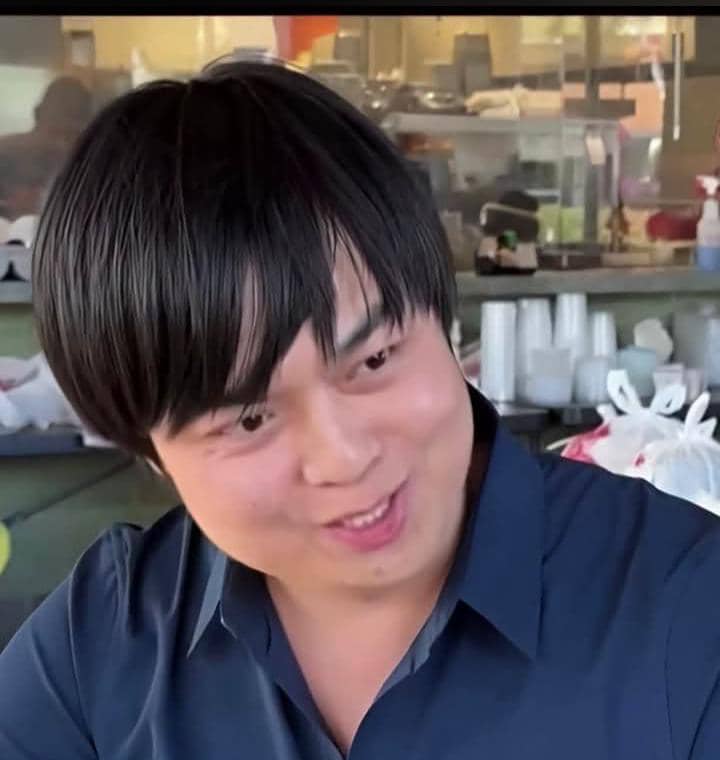
Chez Xue, a Chinese restaurant in Foster City, California, has gone viral after its owner, You You Xue, announced a policy warning parents that the restaurant is not a playground. The rule says families could face fees if their children damage restaurant property or create serious disruptions.
The decision has sparked a heated online discussion. Some customers believe the restaurant is simply asking parents to take responsibility. Others argue that the policy feels too strict and could make families feel judged when dining out.
At the center of the debate is a question many restaurants, parents, and customers have struggled with for years: How much responsibility should parents have when their children’s behavior affects everyone around them?
A Restaurant Owner Draws a Line After Years of Frustration
According to Xue, the policy did not appear overnight. He said it came after repeated incidents in which employees had to deal with situations involving children running around, making loud disturbances, or damaging restaurant equipment.
For restaurant workers, those moments can create real challenges. Servers are expected to deliver food, assist customers, and maintain a clean environment. They are not trained to monitor children or step into parenting situations.
Xue said he wanted to make one thing clear: the restaurant welcomes families. The goal, he explained, is not to punish children for being children. Instead, the focus is on situations where parents fail to step in when their child’s actions become disruptive or destructive.
The restaurant’s message encourages parents to keep an eye on their children and ensure they respect the surrounding space. The policy reminds guests that restaurants are shared environments where everyone deserves a comfortable experience.
For many business owners, this issue is becoming increasingly difficult. Restaurants must balance welcoming families with protecting their staff, customers, and property.
A child laughing, talking loudly, or being energetic is generally expected in a family restaurant. But problems arise when children begin running between tables, climbing on furniture, throwing objects, or damaging expensive equipment.
That difference is exactly where Chez Xue says it has drawn the line.
Parents Could Pay When Children Cause Damage
The part of Chez Xue’s policy that has attracted the most attention is the possibility of financial penalties.
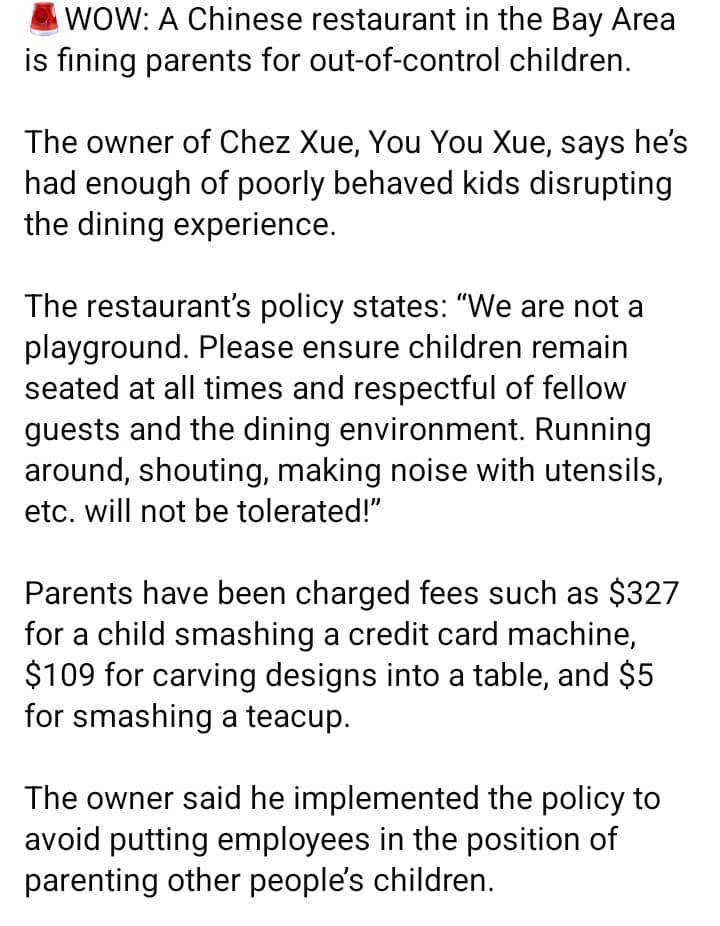
The restaurant has reportedly charged families when children caused damage inside the business. These fees were connected to specific incidents involving damaged equipment or property rather than ordinary childhood behavior.
One reported case involved a child damaging a payment machine, leading to a charge of hundreds of dollars. Another involved damage to a table caused by a child who scratched the surface with a utensil. There were also smaller charges related to broken restaurant items.
The restaurant’s position is that parents should be responsible for damage caused by their children. Many supporters of the policy agree, comparing it to other situations where people are expected to pay for property they damage.
For example, if an adult accidentally breaks a valuable item in a store or restaurant, they may be expected to pay for it. Supporters argue that the same principle should apply when a child causes damage.
However, critics question whether financial penalties are the best way to handle these situations. Some believe restaurants should focus on communication rather than punishment.
The debate also highlights changing expectations around parenting in public. Many older generations argue that children were traditionally expected to follow stricter rules when visiting restaurants, stores, or other public places.
Meanwhile, some modern parents believe society should be more understanding of children’s behavior and recognize that young kids naturally have energy and curiosity.
The challenge is finding a middle ground between accepting normal childhood behavior and maintaining respect for other people.
The Internet Reacts: Supporters Applaud, Critics Push Back
Once the restaurant’s policy spread online, reactions came quickly. Social media users had strong opinions, and the conversation quickly expanded beyond one restaurant in California.
Many people supported Xue’s decision, saying that restaurants should not have to absorb the cost of property damage or have employees deal with uncontrolled situations.
Some commenters argued that parents have a responsibility to teach children how to behave in public. They pointed out that a restaurant is a place where many different people gather, including couples celebrating special occasions, business customers, and elderly guests who may prefer a quieter atmosphere.
Supporters also noted that employees often feel uncomfortable confronting customers about their children’s behavior. A clear policy gives restaurant workers a standard to point to, rather than forcing them into difficult conversations.
On the other side, some critics believe the approach could create unnecessary tension between restaurants and families.
They argue that children are still learning social skills and that occasional mistakes are part of growing up. They worry that strict rules could discourage families from visiting restaurants altogether.
Some parents also believe businesses should consider creating more family-friendly spaces rather than placing the responsibility entirely on parents.
The conversation reflects a larger cultural debate about public manners. Similar arguments appear in places such as airplanes, hotels, movie theaters, and other shared spaces where people have different expectations.
One group believes society has become too accepting of disruptive behavior. Another believes people have become less patient with children.
Chez Xue’s policy has simply brought that disagreement into the spotlight.
Why More Businesses Are Paying Attention to Customer Behavior
The discussion around Chez Xue comes at a time when many businesses are reconsidering how they manage customer experiences.
Restaurants operate in a competitive environment where reviews, reputation, and customer satisfaction can determine success. A single negative experience can quickly spread online and influence how people view a business.
Owners must think about everyone who enters their establishment. Families are important customers, but so are other groups who expect a certain level of comfort and respect.
A restaurant that becomes known for constant noise, damaged property, or uncomfortable dining experiences may lose customers seeking a different atmosphere.
At the same time, businesses must be careful about how they enforce rules. Policies need to be applied fairly and clearly so customers understand expectations before problems happen.
In Xue’s case, the restaurant’s approach has generated attention precisely because it challenges a common assumption that businesses should simply tolerate any customer behavior.
The policy sends a message that restaurant owners also have limits. They have employees to protect, bills to pay, and other customers to consider.
Whether other restaurants follow the same path remains uncertain. Some businesses may decide that clear behavior policies are useful, while others may prefer traditional approaches.
But the conversation initiated by Chez Xue shows that public behavior remains a major issue for businesses and customers alike.
A Small Restaurant Creates a Big Conversation
The debate surrounding Chez Xue is about more than one restaurant or one rule. It is about respect, responsibility, and how people share public spaces.
Most people agree that children should be allowed to enjoy meals with their families. Restaurants are not only for adults, and family dining is an important part of many communities.
But many also agree that parents play an important role in helping children understand boundaries. Teaching kids how to behave in public prepares them for situations throughout life.
For You You Xue, the message behind the policy is straightforward: families are welcome, but everyone must respect the space they share with others.
The restaurant’s decision may continue to divide opinions, but it has started a conversation that many people have quietly been having for years.
When does normal childhood behavior become disruptive? How much responsibility should parents carry? And what should businesses be allowed to do to protect their environment?
Those questions do not have simple answers. But one Bay Area restaurant has made one thing clear: the debate over public manners is far from over.