10 Foods Grandma Pickled That Would Surprise Younger Generations
These days, most people think of pickles as cucumbers in a jar from the grocery store. Maybe a few folks still make dill spears or bread-and-butter slices at home, but that’s usually where it ends. For our grandmothers, though, pickling was a whole season of work, and almost nothing from the garden or the orchard was off-limits.
Late summer meant a hot kitchen, steaming canners and rows of jars lined up on the counter to cool. Grandma pickled what she grew, what she bought cheap at the market and whatever was left over when the season ended. Some of those jars would make a modern home cook do a double take.
If you remember a cellar shelf full of colorful jars, a few of these will bring back the smell of vinegar and spice. Here are 10 foods Grandma pickled that would surprise younger generations today.
1. Watermelon Rind
Most people today toss the rind in the trash after a slice of watermelon, but Grandma saw it as a second treat. She trimmed off the green skin and the last bits of pink fruit, cut the thick white rind into cubes and turned it into sweet, spiced pickles. They were a staple on Southern relish trays for generations.
The process took patience. A recipe from the National Center for Home Food Preservation soaks the rind in an ice-and-salt brine for hours, then simmers it in a syrup of sugar, vinegar, cloves, cinnamon and lemon slices. The result is crisp, sweet and a little tangy, and it’s still a favorite at holiday dinners in many families.
2. Red Beet Eggs
Walk into a Pennsylvania Dutch kitchen a few decades ago, and you might find a jar of bright pink eggs on the counter. Hard-cooked eggs were peeled and soaked in the juice from pickled beets, along with vinegar and sugar, until they turned a vivid magenta color. Slice one open, and the pink ring around the yellow yolk is a real showstopper.
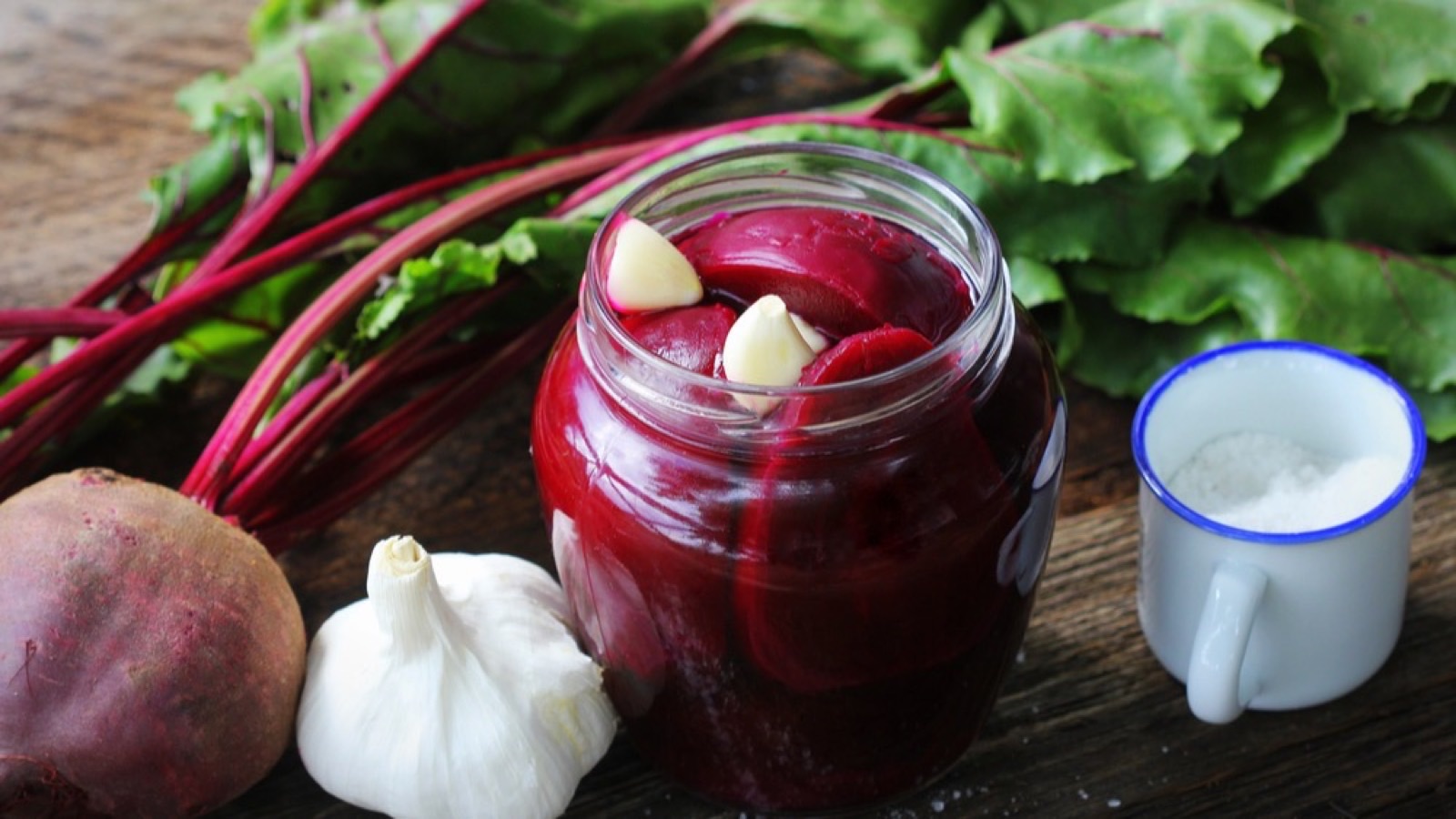
Pickled eggs came in many flavors. The NCHFP pickled eggs guide lists red beet eggs alongside versions made with dill, apple cider and even red cinnamon candies. Younger folks are often shocked that eggs can be pickled at all, but for many families they were a picnic and potluck classic. Today’s guidance says to keep them in the refrigerator, not on the shelf.
3. Pigs’ Feet
This one tends to get the strongest reaction. Pickled pigs’ feet were cooked until tender, then packed in a vinegar brine with spices. They were a common sight in big glass jars at country stores and taverns, and many families made their own after butchering season.
For our grandparents, nothing on the animal went to waste, and pickling was an easy way to keep these cuts for later. Many older folks remember snacking on them with crackers or saltines. Younger generations, though, are far more likely to see them as a dare than a snack.
4. Cantaloupe
Sweet, juicy cantaloupe doesn’t seem like an obvious choice for the pickle jar. But in many old farm kitchens, firm, still-green melons were cut into chunks and simmered in a sweet and spicy vinegar syrup. The result was something between a pickle and a preserve.
The NCHFP cantaloupe recipe shows that it’s still a tested home-canning method today. Grandma likely made it when the garden produced more melons than the family could eat. Served cold next to a ham or pork roast, these pickles were a sweet surprise.
5. Spiced Crabapples
Crabapples are small, sour and not much fun to eat raw, but Grandma knew how to make them shine. She left the little apples whole with their stems on, then cooked them gently in a spiced syrup of sugar, vinegar, cinnamon and cloves. They came out glossy, ruby-red and lovely to look at.
Spiced crabapples were a classic garnish for holiday tables, often set beside the turkey or ham. Many homes had a crabapple tree in the yard, and this was the best way to use the fruit. Today, most people think of crabapple trees only as pretty spring flowers, with no idea that their grandmothers once filled jars with them.
6. Piccalilli and Chow-Chow
At the end of the growing season, Grandma often had a pile of odds and ends left in the garden: green tomatoes that would never ripen, a few peppers, onions and some cabbage. Instead of wasting them, she chopped everything up and turned it into a tangy, sweet relish. In some regions it was called piccalilli, and in the South and Pennsylvania Dutch country, a similar mix was called chow-chow.
The NCHFP’s piccalilli recipe uses green tomatoes, red and green peppers, onions and cabbage, cooked with vinegar, brown sugar and pickling spice. Families spooned it over beans, hot dogs and greens. It’s one of those pantry items that used to be in every kitchen and now feels like a rare find.
7. Jerusalem Artichokes
Despite the name, Jerusalem artichokes aren’t from Jerusalem and aren’t really artichokes. They’re knobby roots from a type of sunflower, sometimes called sunchokes. They grow so easily that they can take over a garden, and that’s exactly why Grandma needed a way to use them up.
Pickled Jerusalem artichokes are crunchy and a little nutty, with a texture a bit like a water chestnut. Many older Southern cooks made them into a relish or sliced them into sweet pickles colored golden with turmeric and red peppers. Most younger people have never heard of them, let alone tasted one from a jar.
8. Okra
People tend to love or hate okra, but even okra skeptics often like it pickled. The pods are packed whole into jars with garlic, dill and sometimes hot peppers, then covered with a vinegar brine. The pickling takes away some of the slippery texture that turns people off.
Pickled okra has deep roots in Southern kitchens, where okra grows well in the summer heat. Grandmothers served it on relish trays or as a snack straight from the jar. It’s having a bit of a comeback today, but plenty of younger folks are still surprised to see it outside of a pot of gumbo.
9. Figs
In the South, many backyards had a fig tree that produced more fruit than anyone could eat fresh. Figs spoil quickly, so Grandma turned them into preserves, jams and, yes, pickles. Pickled figs were cooked in a sweet, spiced vinegar syrup, much like watermelon rind.
They were often served with meats or as a sweet bite at the end of a meal. Fig pickles might sound unusual today, but they were a smart way to save the harvest for months. Ask an older relative from the Deep South, and there’s a good chance they remember a jar or two in the pantry.
10. Herring
In many families with German, Scandinavian, Dutch or Eastern European roots, pickled herring was a must. The fish was soaked in a brine of vinegar, sugar and onions, and sometimes served in a creamy sour cream sauce. It often appeared at Christmas Eve and New Year’s gatherings, where some families ate it for good luck.
For younger people, the idea of cold pickled fish can be a hard sell. But for older generations, it was a taste of home and heritage. Some grandparents still keep a jar in the fridge, and they’re usually happy to share it with anyone brave enough to try.
The Lost Art of the Pickle Jar
Pickling was about more than just flavor. It was how families stretched their food, saved their harvest and got ready for winter, all without wasting a thing. It took skill, time and a few clever kitchen tricks passed down from mother to daughter.
So which of these did your grandmother keep on her shelf? Was it watermelon rind, red beet eggs or something even more unexpected? Tell us in the comments, and share the strangest thing you remember seeing in a pickle jar.