Pie Crust Gets Flakier When You Add This From the Liquor Cabinet
Homemade pie crust has a way of humbling even good cooks. Add too little water and the dough cracks and crumbles when you try to roll it. Add too much and it bakes up tough and chewy instead of tender and flaky, no matter how carefully you handled it.
With Thanksgiving just 11 days away, pie season is in full swing, and a lot of home bakers are bracing for that annual battle with the rolling pin. Many simply give up and buy a refrigerated crust. But there is a surprising fix that has been quietly winning over bakers for nearly two decades, and it may already be sitting in your kitchen.
It does not come from the baking aisle or the dairy case. It comes from the liquor cabinet, and one of the most respected test kitchens in the country made it famous. The best part is that it leaves no boozy taste behind once the pie comes out of the oven.
The Secret Ingredient Is Vodka
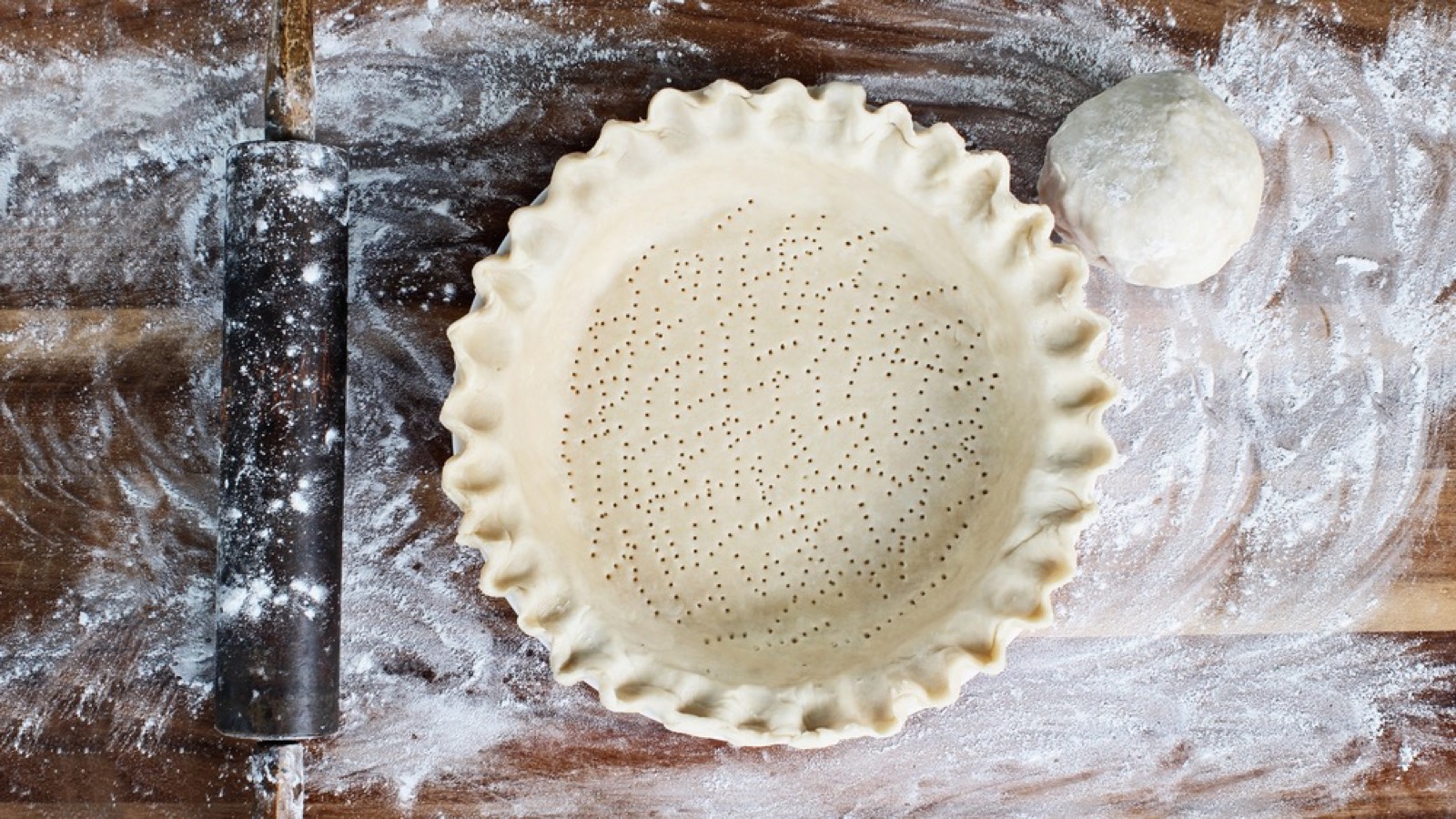
The ingredient that makes pie crust flakier and easier to work with is plain vodka. You simply replace part of the ice water in your pie dough with cold vodka. The dough comes together more easily, rolls out without cracking and bakes up tender and flaky.
The trick was made famous by Cook’s Illustrated. Its Foolproof Pie Dough, developed by J. Kenji López-Alt, calls for 1/4 cup of cold vodka along with 1/4 cup of cold water for a double-crust pie. Food blogger Deb Perelman of Smitten Kitchen shared the recipe soon after it appeared in the magazine’s November 2007 issue, and home bakers have been passing it around ever since.
Why Vodka Makes a Flakier Crust
The science comes down to gluten, the stretchy network that forms when wheat flour mixes with water. A little gluten holds the dough together, but too much makes it tough. That is why old recipes warn you to add water sparingly and handle the dough as little as possible.
Vodka gets around the problem. America’s Test Kitchen explains that vodka is about 40 percent ethanol, which does not form gluten, so you can add more liquid without making the crust tough. That extra moisture makes the dough soft and easy to roll, while the crust still bakes up tender.
Scientific American breaks it down further. An 80-proof vodka is roughly 60 percent water and 40 percent alcohol, and the alcohol does not hydrate the wheat proteins the way water does. In other words, you get the moisture you need to bind the dough without as much of the gluten that turns crust chewy.
Will It Taste Like Alcohol?
This is the question everyone asks, and the answer is no. America’s Test Kitchen notes that the alcohol vaporizes in the oven, so the finished crust has no boozy flavor. What is left behind is just a buttery, flaky pastry.
That is also why plain, unflavored vodka is the best choice. It has a clean, neutral taste, so even before baking it does not add any unwanted flavor to the dough. Flavored vodkas, like citrus or vanilla, are best left in the bottle for this purpose.
The quick evaporation helps in another way, too. Tasting Table points out that because the alcohol leaves the dough so fast in the oven’s heat, the crust does not turn soggy from all that extra liquid. You get the easy rolling of a wetter dough with the crisp, flaky finish of a drier one.
How to Use Vodka in Your Pie Dough
The easiest way to try this is to take your favorite pie crust recipe and replace about half of the water with vodka. Scientific American describes swapping roughly 50 percent of the liquid for spirits, which is the same basic idea behind the Cook’s Illustrated recipe. If your recipe calls for 1/2 cup of ice water, use 1/4 cup water and 1/4 cup vodka.
Keep everything cold. Chill the vodka in the freezer or refrigerator before you start, use ice-cold water and make sure your butter is straight from the fridge. Cold fat is what creates flaky layers, and warm dough tends to turn greasy and dense.
Do not be alarmed if the dough feels a bit wetter than you are used to. That is normal with this method, and it is part of what makes the dough so easy to roll out. Wrap it in plastic, chill it for at least an hour, and it will firm up nicely.
Other Spirits From the Liquor Cabinet
Vodka is the classic choice, but it is not the only one. Tasting Table reports that Cook’s Illustrated also tested rum, whiskey and gin, and all of them produced flaky crusts without a lingering alcohol taste. The key is sticking with an 80-proof spirit.
Scientific American mentions apple brandy and bourbon as other options. Some bakers like the idea of a splash of bourbon in a pecan or pumpkin pie crust, or apple brandy for an apple pie. Since the alcohol bakes off, the difference in flavor is subtle, but it can be a fun way to match the crust to the filling.
If you do not keep liquor in the house, you can still make a great crust the old-fashioned way. Many grandmothers relied on very cold water, a light touch and a pastry blender, plus a few kitchen staples they always kept within arm’s reach. The vodka method simply makes the process more forgiving.
A Few Extra Tips for Holiday Pies
America’s Test Kitchen suggests baking pies on a preheated baking sheet to help crisp and brown the bottom crust. That extra heat from below helps prevent the dreaded soggy bottom, especially with wet fillings like pumpkin or sweet potato. The baking sheet also catches any drips before they hit the oven floor.
If your dough tears while you are rolling it out, do not start over. The Test Kitchen recommends moistening a scrap of dough and pressing it over the tear like a patch. Once the pie is filled and baked, nobody will ever know.
For double-crust pies, remember to cut vents in the top so steam can escape. A small biscuit cutter or the rim of a juice glass makes neat, decorative vent holes. These little touches help your homemade pie look as good as it tastes.
Your Flakiest Holiday Pie Yet
If pie crust has ever made you want to give up, the vodka trick is worth a try this Thanksgiving. Swap half the water for cold vodka, keep everything chilled and handle the dough gently. You will likely find it easier to roll and more tender and flaky once baked, with no hint of alcohol in the finished pie.
It is one of those clever kitchen tricks that once you learn it, you never forget. Have you ever tried vodka in your pie crust, or does your family swear by a different secret? Share your best pie tips in the comments.