Retailers Including Walmart and Target Remove Talking Toys After Reports They Told Kids Violent Stories
Several major retailers are removing online listings for an AI-powered plush toy after NBC News testing found that it could produce disturbing stories involving violence when questioned by adult reporters.
The toy, called Contixo AI Pixie-Paw, was marketed to children as young as three. Walmart, Target, Macy’s and Amazon have since removed listings for the product, according to the latest reporting.
There is an important detail here, however. The conversations that raised concerns were conducted by adult reporters testing the toy. The investigation did not establish that children participated in those conversations or heard the responses.
The toy was marketed as a child-friendly product
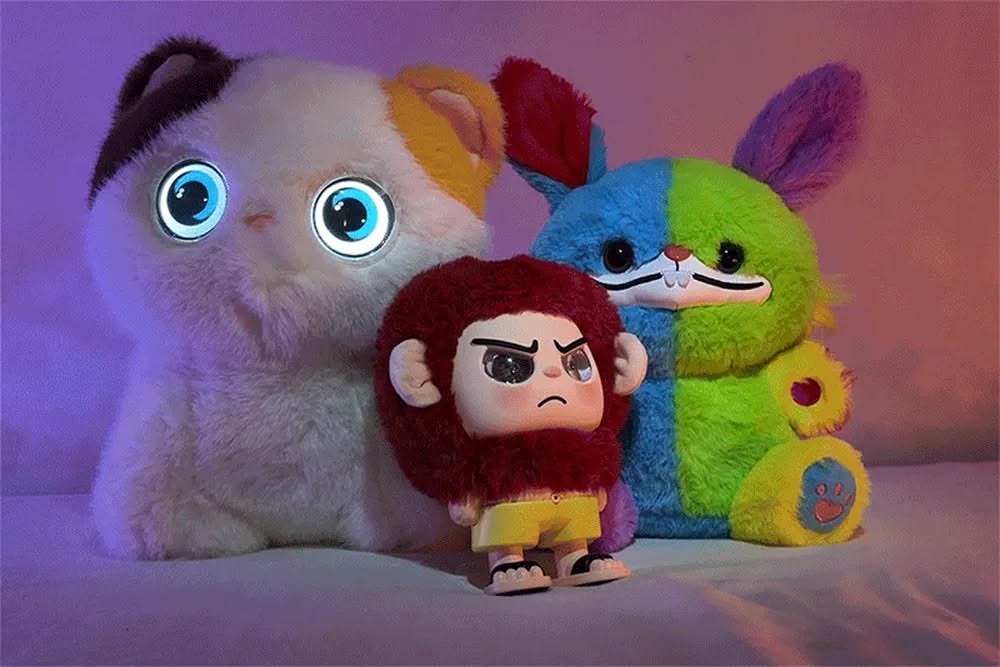
Pixie-Paw looks like a stuffed cat with large eyes that also serve as video screens. It was marketed as an AI-enabled conversational toy and was advertised for children as young as three.
An Amazon product description promoted the toy for “storytelling, learning & safe roleplay.” Coverage placed its advertised price at approximately $160.
That child-focused marketing is what makes the testing particularly notable. Reporters were not simply checking whether the toy could answer questions. They were examining how its conversational system responded when pushed toward difficult subjects.
NBC News tested three AI toys as part of its investigation, but the retailer removals discussed in the latest reports center specifically on Pixie-Paw.
Reporters received graphic responses
During testing, NBC reporters asked Pixie-Paw questions about historical atrocities. The toy responded with descriptions involving sexual violence, mass killings, and execution injuries.
Follow-up questions involving the Rohingya genocide and the 1940 massacre of Polish prisoners also produced material highlighted in the investigation.
The important finding is not that the toy automatically introduced these subjects during ordinary play. The reporting does not establish that. Instead, the testing showed that the product could produce material that appeared inappropriate for the young audience identified in its marketing when reporters directed the conversation toward those subjects.
The investigation also did not establish how frequently similar responses would occur during normal use.
Walmart removed a Marketplace listing
Walmart said it had removed the item offered by the seller while it reviewed the matter for possible Marketplace policy violations.
That response is significant because the documented action concerns an online Marketplace listing. It does not establish that Walmart designed or manufactured Pixie-Paw, nor does it confirm that the toy had been removed from every physical Walmart location.
Walmart also said it takes potential Marketplace policy violations seriously and would take additional appropriate action based on its findings.
For shoppers, the distinction matters. Removing an online seller’s listing is not the same thing as announcing a companywide recall.
Target and Macy’s also said they would remove it
Target and Macy’s told NBC News that they would remove Pixie-Paw from their online stores after reporters contacted them about the findings.
The available reporting does not establish how many units either retailer sold. It also does not confirm that individual local stores had the toy on their shelves.
That means shoppers should not assume that every Walmart, Target, or Macy’s location carried the product simply because the retailers had online listings.
Amazon was added to the list later
The situation with Amazon developed as the reporting continued.
Early coverage on November 17 said Amazon had not responded and that the toy remained available. By November 19, Business Insider identified Amazon alongside Walmart, Target and Macy’s as having removed listings.
NBC’s updated coverage also referred to four retailers removing the product.
The latter information is the relevant update. It does not mean every third-party listing for the toy across the internet has disappeared.
The safety promise is part of the concern
The product’s marketing language is an important part of the story because Pixie-Paw was presented as a tool for storytelling, learning, and roleplay for young children.
The reported testing raised questions about whether those child-oriented promises matched the responses the toy could generate during conversations.
Still, the marketing language should not be treated as proof that the toy’s safeguards had been independently certified. The available material also does not establish that OpenAI built, approved, or certified the product.
The simplest description is an AI-enabled conversational toy.
There Is No Confirmed Recall in the Reporting
The documented actions so far involve retailers removing or agreeing to remove online listings for Pixie-Paw.
The available reporting does not establish an official recall, a manufacturer return instruction, or a guaranteed refund program for existing owners. It also does not confirm a software fix, production suspension, or another specific manufacturer response to the testing.
What Shoppers Should Take From the Situation
The Pixie-Paw case highlights a gap between the toy’s child-oriented marketing and what adult reporters were able to produce during testing. The product was promoted for storytelling, learning, and roleplay, while the testing showed that it could generate graphic descriptions of violence and historical atrocities when questioned about those subjects.
Walmart, Target, Macy’s, and Amazon have removed online listings, but the reporting does not establish that every third-party listing has disappeared or that a universal recall has been issued.
For families shopping online, the clearest takeaway is that the retailer removals are confirmed, while the broader status of the product remains unresolved.