Power Outage, Card Glitch or Emergency: How Much Cash Should You Actually Have Within Reach?
A full bank account does not help much if the card reader suddenly stops working.
That is why emergency-preparedness guidance recommends keeping some physical cash available at home. But there is no magic number that works for every household. Instead, the best approach is to estimate what you would actually need for essential purchases during a short payment disruption, then add any transportation or evacuation costs that apply to your situation.
A joint financial-planning guide from the American Red Cross, the American Institute of CPAs, and the National Endowment for Financial Education uses at least three days of family needs as a starting point. FEMA also points to essentials such as food, fuel, and everyday necessities, while the FDIC cautions against keeping more cash at home than you need for immediate post-disaster expenses.
Here is how to turn that advice into a practical number.
Start With Three Days of Essential Purchases
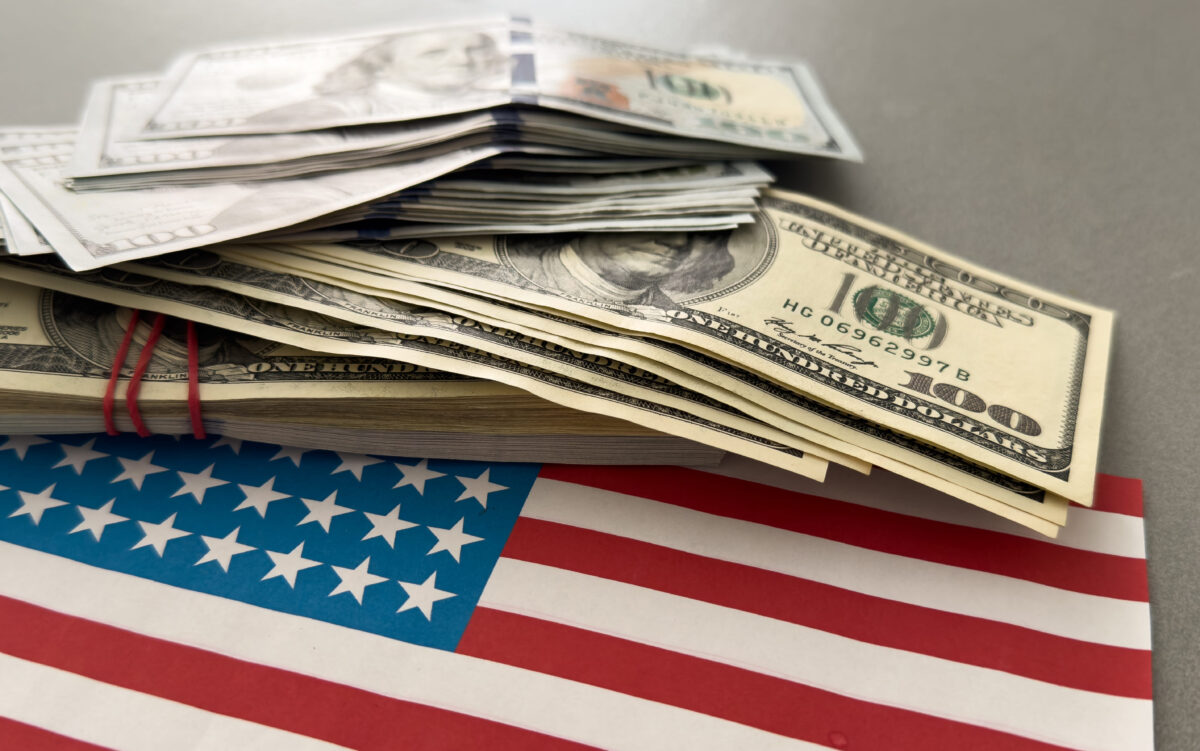
The simplest starting point is to estimate what your household would need to buy for three days if electronic payments were temporarily unavailable. Think about the essentials you would actually need rather than choosing an arbitrary amount such as $100 or $500.
For example, the three-day figure could include food, fuel, and everyday necessities. Three days is a planning baseline, not a guarantee that every emergency or payment disruption will be resolved within that time.
Add Transportation or Evacuation Costs
Your cash target may need to be higher if your emergency plan includes leaving home. FEMA’s preparedness guidance recommends considering expenses such as food, fuel, and a few hotel nights when evacuation is possible.
A household preparing only for a temporary card or ATM disruption may calculate a smaller reserve than one that expects to travel during an emergency. The important part is adding costs that actually apply to your plan rather than guessing at a universal amount.
Use Your Own Numbers to Calculate the Reserve
A simple example can show how the calculation works.
Suppose a household estimates $40 per day for essential purchases. Three days would equal $120. If that household also decides to set aside another $50 for transportation, the total reserve would be $170.
That $170 is only a hypothetical example. It is not an agency-recommended minimum. Your own household’s needs should determine the amount.
Keep Small Bills in the Mix
The total amount is only part of the preparation. The denominations you keep can matter too.
Ready.gov recommends small bills, while FEMA’s detailed guidance suggests keeping ones, fives, and tens, with a twenty as the largest bill. The idea is to make the cash easier to use when exact change may not be available.
The goal is a practical mix, not simply a stack of large notes.
Store the Money Securely and Keep It Accessible
Emergency cash needs to be protected without being placed somewhere you cannot reach when you need it.
The FDIC recommends keeping emergency cash where it can be accessed quickly during an evacuation. Its disaster guidance suggests using a waterproof bag inside a fire-resistant box or safe.
A safe-deposit box serves a different purpose. The FDIC identifies such boxes as suitable for certain documents that do not require frequent access, while also noting that their contents are not covered by FDIC deposit insurance.
Do Not Assume More Cash Means Better Preparation
Keeping a large amount of money at home is not automatically a better emergency plan.
The FDIC warns that cash stored at home can be stolen or destroyed and recommends keeping no more than what is necessary for immediate post-disaster needs. Physical cash kept in a home safe or safe-deposit box is also not FDIC-insured.
Any insurance coverage for cash depends on the applicable policy, so households should check their own coverage rather than assume it will replace lost currency.
Keep Physical Cash Separate From Emergency Savings
Physical cash and emergency savings have different jobs.
Cash on hand can help bridge a temporary problem when card payments, ATMs, or other electronic payment methods are unavailable. Emergency savings, meanwhile, provide a larger financial cushion for unexpected expenses and broader financial disruptions.
Preparedness guidance recommends having both rather than turning physical cash into a replacement for savings. There is no need to withdraw months of living expenses and keep them in the house simply because an emergency fund is important.
Build the Reserve Gradually
If the amount you calculate feels difficult to set aside immediately, the preparedness guidance also allows for a gradual approach.
FEMA’s financial-emergency material identifies saving $5 or $10 a week as one possible place to begin. The FDIC likewise encourages realistic savings goals and notes that even a small emergency fund can help.
The same thinking can apply to building a physical cash reserve. The goal is to work toward the amount that fits your household plan instead of treating preparedness as an all-or-nothing task.
The best answer to the cash question is therefore not a round number. Start with three days of essential purchases, add transportation or evacuation costs when they apply, choose useful denominations, and keep the reserve secure but accessible. The purpose is to create a practical bridge through a payment disruption, not to replace your bank account with a cash stockpile.