7 Hawaii Foods Mainlanders Find Confusing
Hawaii’s food is unlike anything else in the United States. The islands’ cooking blends Native Hawaiian traditions with influences from Japan, China, the Philippines, Korea, Portugal and the mainland, creating a style often called “local food.” For visitors from the mainland, many of these dishes can be surprising at first bite.
Some combine ingredients in unexpected ways, while others use foods that mainlanders rarely see at home. But for people who grew up in Hawaii, these dishes are pure comfort. Here are seven Hawaii foods that mainlanders often find confusing.
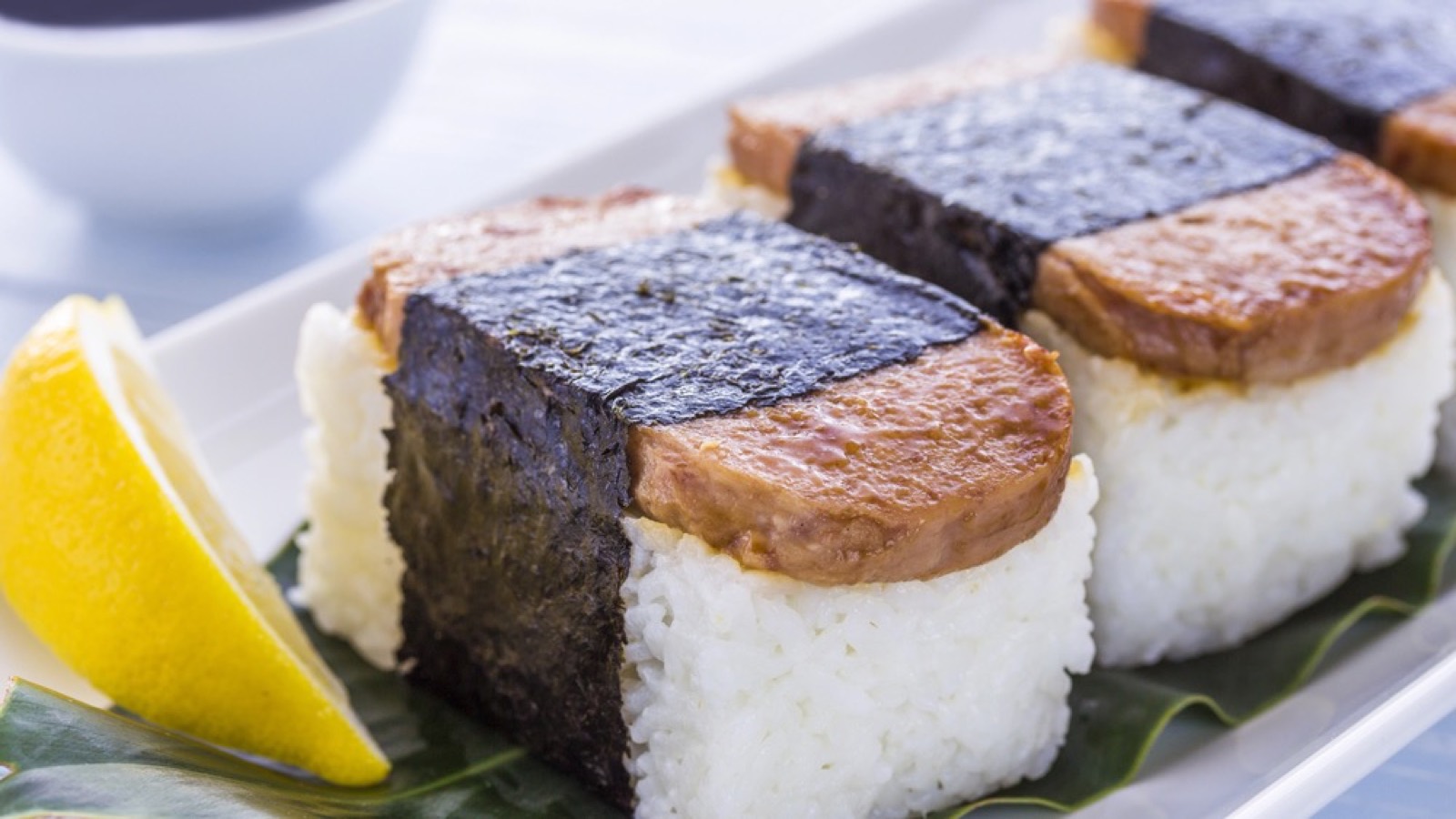
1. Spam Musubi
Spam musubi might be the most famous example. It is a slice of grilled Spam placed on a block of rice and wrapped with a strip of nori, the seaweed used in sushi. It is sold everywhere in Hawaii, from convenience stores to family gatherings.
Mainlanders are often surprised by how popular Spam is in Hawaii. The canned meat became common in the islands during and after World War II, when it was widely available and easy to store. Today, Hawaii is known for loving Spam, and musubi is a go-to snack for school lunches, road trips and beach days.
2. Loco Moco
Loco moco is a hearty dish that starts with a bed of white rice, topped with a hamburger patty, a fried egg and plenty of brown gravy. It is often said to have originated in Hilo on the Big Island in the mid-1900s.
Mainlanders may find it confusing because it combines elements of a diner breakfast and a dinner plate. But for many locals, loco moco is the ultimate comfort food, served at any time of day.
3. Poi
Poi is one of the oldest and most important foods in Native Hawaiian culture. It is made by cooking and mashing taro root, then mixing it with water to create a smooth, purple paste. Poi can be eaten fresh or allowed to ferment, which gives it a sour flavor.
Many visitors are unsure what to make of poi’s texture and mild taste. Some expect it to be sweet like pudding. But poi is often eaten alongside savory dishes, such as kalua pork or lomi salmon, and holds deep cultural meaning in Hawaii.
4. Shave Ice
Shave ice might sound like a snow cone, but locals will quickly tell you it is different. Shave ice is made by shaving a block of ice into fine, fluffy flakes, which soak up flavored syrups more evenly than crushed ice.
What confuses many mainlanders are the toppings. Shave ice can come with a scoop of ice cream at the bottom, sweet azuki beans, mochi balls or a drizzle of sweetened condensed milk on top. The flavors are often tropical, such as lilikoi, guava and coconut.
5. Saimin
Saimin is a noodle soup that reflects Hawaii’s mix of cultures. It features soft wheat noodles in a clear broth, often topped with green onions, kamaboko (fish cake), char siu pork, eggs or Spam.
Mainlanders sometimes mistake saimin for ramen. While it shares similarities, saimin has its own history in Hawaii’s plantation communities, where workers from different backgrounds combined their cooking traditions. Saimin is so popular that it has even appeared on menus at local fast-food restaurants.
6. Malasadas
Malasadas are Portuguese doughnuts brought to Hawaii by immigrants from Madeira and the Azores in the late 1800s. They are fried balls of dough rolled in sugar, with no hole in the center.
Mainlanders who expect a typical doughnut may be surprised by malasadas’ light, airy texture. Many are filled with custard, haupia (coconut pudding) or tropical fruit fillings. They are especially popular on Malasada Day, which falls on Fat Tuesday.
7. Li Hing Mui
Li hing mui is salted, dried plum, originally from China. In Hawaii, the powder made from it is sprinkled on everything from fresh fruit to candy to shave ice and even margaritas.
The flavor is a mix of sweet, salty and sour, which can catch mainlanders off guard. Many visitors are confused when they see bright red powder on pineapple or gummy candies. For locals, though, li hing mui is a nostalgic snack flavor with deep roots in island life.
Why Hawaii’s Food Is So Unique
Hawaii’s food reflects the islands’ history. Native Hawaiian staples like taro and fish formed the foundation. Later, plantation workers from Asia and Europe brought their own foods and cooking methods. Over time, these traditions blended into a unique local cuisine.
That mix explains why a single plate lunch might include rice, macaroni salad, teriyaki chicken and kalua pork. It is a combination that might seem unusual to mainlanders but makes perfect sense in Hawaii.
The Famous Plate Lunch
No list of confusing Hawaii foods is complete without mentioning the plate lunch. It usually includes two scoops of white rice, a scoop of macaroni salad and a main dish such as chicken katsu, kalbi ribs or mahi-mahi. Mainlanders often wonder why rice and macaroni salad appear on the same plate, but locals see it as the perfect combination.
Local Etiquette Around Island Food
Food in Hawaii is closely tied to sharing and hospitality. At family parties, beach gatherings and potlucks, it is common for everyone to bring a dish, and guests are often encouraged to take a plate home afterward. This practice, sometimes called taking a “plate,” is a big part of island culture.
Visitors are often surprised at how much food appears at local gatherings and how generously it is shared. Trying dishes with an open mind and asking about their history is usually appreciated. Many locals enjoy explaining what poi pairs well with or why a certain shave ice stand is the best on the island, and those conversations can be as memorable as the food itself.
Bringing Island Flavors Home
Many visitors leave Hawaii with a new craving for local food. Some pack bags of li hing mui powder or Spam musubi molds in their suitcases, while others hunt for Hawaiian restaurants back on the mainland. Local food has spread well beyond the islands in recent years, but many say it never tastes quite the same as it does by the ocean.
The Bottom Line
Spam musubi, loco moco, poi, shave ice, saimin, malasadas and li hing mui are just a few of the Hawaii foods that surprise mainland visitors. Each reflects the islands’ rich history and blend of cultures.
Much like the states with the most unique personalities, Hawaii’s food scene is one of a kind. Once mainlanders give these dishes a try, many find themselves craving them long after they head home.