Why Diner Pancakes Taste Better Than the Ones You Make at Home
There is something special about ordering pancakes at a diner. They arrive warm, fluffy, golden around the edges, and stacked so neatly that you almost want to take a picture before picking up your fork.
Then you try making pancakes at home. You use flour, eggs, milk, sugar, and baking powder, just like the recipes suggest. Yet somehow, the results are different. They might turn out flat, slightly chewy, or unevenly browned. So, what are diners doing differently?
The surprising answer is that most diners are not using mysterious ingredients or complicated recipes. The difference often comes down to a few simple techniques, the right cooking equipment, and experience with a recipe that has been tested repeatedly.
From using buttermilk to knowing exactly when to flip the batter, here are the little details that can make your homemade pancakes taste much closer to the ones you order at your favorite diner.
Buttermilk Gives Pancakes That Signature Fluffy Texture
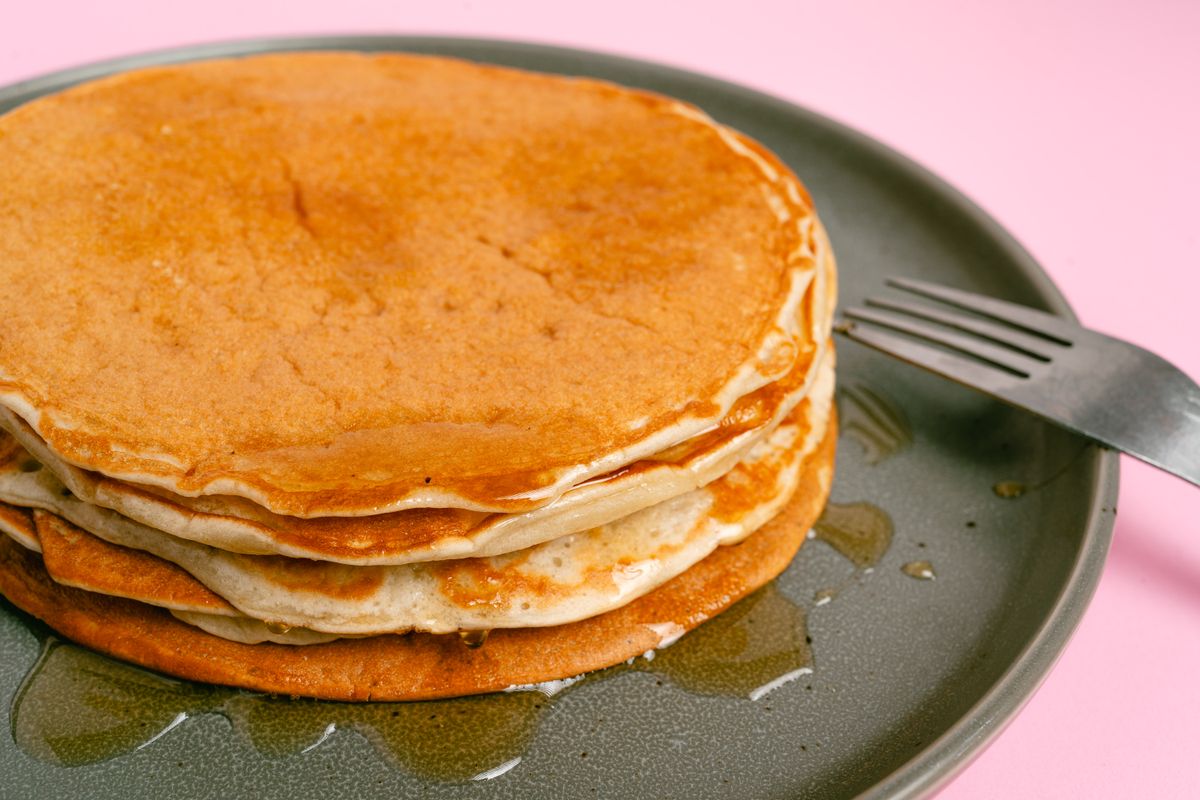
One of the biggest differences between diner-style pancakes and many homemade versions is buttermilk.
Regular milk works perfectly well in pancake recipes, but buttermilk brings something extra. It has a tangy flavor that balances the batter’s buttery sweetness, and its acidity reacts with baking soda to produce carbon dioxide bubbles. Those bubbles help create a lighter texture.
Chef Suzanne Vizethann of Buttermilk Kitchen has explained that buttermilk produces more flavorful, tender, and fluffy pancakes than plain milk. Food experts featured by Mashed also highlight the buttermilk-and-baking-soda combination as an important part of diner-style pancakes. Some recipes also include baking powder for extra lift as the pancakes cook.
If your homemade pancakes regularly turn out dense, replacing regular milk with buttermilk is one change worth trying.
Overmixing Is Ruining Your Pancake Batter
This is one of the easiest mistakes to make in a home kitchen. When preparing pancake batter, many people keep whisking until every little lump disappears. It seems like the right thing to do, but it can actually work against you.
Flour contains proteins that form gluten when mixed with liquid. The more you mix, the more developed that gluten network becomes. This can make pancakes tougher and less fluffy.
An experiment discussed by Scientific American explains how overmixing creates a tighter gluten network, leaving less room for the air pockets that help pancakes rise. The better approach is to mix gently.
Use a spatula or wooden spoon to fold the wet and dry ingredients together until just combined. A few small lumps are perfectly fine.
As the team at Phoenicia Diner explains in this report, gentle folding is preferable to vigorously whisking the batter.
The next time you make pancakes, resist the temptation to keep stirring. Your batter does not need to look perfectly smooth.
Letting the Batter Rest Makes a Difference
Another small step that home cooks often skip is resting the batter. It is tempting to pour the mixture straight into the pan because everyone is hungry and breakfast is already taking longer than expected. However, letting pancake batter sit for a bit can improve the final result.
According to Good Housekeeping, letting batter rest for about 10 to 20 minutes gives the flour time to absorb the liquid and the gluten time to relax. It also gives the leavening ingredients time to begin working.
Other cooking experts recommend resting batter for approximately 10 to 30 minutes, depending on the recipe.
You do not need special equipment or an extra ingredient. Prepare the batter, leave it alone for a short while, and use that time to heat your griddle or prepare your toppings. This small adjustment can make your breakfast routine more rewarding.
Diners Have Better Equipment for Cooking Pancakes
Have you noticed how diner pancakes often have beautifully even golden surfaces? Part of that consistency comes from the equipment.
Many restaurants use large, flat-top commercial griddles. They provide plenty of cooking space and let cooks prepare several pancakes at once while maintaining more consistent heat.
A regular home frying pan can work, but it may not distribute heat as evenly across its surface.
A properly heated griddle also gives pancakes room to spread without touching one another. This makes it easier to achieve consistent shapes and browning.
According to The Takeout, commercial flat-top griddles offer temperature control and an even cooking surface that can be difficult to replicate with an ordinary home skillet.
The good news is that you do not need restaurant equipment to improve your pancakes. An electric griddle or a well-maintained cast-iron pan can also work. The key is a cooking surface that heats evenly.
Consistent Heat Helps Create Golden Edges
A pancake can have the right ingredients and still turn out disappointing if the cooking temperature is wrong.
If your pan is too cool, the batter may take too long to cook and turn out pale. If the heat is too high, the outside can brown before the inside fully cooks. Getting the temperature right is part of the process.
Several cooking guides recommend a griddle temperature around 350 to 375 degrees Fahrenheit for pancakes, although the ideal setting can vary depending on the recipe and equipment.
The goal is steady, even heat rather than constantly adjusting the temperature while cooking.
Give your griddle time to preheat before adding the batter. You can also test a small pancake first to see how quickly it browns. Once you find a setting that works, try to maintain it throughout the batch.
You Might Be Flipping Your Pancakes Too Early
Experienced diner cooks seem to know exactly when to flip a pancake for a reason. It is not simply about waiting until bubbles appear.
A common mistake is turning pancakes as soon as the first bubbles form on the surface. Sometimes the edges are still wet, meaning the pancake hasn’t set properly.
A cooking guide from Kitchen Tools Lab recommends looking for bubbles that pop and leave open holes, along with edges that look dry and set.
These are better signs that the first side is ready. Once you flip the pancake, avoid pressing it down with your spatula. Let it finish cooking naturally.
Try to flip only once rather than repeatedly turning it over. This helps you avoid flattening the pancake while it cooks.
The Right Amount of Butter and Oil Helps
That delicious golden surface is not just about the batter. How you prepare the cooking surface also matters. A lightly greased griddle helps prevent sticking and allows the pancakes to cook evenly.
Some cooks prefer oil for the cooking surface and add butter after the pancakes are finished. Others use clarified butter or a combination of both.
Chef Suzanne Vizethann, as discussed in Chowhound’s pancake guide, uses oil or clarified butter to prepare her griddle. The trick is to use just enough fat so the pancakes don’t end up greasy.
Apply a thin coating to the cooking surface, pour in the batter, and let the pancake develop its golden edges. Add butter when serving for that familiar diner-style finish.
Diners Have Had Plenty of Practice With Their Recipes
Restaurants have another advantage over most home cooks: repetition. A diner may prepare pancakes every morning using the same recipe, equipment, and cooking process. Over time, cooks learn how the batter behaves, how much to pour, and when to flip each pancake. They also work with recipes that have been adjusted and tested repeatedly.
An expert interviewed by The Takeout explains that larger batches can be more forgiving and that established restaurant recipes benefit from carefully tested ingredient ratios.
At home, you might make pancakes once every few weeks and use a slightly different recipe each time. That makes consistency harder to achieve.
You can borrow the diner’s approach by choosing one reliable recipe, measuring your ingredients carefully, and repeating the same cooking method until you understand how it works.
Your Homemade Pancakes Can Be Just as Good
The secret to better diner-style pancakes is not necessarily an expensive ingredient or a professional kitchen.
It is the little things: buttermilk, gentle mixing, resting the batter, consistent heat, and knowing when to flip.
Start with one or two changes rather than trying to overhaul your entire recipe. Leave a few lumps in the batter, let it rest, and pay attention to your griddle temperature.
You might discover that the pancakes you have been craving from your favorite diner were never that difficult to make at home.
Sometimes, the difference between an ordinary pancake and a really good one is simply knowing when to stop mixing.