A 29-Foot Statue of Christ and a 30-Foot Border Wall: The Mount Cristo Rey Fight That Put Faith, Land and Government Power on a Collision Course
High above the desert where New Mexico, Texas and Mexico meet, a century-old symbol of faith now stands at the center of one of America’s most unusual border disputes. A Catholic shrine built to represent hope and unity is facing a legal battle over whether federal border infrastructure can reshape the land beneath it.
For nearly 90 years, Mount Cristo Rey has watched the changing story of America’s southern border.
The limestone statue of Christ the King has stood on the mountain overlooking the El Paso region since 1939, welcoming pilgrims who climb the rocky path seeking prayer, reflection and connection.
Now, beneath that familiar silhouette, another structure is taking shape: a 30-foot steel border barrier.
The contrast has transformed a small piece of New Mexico desert into a national debate over religious freedom, government authority, immigration policy and the meaning of sacred land.
The dispute is not about removing the statue itself. It is about 14.259 acres at the base of Mount Cristo Rey that the federal government wants for border wall infrastructure, a move the Diocese of Las Cruces argues would fundamentally change the character of one of its most important religious sites.
Mount Cristo Rey Was Never Just Another Piece of Property
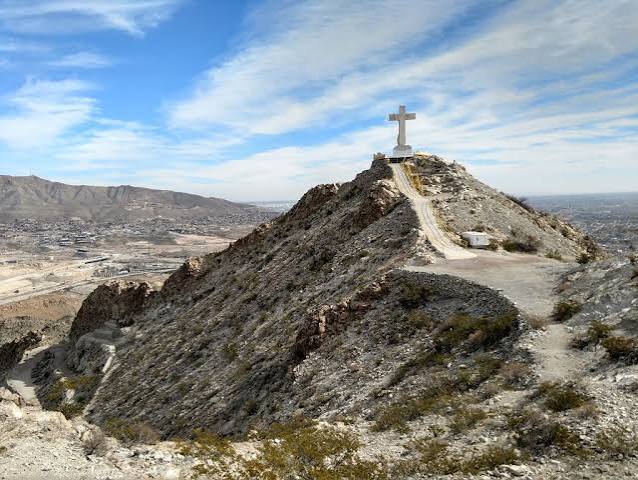
Mount Cristo Rey is located in Sunland Park, New Mexico, near the meeting point of New Mexico, Texas, and Chihuahua, Mexico.
For many visitors, the mountain represents much more than a geographic location.
The 29-foot limestone statue of Christ the King was created by Catalan sculptor Urbici Soler and completed in the late 1930s after local Catholic communities worked to establish a permanent religious monument overlooking the border region.
Over the decades, the site became a destination for thousands of pilgrims.
Many visitors make the climb during important Catholic celebrations, including Good Friday and the Feast of Christ the King. Some come carrying personal prayers. Others return because their families have visited the mountain for generations.
The mountain has become part of the region’s cultural identity.
That history is central to why the current dispute has become so emotionally charged.
The federal government sees strategically important border property.
The Catholic Diocese of Las Cruces sees a sacred landscape.
The 14 Acres at the Center of a Much Bigger Debate
At first glance, the dispute appears to involve a relatively small amount of land.
The federal government is seeking:
- 14.259 acres from the Diocese of Las Cruces
- Approximately 1.32 miles of border barrier construction
- A wall system reaching around 30 feet high
- Additional infrastructure including roads, lighting, cameras and security equipment
The government has argued that the land is needed to support border enforcement operations.
Federal officials say the project is part of a broader effort to strengthen security along the U.S.-Mexico border.
But church leaders argue that the significance of Mount Cristo Rey cannot be measured only in acreage.
A pilgrimage site is not simply the ground where a statue stands.
It is the journey to reach that place, the surroundings that create the experience, and the spiritual meaning attached to the entire area.
The diocese argues that dividing the mountain into “affected” and “unaffected” sections ignores how religious communities understand sacred spaces.
A Border Security Project Meets a Religious Sanctuary
The legal battle represents two very different interpretations of the same landscape.
For federal officials, Mount Cristo Rey sits near an international border where the government has a responsibility to control crossings and protect national security.
For Catholic leaders, the mountain represents a place where people have gathered for prayer and worship for generations.
The disagreement is not simply about whether the government can build border infrastructure.
The deeper question is whether government authority can move forward without changing the meaning of a place that a community considers sacred.
The Diocese of Las Cruces has challenged the project under religious freedom protections, arguing that the construction would place a significant burden on religious practice.
Church attorneys have pointed to the First Amendment’s protection of religious exercise and the Religious Freedom Restoration Act, which requires the federal government to justify actions that substantially interfere with religious activity.
The People Who Climb the Mountain See More Than a Statue
Behind the legal filings are thousands of people who view Mount Cristo Rey as part of their personal history.
For pilgrims, the climb is often an act of devotion.
Families have walked the mountain together for decades. Some visitors climb in memory of loved ones. Others make the journey during religious celebrations as a personal sacrifice or expression of gratitude.
For these visitors, the experience begins long before reaching the statue.
The path itself matters.
The view matters.
The feeling of standing above the borderland matters.
That is why many supporters of protecting the site argue that the impact of a border wall cannot be measured only by whether visitors can physically reach the statue.
They believe the surrounding environment is part of the religious experience.
The Government Says Access Will Remain Open
Federal officials have pushed back against concerns that the project will eliminate access to the shrine.
Customs and Border Protection has said that the barrier will be located near the southern base of the mountain while the main pilgrimage route and statue remain accessible from the United States side.
The agency has argued that the project does not target the religious monument and that visitors will continue to be able to reach the summit.
This distinction has become one of the central disagreements in the case.
The government focuses on physical access.
The diocese focuses on the broader impact on the spiritual character of the site.
Both sides are describing different forms of harm.
A History of Border Projects Colliding With Sacred Places
The Mount Cristo Rey dispute is not the first time border wall construction has created conflict with religious or historic locations.
A similar fight occurred over La Lomita Chapel in Mission, Texas, a historic Catholic site near the Rio Grande.
In that case, church leaders argued that border construction threatened access to the chapel and its historic importance. The dispute eventually led to congressional action protecting the site.
Supporters of protecting Mount Cristo Rey say the current battle follows a similar pattern.
They argue that border security and preservation do not have to be competing goals.
The challenge is finding a way to protect both.
The Legal Fight Could Shape Future Eminent Domain Cases

The Mount Cristo Rey lawsuit could have consequences beyond one mountain.
At the center of the case is a complicated legal question:
When the federal government uses eminent domain for a public project, how much protection do religious organizations receive?
The government argues that it has authority to acquire land needed for border infrastructure and that property owners are entitled to compensation.
The diocese argues that compensation alone does not address the religious impact of taking control of land connected to worship.
The court’s decision could influence future disputes involving churches, historic properties and government projects.
Congress Has Entered the Fight Over Mount Cristo Rey
The dispute has also moved into Washington.
Representative Veronica Escobar introduced the Mount Cristo Rey Protection Act, legislation designed to prevent federal funding from being used for the project near the shrine.
The bill reflects a broader debate over whether Congress should protect culturally significant locations from federal construction projects.
Supporters say Mount Cristo Rey represents a unique religious and historical landmark.
Opponents argue that border security projects require flexibility and that individual property disputes should not block federal infrastructure decisions.
A Mountain Between Two Visions of America
The future of Mount Cristo Rey now depends on decisions in court and Congress.
But the deeper conflict is already clear.
One side sees a necessary border security project built on privately owned land.
The other sees a sacred place where government action could alter a tradition that has lasted nearly a century.
The mountain remains where it has always been, overlooking communities on both sides of the border.
But the debate surrounding it has become a reflection of a much larger American question:
How does a country protect its borders while preserving the places, traditions and beliefs that give communities their identity?
For now, the statue of Christ the King continues to stand above the desert, watching another chapter unfold in the long and complicated story of the American border.