Amazon Warns NYC Shoppers of $5 Delivery Fee as Battle Over Worker Protection Bill Heats Up
Imagine opening Amazon to order a phone charger, a kitchen gadget, or a last-minute birthday gift. Instead of jumping straight into shopping, you’re greeted with a warning about a possible $5 increase in delivery costs.
That is exactly the kind of message some New York City shoppers encountered on November 19, 2026.
Amazon has taken its fight against a proposed worker protection law directly to customers, warning that the legislation could make deliveries more expensive and threaten jobs.
But here’s where things get interesting. The proposed law doesn’t actually require customers to pay an additional $5. That number comes from an economic projection connected to an advocacy campaign largely funded by Amazon.
Now, lawmakers, delivery workers, and one of the world’s biggest online retailers are caught in a heated debate over who should be responsible for the people delivering packages.
Why Amazon Is Warning Customers About a $5 Delivery Increase
Amazon’s warning appeared in its shopping app and on its website, telling New York City customers that a proposed law could add up to $5 per order.
The message also encouraged shoppers to contact their City Council representatives and oppose the legislation.
According to CNBC’s November 19 reporting, some customers encountered pop-up notices when opening Amazon’s app or website. The company also displayed banners on its shopping homepage.
Amazon says the warning is about transparency.
The company argues that the proposed legislation could disrupt its delivery network, increase operating expenses, and ultimately leave customers paying more.
However, there is an important distinction between a company predicting higher prices and a law requiring those prices.
The legislation contains no mandatory $5 delivery surcharge.
Amazon could potentially face additional operating expenses if the proposal becomes law, but whether those expenses would translate into a $5 increase remains uncertain.
What Is NYC’s Delivery Protection Act?
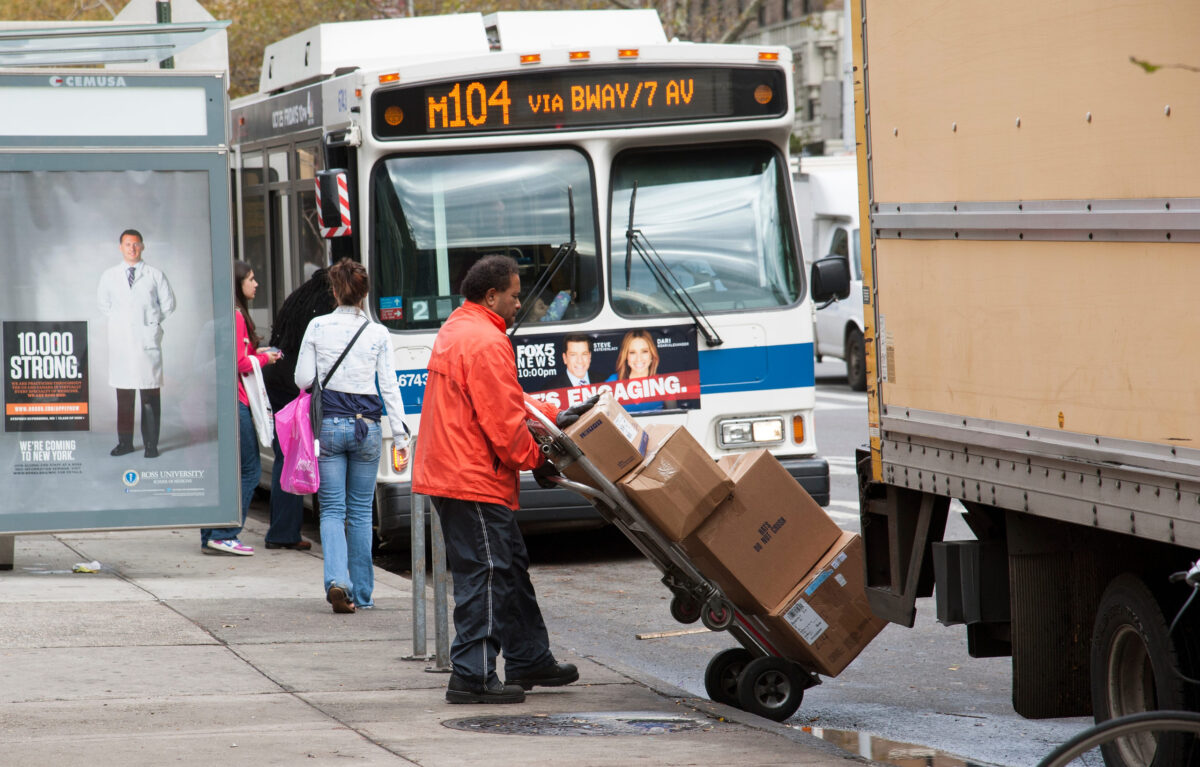
At the center of the controversy is the Delivery Protection Act, formerly known as Intro 518.
Introduced on February 12, 2026, by Council Member Tiffany Cabán, the proposal aims to change how major delivery companies manage workers and warehouses.
Currently, Amazon relies heavily on delivery service partners, commonly called DSPs.
These are separate businesses that hire drivers, manage payroll, and run delivery teams that carry Amazon packages.
You’ve probably seen their drivers wearing Amazon uniforms and driving Amazon-branded vans.
However, many of those workers are technically employed by another company.
The proposed legislation would generally require operators of covered last-mile delivery facilities to directly employ workers performing core delivery and warehouse services.
It also includes worker retention requirements, safety training, licensing rules, and protections against retaliation.
Supporters believe these changes would make large companies more accountable for working conditions.
Amazon argues that the restrictions could threaten the independent delivery businesses that currently employ thousands of workers.
Where Did the $5 Delivery Warning Come From?
Here’s the part that deserves closer attention.
The advertised $5 figure is connected to an economic impact assessment prepared by consulting firm AKRF in June 2026.
The analysis was commissioned by the Five Borough Jobs Campaign, an organization opposing the proposed legislation.
According to a July 23 investigation by New York Focus, Amazon contributed approximately $5 million to the campaign between February and mid-May 2026.
The campaign reportedly paid AKRF $52,500 for its assessment.
The analysis projected that changes to delivery operations could increase expenses, potentially costing households hundreds of dollars annually under certain scenarios.
Some reporting attributed an upper-end estimate of $5.20 per package to the assessment.
However, the complete underlying methodology has not been independently verified in the supplied reporting.
That means shoppers should treat the advertised figure as a projection, not a guaranteed increase.
It is also worth remembering that an order and a package aren’t necessarily the same thing.
One shopping order might contain several packages, so comparisons between per-package and per-order estimates matter.
Amazon Has Spent Millions Fighting the Proposal
The opposition campaign extends far beyond shopping notifications.
New York Focus reported that Amazon contributed just over $5 million to the Five Borough Jobs Campaign earlier in 2026.
By November 20, Gothamist reported that the campaign’s overall opposition spending had exceeded $8 million, citing lobbying data.
The effort has included advertising, lobbying, and public messaging focused on potential consequences for consumers and small delivery businesses.
Amazon-backed coalitions have also raised the possibility of legal action.
In a November 16 letter, attorney Derek Sells argued that the proposed legislation conflicted with existing federal and state law.
Meanwhile, Amazon has warned that it could consider moving operations outside New York City if the legislation passes.
That’s a significant warning, but it isn’t an announcement of confirmed warehouse closures.
No finalized relocation plan has been established.
Delivery Workers Have Their Own Concerns
While Amazon emphasizes potential job losses and higher costs, some delivery workers say the existing system already creates serious problems.
One worker identified in reporting as Luc Rene described concerns about demanding package assignments and insufficient workload adjustments during extreme weather.
Amazon has said it adjusts routes to account for weather conditions.
The disagreement illustrates a larger question: Who should be held responsible when delivery expectations become difficult to manage?
Workers may receive their paychecks from individual delivery contractors, while Amazon helps determine how its packages move through the network.
Supporters of the Delivery Protection Act argue that this arrangement can complicate accountability.
Opponents counter that forcing changes to the contractor model could eliminate opportunities for small delivery businesses and their employees.
Both concerns matter, especially when thousands of livelihoods could be affected.
City Leaders Say Workers and Jobs Must Be Protected
The legislation has attracted support from more than 30 City Council members.
Council Speaker Julie Menin has emphasized the need to protect delivery workers without sacrificing employment opportunities.
In comments published by City & State on November 16, Menin said she was determined to pass legislation protecting workers while keeping jobs in New York City.
Discussions have also explored possible compromises.
According to Bloomberg’s November 20 reporting, one option under consideration would allow companies to use genuinely independent delivery operators, provided those businesses control their own operations.
That could create a different arrangement from Amazon’s existing delivery partner model.
However, those discussions have not yet produced an officially adopted amendment.
As of November 21, the bill remained pending in committee, with no confirmed final vote or enactment.
What Should Amazon Customers Do Now?
For New Yorkers who regularly shop online, there’s no reason to assume their next Amazon delivery will automatically cost an additional $5.
The proposed legislation has not become law, and no mandatory customer fee has been established.
Customers should pay attention to the delivery charges shown before placing an order rather than treating political campaign warnings as final pricing announcements.
It’s also worth watching whether lawmakers revise the contractor provisions before any vote.
Those decisions could affect delivery workers, small businesses, and shoppers alike.
For now, this fight is about much more than a possible delivery fee.
It’s about whether companies should take greater responsibility for the workers behind their services, how that responsibility should be enforced, and who might ultimately pay for the changes.
And until lawmakers reach a final decision, the $5 warning remains a prediction, not a new delivery charge.