Cardi B Says Karmelo Anthony’s 35-Year Sentence Was “Excessive” as Case Sparks Bitter Debate Over Race and Justice.
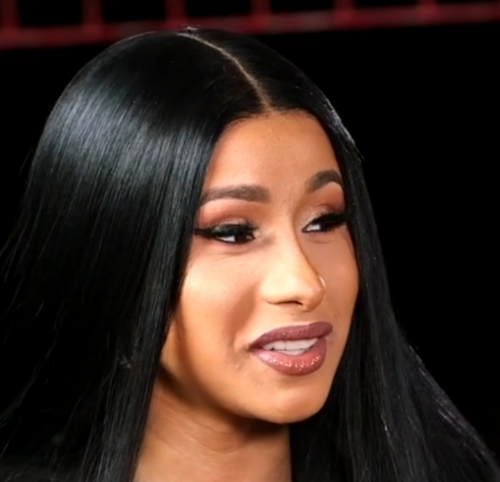
Cardi B has stepped into one of the most emotionally charged criminal cases in recent memory, and her comments are now intensifying a national argument about punishment, race, youth, and fairness in the American justice system.
The rapper reacted after Karmelo Anthony was convicted of murder and sentenced to 35 years in prison in the fatal stabbing of 17-year-old Austin Metcalf at a Texas high school track meet. Anthony, who was also 17 at the time of the incident and is now 19, argued self-defense during the trial, but the jury rejected that claim and returned a guilty verdict.
For many watching the case unfold, the outcome already carried emotional weight. But Cardi B’s reaction added a new layer of cultural tension, pushing the story beyond the courtroom and into a broader public debate.
Cardi B did not soften her words after the verdict. She called the decision “disgusting” in a post online and later expanded her thoughts during an X Spaces discussion, where she described the sentence as excessive and questioned whether the outcome would have been the same under different racial circumstances.
Her comments immediately sparked divided reactions across social media, where the case has already been widely discussed and emotionally debated.
Cardi emphasized that she understands the pain on both sides. She spoke about the grief of Austin Metcalf’s family, who lost a teenager in a sudden and violent incident that changed their lives forever. At the same time, she also expressed empathy for Anthony’s family, saying they are watching their child face a system that can deliver decades behind bars for a single moment of conflict.
That dual perspective became the foundation of her argument. Cardi suggested that the sentence did not reflect what she believed was the lack of clear intent to commit murder, pointing to Anthony’s emotional reaction in court as evidence of panic rather than planning.
She also questioned why the jury did not consider a lesser charge, such as manslaughter, arguing that the final outcome felt too severe given the circumstances described during the trial.
However, her most controversial comments focused on race.
Cardi B said she believes the case would have been handled differently if the racial roles were reversed. She did not present this as a legal conclusion but as her personal interpretation of how similar cases are perceived in the United States. In her words, she suggested that race may have influenced how the situation escalated, how it was prosecuted, and how the final sentence was reached.
She went further, saying the case has changed how she thinks about protecting her own children. Cardi said she now feels compelled to warn her sons to avoid confrontations entirely, adding that she would tell them to walk away from arguments with white boys rather than risk escalation that could lead to legal consequences.
That statement has become one of the most debated parts of her reaction, with critics and supporters interpreting it in very different ways.
Critics argue that Cardi’s comments overshadow the victim in the case. They say the focus should remain on Austin Metcalf, a teenager whose life ended in a violent encounter, and on the jury that reviewed evidence before reaching a verdict. To them, the 35-year sentence reflects accountability and the seriousness of the crime.
Others say the conversation cannot ignore broader questions about the justice system. Supporters of Cardi B’s perspective argue that cases involving young defendants often raise complex issues about intent, fear, escalation, and how juries interpret self-defense claims. They also point to ongoing national discussions about racial disparities in sentencing and courtroom outcomes.
The jury composition and the relatively short deliberation time have also been mentioned in public debate, though court proceedings and evidence presented remain central to the legal outcome.
What makes this case especially volatile is that it sits at the intersection of several deeply sensitive issues. It involves two families dealing with irreversible loss on different sides of a courtroom. It involves a teenage defendant facing a long prison sentence. And it involves a public figure using her platform to raise questions that many people are already debating privately.
For Austin Metcalf’s family, the verdict represents closure in a case defined by tragedy. For Karmelo Anthony’s family, it marks the beginning of a long legal and emotional road as they navigate the consequences of a conviction that could keep their son incarcerated for decades.
Cardi B’s reaction has not changed the legal outcome, but it has clearly changed the conversation surrounding it. Her words have amplified an already polarizing case, forcing people to confront uncomfortable questions about fairness, perception, and justice.
As the debate continues, the case remains a stark reminder of how quickly a single moment can alter multiple lives forever, and how differently that moment can be interpreted depending on where someone stands in the broader national conversation.