Colt Gray Sentenced to Life Behind Bars After Apalachee High School Tragedy
The teenager who carried out one of Georgia’s most devastating school shootings will spend the rest of his life behind bars after a judge sentenced him to life without parole for killing four people at Apalachee High School.
Colt Gray, who was 14 years old when he opened fire on Sept. 4, 2024, pleaded guilty to 55 charges, including murder, for the attack that killed two students and two teachers and wounded nine others. On Tuesday, Barrow County Superior Court Judge Nicholas Primm delivered the maximum sentence, saying Gray’s actions were driven by a desire for recognition rather than fear, anger, or self-defense. The sentence brought a measure of accountability for the victims’ families, but it could not undo the damage left behind.
The shooting claimed the lives of teachers Richard “Ricky” Aspinwall, 39, and Cristina Irimie, 53, along with students Mason Schermerhorn and Christian Angulo, both 14. Another teacher and several students were injured during the attack, leaving the Apalachee High School community facing years of grief and recovery.
Judge Says Gray Sought Infamy Through Violence
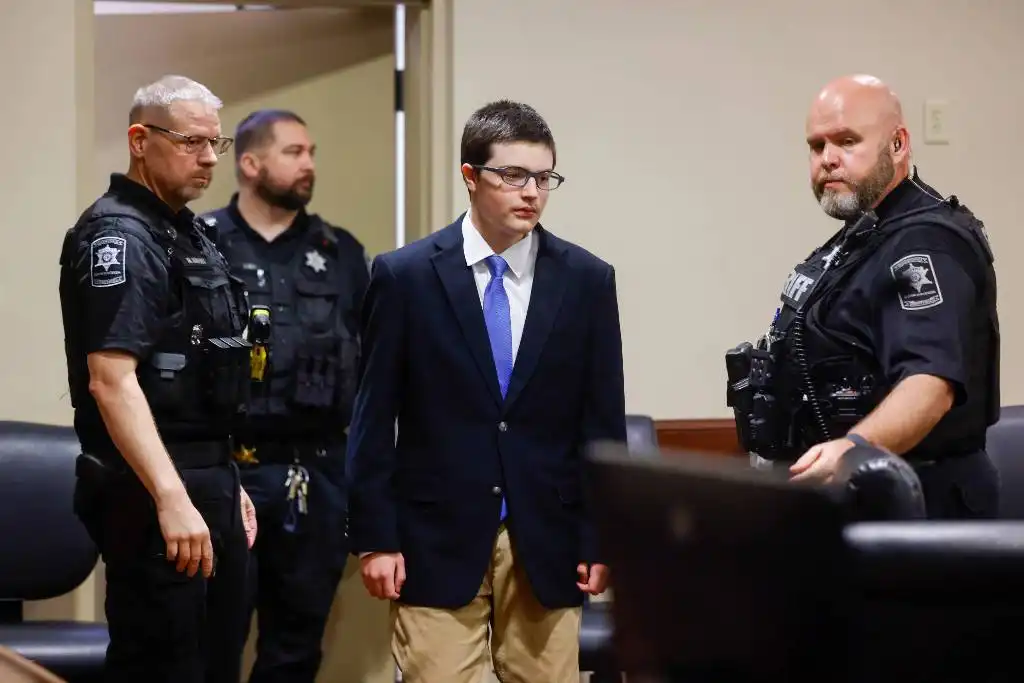
During the sentencing hearing, Judge Primm delivered a harsh assessment of Gray’s actions, saying the teenager appeared motivated by the attention associated with previous mass shooters.
“You do not seem to be tormented by what you did, you seem to relish following in the footsteps of the murderers you idolize,” Primm told Gray in court.
The judge said the shooting was not a spontaneous act but something Gray had carefully considered over time. “Your plan was not hastily hatched,” Primm said. “It was a slow boil, simmering one in a year’s time.”
Prosecutors argued that Gray had become deeply fascinated with other mass shooters, including Nikolas Cruz, who was convicted for the 2018 shooting at Marjory Stoneman Douglas High School in Florida that killed 17 people.
Investigators testified that Gray had thousands of images of Cruz on his phone and displayed photos connected to him in his bedroom. Prosecutors said Gray wanted to gain attention and notoriety by attacking his own.
Victims’ Families Describe a Lifetime of Loss
Before the sentence was announced, family members of the victims spoke about the pain caused by the shooting. Shayna Aspinwall, the wife of teacher Richard Aspinwall, told the court that her daughters, who were only 2 and 5 years old when their father was killed, would grow up without him.
She described the impact as a “life sentence of grief and trauma” for everyone left behind. Breanna Schermerhorn, whose son Mason was killed, acknowledged that Gray had experienced difficulties growing up but said those struggles did not excuse his actions.
She told the court that the decision to commit mass murder belonged to Gray alone. The judge agreed, saying Gray’s background did not remove his responsibility for the lives he took.
“There’s no joy here,” Primm said. “It’s only a measure of closure.” He added that the victims would not return and that the injured would continue carrying the effects of the attack.
Defense Points to Troubled Childhood and Mental Health Issues
Gray’s defense team presented a different picture of the teenager, describing him as a troubled child who experienced instability at home.
Psychologist Kevin Richards testified that Gray was a “lonely, dysfunctional kid” who grew up in a chaotic environment. Richards said Gray’s parents struggled with drug use, financial problems, and frequent conflicts.
The family moved often, and Gray experienced periods when he was not enrolled in school, the psychologist said. According to the defense, Gray eventually became isolated and spent significant time online, where he developed an obsession with true-crime communities and school shootings.
Prosecutors, however, argued that Gray’s personal struggles did not explain the planning and preparation behind the attack. They pointed to evidence including a notebook that allegedly outlined steps for carrying out the shooting. Investigators said Gray had prepared himself in a bathroom before moving through the school with a rifle.
The Gun Used in the Attack Became a Major Focus
The case also raised questions about how Gray obtained the weapon used in the shooting. Investigators said Gray’s father, Colin Gray, purchased the assault-style rifle for his son as a Christmas gift. Prosecutors argued that the gun became the tool Gray used to carry out his attack.
Colin Gray was later convicted of charges including second-degree murder and involuntary manslaughter for providing his son access to the weapon. During testimony, Gray’s grandmother said the family had experienced years of instability. She said Colt spent significant time with her because of problems involving his parents.
She also testified that Colin Gray owned many firearms and that not all of them were properly secured.
Questions Remain After Another School Shooting Tragedy
The Apalachee High School shooting became another painful chapter in the national debate over school safety, mental health support, and firearm access.
Authorities said Gray had previously been interviewed by sheriff’s deputies in 2023 after an online threat connected to a possible school shooting. At that time, Gray denied making the threat. Investigators also testified that concerns about Gray’s behavior had surfaced before the attack. His mother reportedly urged his father to secure firearms and limit Gray’s access to weapons.
On the morning of the shooting, police said Gray told a teacher he needed to speak with a crisis counselor. Instead, investigators said he went to a bathroom, prepared himself, and began the attack shortly afterward.
After the shooting, Gray surrendered to law enforcement. Investigators later played recordings showing him crying and apologizing, saying what he had done was “horrible” and “the worst nightmare for everyone involved.”
For the families of those killed, the sentencing does not erase the loss. But after months of court proceedings, the decision marks the end of one legal chapter in a tragedy that forever changed the Apalachee community.