DNA Breakthrough Leads to Arrest in Orlando Woman’s 1988 Killing Nearly Four Decades Later
For nearly 38 years, the killing of Diane Matthews remained an open wound in Orlando. Detectives had fingerprints, biological evidence, and a disturbing crime scene, but they did not have enough information to identify and charge a suspect.
That changed on Thursday, July 9, when the U.S. Marshals Service North Carolina Regional Task Force arrested 68-year-old Willie J. Carpenter. He now faces a first-degree murder charge in Matthews’ 1988 death and is awaiting extradition to Florida.
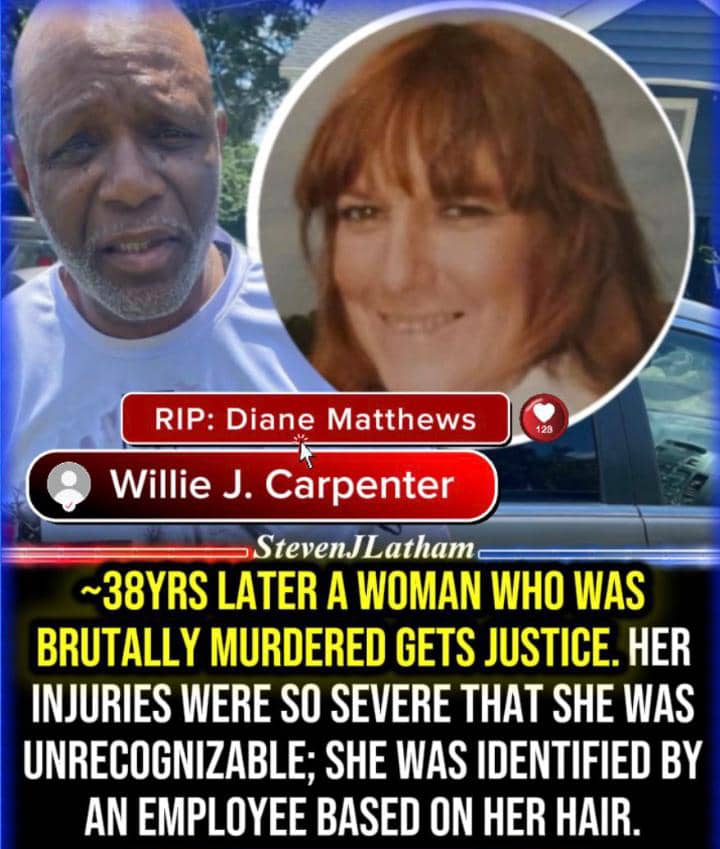
The arrest marks a major breakthrough in a case that began when forensic DNA testing was still in its infancy. Investigators say carefully preserved evidence, a national DNA database and years of follow-up work eventually led them to Carpenter.
Diane Matthews Was Found Dead at Her Workplace
Matthews was killed on Sept. 8, 1988, inside an answering service at 227 N. Magnolia Avenue in downtown Orlando.
Her injuries were so severe that investigators could not immediately recognize her. A co-worker reportedly identified Matthews by her hair.
Detectives collected fingerprints and biological material from the scene. They also interviewed several people while trying to reconstruct Matthews’ final hours. However, DNA analysis was not routinely available to investigators at the time, and the evidence did not produce an immediate suspect.
The case eventually went cold, but the evidence remained in police custody. That decision would become critical decades later.
New forensic methods can sometimes extract useful genetic profiles from evidence that was collected long before modern DNA testing became a standard part of homicide investigations. Those profiles can then be compared with records stored in the Combined DNA Index System, commonly known as CODIS.
In Matthews’ case, investigators say that process eventually produced a possible connection.
An Unrelated Arrest Created a New Lead

The investigation changed after Carpenter was arrested in North Carolina in an unrelated case involving the alleged assault of a young girl. His DNA was collected and entered into CODIS, where it produced a potential match to biological evidence preserved from the Matthews crime scene.
Orlando detectives interviewed Carpenter in 2013. Police said he denied knowing Matthews and declined to provide investigators with a DNA sample.
The inquiry did not end there.
Detectives interviewed him again in 2024. This time, Carpenter voluntarily provided a DNA sample. The sample was submitted to a Florida Department of Law Enforcement laboratory for additional analysis.
Testing conducted in 2025 established what police described as a stronger evidentiary connection between Carpenter and the biological material recovered during the original investigation.
Detectives then worked with forensic specialists and prosecutors to examine the evidence, rule out other possible suspects, and determine whether there was sufficient probable cause to seek an arrest warrant.
Authorities obtained that warrant in 2026. Carpenter was taken into custody in North Carolina on July 9 and charged with first-degree murder.
Police have not publicly explained what relationship, if any, existed between Carpenter and Matthews. They have also not disclosed all the evidence included in the arrest affidavit. Carpenter has been accused but has not been convicted, and information about a plea or defense attorney was not immediately available.
Orlando Police Say Time Did Not Weaken Their Commitment
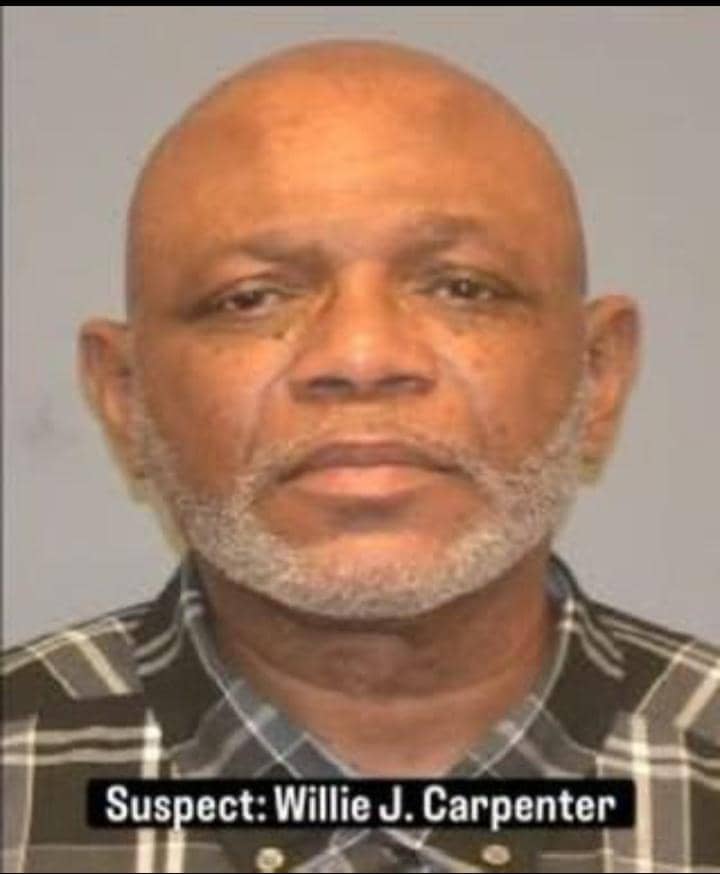
The arrest reflects the growing role of preserved DNA evidence in solving cases that once appeared impossible to close. It also shows why evidence management matters. The samples collected in 1988 could not answer every question at the time, but investigators protected them long enough for science to catch up.
“Time does not diminish our commitment to justice,” Orlando Police Chief Eric Smith said. “No matter how many years pass, the Orlando Police Department’s Homicide Unit will continue to pursue the truth until every possible avenue has been exhausted and those responsible are held accountable.”
Carpenter is expected to be returned to Orange County, Florida, to face the murder charge. Once extradited, he will proceed through the court process, in which prosecutors must prove the allegations beyond a reasonable doubt.
For Matthews’ family and the detectives who carried the case across generations, the arrest is not the same as a conviction or the end of the legal process. Still, it represents something the case had been missing for almost four decades: a named defendant and a path toward a courtroom.
The investigation that began in downtown Orlando in 1988 is now entering an entirely new stage, powered by evidence that survived nearly 38 years and technology that investigators at the original crime scene could scarcely have imagined.