Florida Double Execution Puts Death Penalty System Under Historic Pressure
Florida double execution plans have placed the state’s capital punishment system under intense scrutiny as two death row inmates prepare to face lethal injection on the same day, raising questions about justice, legal safeguards, and the risks of an accelerated execution process.
The scheduled executions of James Aren Duckett and Dominick Anthony Occhicone represent a rare moment in American death penalty history. Florida has not carried out two executions within the same day in more than six decades, making the event a significant test of the state’s approach to capital punishment.
The Florida double execution comes at a time when the national death penalty landscape continues to change. While many states have reduced executions through legal challenges, moratoriums, or abolition efforts, Florida has moved in the opposite direction by increasing the pace of death warrants and executions.
The debate surrounding the Florida double execution extends beyond the two prisoners. It involves unresolved questions about forensic evidence, aging death row inmates, victims’ families seeking closure, and whether a faster execution system creates new risks in cases where mistakes cannot be corrected.
Florida’s rare execution schedule exposes deeper questions about capital punishment
The decision to schedule two executions within hours of each other has drawn attention because modern death penalty systems are designed around lengthy review processes. Capital cases typically involve years of appeals because courts recognize that execution is an irreversible punishment.
Florida’s current approach reflects a broader effort to carry out sentences that have remained unresolved for decades. Supporters argue that justice loses meaning when legally imposed sentences are delayed indefinitely. They believe victims’ families deserve finality after years of waiting.
However, critics argue that the Florida double execution raises concerns about whether speed is becoming a defining feature of the state’s death penalty system. They question whether conducting two lethal injection procedures on the same day creates additional pressure on prison staff and increases the possibility of procedural mistakes.
The history of same-day executions shows how unusual Florida’s decision is. In the modern era, only a small number of states have carried out multiple executions within hours of each other. Florida’s last same-day executions occurred in 1964, long before lethal injection became the dominant method.
The significance of the Florida double execution is therefore not only about two individuals. It represents a larger debate about how governments should administer the ultimate punishment. When the outcome cannot be reversed, every stage of the process receives greater attention.
A race against time after decades of courtroom battles
Both cases behind the Florida double execution began nearly 40 years ago. The crimes occurred in the 1980s, but the legal battles continued through multiple appeals, forensic reviews, and constitutional challenges.
James Duckett was convicted in connection with the 1987 murder of 11-year-old Teresa McAbee. Prosecutors argued that evidence connected Duckett, a former police officer, to the crime, including fingerprints and other circumstances presented during trial.
Duckett has maintained his innocence for decades. His defense team recently focused on DNA testing, arguing that modern forensic technology could reveal information that was unavailable during the original investigation.
The testing did not produce a conclusive result. Florida courts concluded that the results did not provide grounds to overturn the conviction, while Duckett’s attorneys argued that uncertainty should justify additional review before execution.
The disagreement highlights one of the most difficult issues in capital punishment cases. A failed or inconclusive DNA test does not automatically prove innocence, but it can create questions about whether every possible avenue of investigation has been exhausted.
The Florida double execution has therefore become connected to a broader national discussion about wrongful convictions. Since the 1970s, dozens of people sentenced to death across the United States have later been exonerated after new evidence emerged.
Florida has recorded more death row exonerations than any other state, according to national death penalty research organizations. Supporters of the death penalty argue that courts have multiple opportunities to correct mistakes, while opponents argue that even a small risk of executing an innocent person is unacceptable.
The unanswered DNA debate surrounding James Duckett

The controversy surrounding Duckett’s case is centered on a difficult question: how much uncertainty should exist before the state carries out an irreversible punishment?
Prosecutors have consistently defended the original conviction. They point to the evidence presented at trial and argue that appellate courts have repeatedly reviewed the case and upheld the verdict.
Duckett’s legal team sees the situation differently. They argue that DNA evidence represents a powerful tool that did not exist when the original conviction occurred. They believe the state should allow additional testing because the consequences of error are permanent.
The debate reflects the changing role of forensic science in criminal justice. DNA evidence has overturned convictions in some cases, but it has also failed to provide answers in others because evidence can degrade, become contaminated, or lack enough material for reliable conclusions.
The Florida double execution has brought renewed attention to how courts handle scientific uncertainty. Some legal experts argue that capital cases require a higher level of caution because an executed prisoner cannot later benefit from new discoveries.
At the same time, courts must balance those concerns against the rights of victims and the need to enforce final judgments. The result is a legal conflict between certainty, fairness, and closure.
An 80-year-old prisoner and the changing face of death row
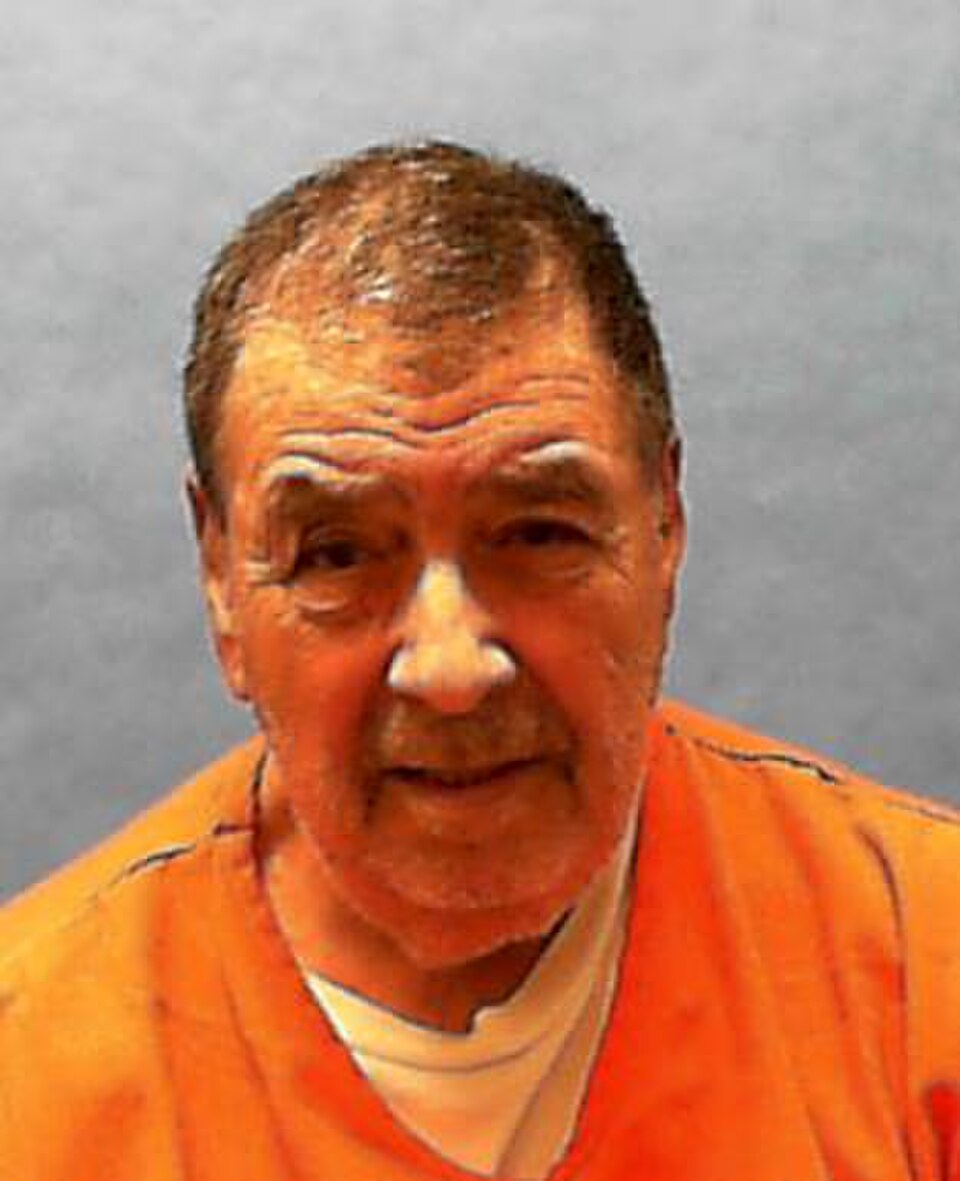
Dominick Occhicone’s case introduces a different issue into the Florida double execution debate: the growing number of elderly prisoners facing execution.
Occhicone was convicted of killing Raymond and Martha Artzner in 1986. Prosecutors said he murdered the couple after a conflict involving his former relationship with their daughter.
Nearly four decades later, Occhicone is 80 years old. If executed, he would become one of the oldest prisoners put to death in the modern American death penalty era.
His attorneys have argued that his age and medical conditions create constitutional concerns. They contend that executing an elderly prisoner with significant health challenges raises questions about whether punishment remains proportional after decades of incarceration.
Florida courts rejected those arguments. Judges concluded that age alone does not prevent the state from carrying out a legally imposed sentence.
The issue reflects a larger trend across the United States. Death row populations have aged because many capital cases remain in litigation for decades. Prisoners sentenced as younger adults often reach old age while waiting for their final appeals.
This reality has changed the nature of the death penalty debate. The question is no longer only about the original crime. It also involves time, rehabilitation, aging, and whether decades of imprisonment alter the meaning of punishment.
Victims’ families remain at the center of the execution debate
While discussions about the Florida double execution often focus on prisoners and legal challenges, the victims and their families remain central to the story.
Families affected by murder often spend decades navigating a painful legal process. Trials, appeals, and execution dates can repeatedly reopen traumatic memories while extending uncertainty.
Supporters of capital punishment frequently argue that carrying out sentences provides recognition for victims. They believe justice requires accountability for the most severe crimes and that endless delays can create additional suffering.
However, victims’ families are not always united on executions. Some support capital punishment, while others oppose it after years of reflection, religious consideration, or concerns about state-sponsored killing.
The Florida double execution places these competing perspectives into sharp focus. The state must consider both the harm caused by the original crimes and the responsibility to maintain a fair justice system.
A justice system faces difficult questions when it seeks to honor victims while also ensuring that every legal safeguard has been respected.
Florida’s execution surge separates it from national trends
The Florida double execution reflects a broader shift within the state’s capital punishment policy. While national execution numbers have generally declined compared with previous decades, Florida has increased its activity.
In recent years, Florida has accounted for a significant share of executions nationwide. The state’s leadership has argued that carrying out death sentences fulfills promises made to victims and strengthens public confidence in the justice system.
Governor Ron DeSantis has supported the death penalty as an appropriate punishment for certain crimes. His administration has signed numerous death warrants, contributing to Florida’s position as one of the most active execution states.
Critics argue that the increase represents a political and institutional shift toward faster use of capital punishment. They question whether executive authority over death warrants provides enough transparency and oversight.
The Florida double execution has intensified those concerns because it combines several controversial issues at once. It involves a disputed evidence question, an elderly prisoner, and an unusually compressed execution schedule.
The outcome could influence future discussions about how states manage death sentences and whether execution policies should emphasize speed or additional review.
The final hours will define a historic moment in Florida
The Florida double execution represents more than a scheduled prison procedure. It is a moment where legal principles, political choices, scientific uncertainty, and human suffering intersect.
For supporters, the executions represent accountability after decades of appeals. For opponents, they represent the risks of carrying out irreversible punishment when questions remain about evidence, procedure, and fairness.
The debate surrounding James Duckett and Dominick Occhicone reflects the broader challenge facing the American justice system. A society must decide how to balance justice for victims, protection against wrongful convictions, and confidence in government authority.
As Florida approaches this historic execution date, the central question remains larger than any individual case: when a punishment cannot be undone, how much uncertainty can a justice system accept before moving forward?