Florida Mail Carrier Accused of Trapping over 100 Cats, Dogs Stolen From Her Route.
For months, families along Florida’s Treasure Coast searched their yards, put up photos, and called out at night for pets that had disappeared. Then, deputies found a scene inside a Martin County home that turned these private losses into a major animal cruelty investigation.
Authorities say 77-year-old U.S. Postal Service worker Gail Giustino had been picking up cats she found during her mail route. When investigators entered her home on July 20, they first removed 80 cats and 12 dogs. The number later rose to 108 as more animals were found or surrendered. Some cats had microchips that connected them to families who had been searching for them for months.
Giustino has been charged with one count of animal cruelty and one count of confining animals without sufficient exercise. The allegations have not been proven in court, and she is presumed innocent unless convicted.
A Search Warrant Reveals a Hazardous Home
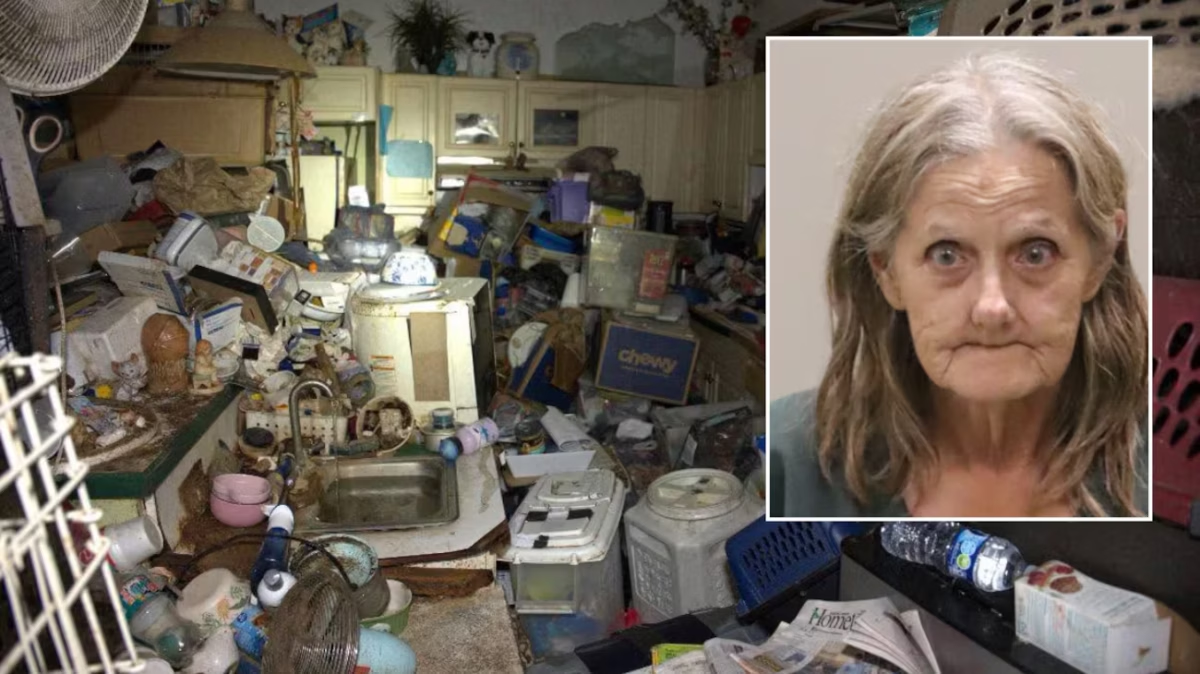
The investigation started after a complaint that a postal worker was taking cats along her route. Martin County Sheriff John Budensiek said animal control officers tried for days to check Giustino’s property, but she did not let them in. During that time, she gave about 15 animals to local shelters and told officials the animals were gone. Investigators were not convinced and got a search warrant for her house on Southwest Meadowlark Circle. When deputies, firefighters, and animal control officers arrived, trash and debris blocked the front door, so they had to go in from the back.
Inside, rescuers found cages, extreme heat, stale air, and thick layers of animal waste. Investigators said the house had no working air conditioning and barely any ventilation. Temperatures were estimated to be over 110 degrees, and in some places, feces was nearly a foot deep. The smell of urine, feces, and ammonia was so strong that the fire department’s hazardous materials team had to air out the building before crews could safely remove the animals.
“When we cracked the door on it earlier today, the stench was unreal, the air was stifling hot,” Budensiek said. The sheriff called it the worst animal hoarding case he had seen in Martin County. Even with these conditions, officials said they did not find any dead animals during the first search, which Budensiek said surprised him.
The surviving animals still needed urgent care. Shelter workers said many cats arrived very dehydrated, underweight, and missing fur. Others had skin problems, dental disease, or were over-grooming from stress. Some dogs also had dental issues, and three were quarantined with kennel cough. Sarah Fisher from the Humane Society of the Treasure Coast said the crates were covered in feces and some cats drank water for about 15 minutes straight after arriving.
Missing Pets Begin Finding Their Way Home
As veterinarians checked the rescued animals, shelter workers scanned them for microchips. This step changed the case. Not all the cats were feral; some were friendly, socialized pets. Several had microchips that matched families who had been looking for them. Soon, people lined up outside the Humane Society of the Treasure Coast in Palm City with photos, vet records, and microchip details. Some left crying with their pets, while others left without finding their missing animals.
One of the most emotional reunions was for a cat named Patchy. His owner, Linh Nguyen, had searched for him for almost seven months after he went missing in January. She handed out fliers, offered a reward, and drove around her neighborhood at night calling his name. When Nguyen heard about the rescue, she hoped Patchy was among the cats. At the shelter, she said she recognized his voice before she could even see him.
“I feel like I got back a family member. It’s like a child to me,” Nguyen said. “I lost all my hope. I didn’t expect ever to see him again.” Another owner, Jisel Leon, was reunited with her cat Blizzard after more than a month apart. Leon described the experience as overwhelming and compared it to stepping into a dream in which she finally found him.
But for every happy reunion, other families looked through the rescued animals and found no match. Some left the shelter in tears, still not knowing what happened to their missing pets. This contrast made the shelter a place of both joy and sadness. It also showed how important it is to microchip pets and keep their information up to date. A small chip can be the best way to reconnect a lost pet with its family, especially if the animal’s appearance has changed due to illness, stress, or weight loss.
By July 29, the shelter had taken in 108 animals from the investigation. Staff had the huge job of giving medical exams, vaccines, food, clean bedding, and behavioral care, all while checking if any animal had an owner. People in the community donated food, cat litter, and other supplies. The Humane Society also asked anyone who thought a recovered animal might be theirs to contact the shelter.
Two Charges and a Complicated Human Question

Giustino’s arrest has brought up a tough question about how the justice system should respond when someone thinks they are saving animals but actually puts them in danger. Budensiek said investigators did not see this as a simple case of intentional cruelty. Authorities believed Giustino thought she was helping, but she could no longer see the suffering in her home.
Officials said she had received dozens of civil citations before for animal conditions. About ten years ago, code enforcement stepped in and things improved, including adding window air conditioners. Investigators said those units later stopped working as more animals, trash, and debris built up again. Animal control had reportedly given her up to 65 civil citations over the years.
Deputies said the number of animals could have led to more charges, but Giustino was charged with two misdemeanors. Her bond was set at $50,000. Budensiek said the main goal was to get the animals out of danger, stop Giustino from getting more, and help her get a mental health evaluation and support, instead of just putting a 77-year-old woman in jail.
The Postal Service confirmed that Giustino started working there in 1997 and was still employed when the case became public. A USPS spokesperson said the agency knew about the arrest but would not discuss personnel issues. For the rescued animals, recovery is not just about a clean cage and food. Some may need weeks or months to gain weight, trust people again, and feel safe in a normal home.
Still, the case has brought out a positive response to the darkness found inside the home. Residents have donated supplies, offered to foster, and asked about adopting. Families who almost gave up hope have heard their pets’ meows again. The courts will decide Giustino’s legal responsibility, but the rescue has already changed the animals’ lives. Pets once trapped in terrible conditions are now getting care and, for some, finally going home.