From Medical Care to Grocery Bills, Three Lawsuits Test the Reach of Trump’s Power
A medical decision, an application for emergency assistance and the price of goods at a neighborhood store may appear to have little in common. Yet three lawsuits filed on the same day have placed all three inside a larger national struggle over presidential power.
Federal employees, advocacy organizations and a coalition of 25 states are challenging separate Trump administration policies involving transgender healthcare coverage, personal information collected through a family-assistance program and tariffs on imports from dozens of trading partners.
The cases do not establish that the administration acted illegally. They contain allegations that federal judges must now examine. Taken together, however, they raise a consequential question: How much of American life can a president reshape through executive agencies without new authorization from Congress?
Federal workers fight a healthcare exclusion

Five anonymous federal employees filed a proposed class action in Washington challenging the administration’s exclusion of gender-affirming treatment from federal health insurance.
The policy applies to the Federal Employees Health Benefits Program and the Postal Service Health Benefits Program. It prevents plans from covering certain hormones, hysterectomies, facial surgeries and other procedures when used for a gender transition, although those treatments may remain covered for other medical purposes.
That distinction forms the heart of the employees’ case. Their complaint argues that the government is treating transgender and gender-nonconforming workers differently because of sex, in violation of Title VII of the Civil Rights Act.
“This exclusion targets gender-affirming care,” the employees argued in their complaint, contending that it singles out transgender and gender-nonconforming enrollees.
The change could affect at least 39,400 current or former federal workers and dependents based on a Williams Institute estimate cited by the plaintiffs. The lawsuit seeks damages and a permanent order preventing the Office of Personnel Management from enforcing the exclusion.
For affected families, the dispute is more immediate than its legal language suggests. It could determine whether an employee continues prescribed treatment through insurance, pays thousands of dollars out of pocket, or postpones care.
The administration views the matter differently. OPM has defended its guidance as a measure that prevents public insurance plans from funding what it describes as “sex-rejecting services.” Its policy still requires coverage for certain counseling and provides an exception process for some people who had already begun treatment.
The legal question is not whether the federal government may regulate its insurance plans in general. It is whether it may deny coverage based on the purpose for which an otherwise covered treatment is prescribed.
The case, Doe v. Kupor, remains at an early stage. No judge has ruled on the employees’ discrimination claim.
Families face a choice between assistance and privacy

A separate courtroom battle concerns Temporary Assistance for Needy Families, the federal program commonly known as TANF. The program provides more than $16 billion annually to states for services that include cash assistance for low-income families with children.
A coalition of states and the District of Columbia sued to block a policy allowing the Administration for Children and Families to share recipient information with other federal agencies, including the Department of Homeland Security.
The disputed information may include Social Security numbers, addresses, dates of birth, and immigration records. Advocacy groups filed another lawsuit in New York, arguing that the data-sharing plan also violates the Privacy Act.
The administration says access is necessary to determine whether states properly verify the citizenship or immigration status of TANF recipients. The states counter that Congress gave them responsibility for determining eligibility and did not authorize federal officials to redirect sensitive program information toward immigration enforcement.
New York Attorney General Letitia James described the policy as an attempt to “turn anti-poverty programs against the people they’re supposed to serve.”
The most powerful part of this story may never appear in a courtroom. It could unfold at a kitchen table where a parent must decide whether requesting help with rent, food or utilities might expose someone in the household to federal scrutiny.
That concern extends beyond undocumented immigrants. Mixed-status families may include U.S.-citizen children, lawful residents and relatives with different immigration classifications. Even when a child qualifies for assistance, fear surrounding the application could discourage the entire household from seeking help.
The states also argue that the administration imposed new conditions on federal funding without following the required legal process. The policy was scheduled to take effect on August 11, making urgent court intervention necessary.
Once again, these claims remain allegations. A judge must decide whether the administration’s oversight authority permits the proposed use of the information.
Tariffs move the legal fight to the checkout counter
The third lawsuit begins at ports of entry but could end in shopping carts across the country.
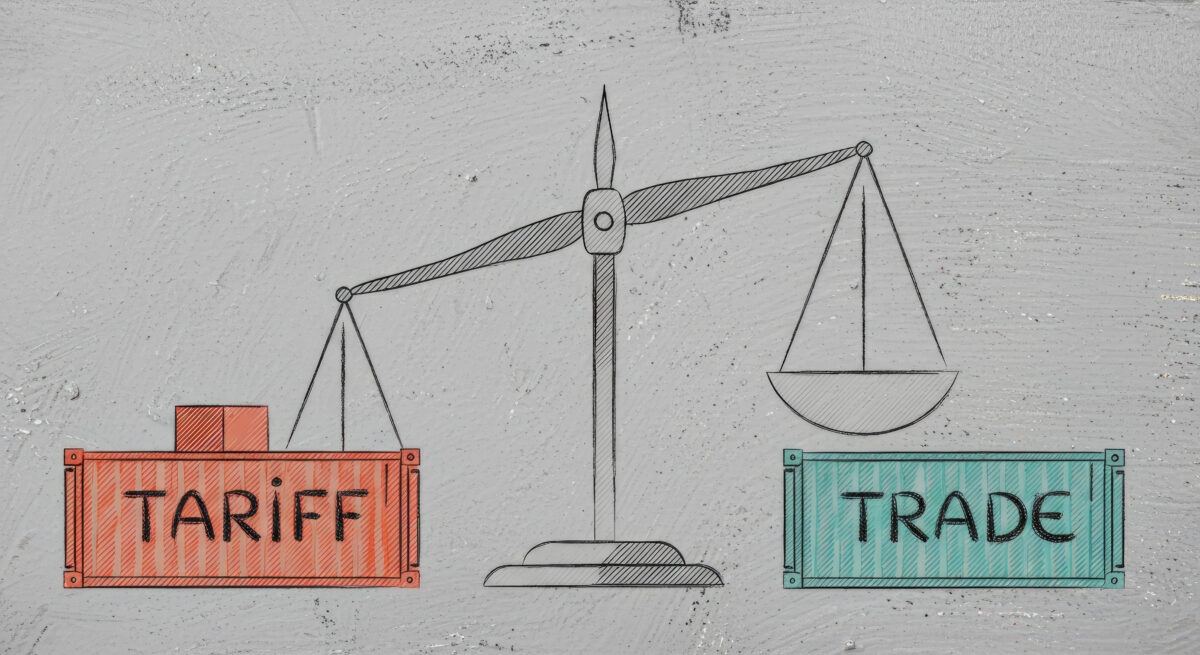
Twenty-five states challenged tariffs of 10% or 12.5% imposed on imports from 60 trading partners. The Office of the U.S. Trade Representative says the duties respond to countries that have failed to establish and enforce adequate prohibitions against goods made with forced labor.
U.S. Trade Representative Jamieson Greer said foreign failures to stop forced-labor imports create an unfair market in which American workers compete on “an unlevel playing field.”
The states do not defend forced labor. Instead, they question whether Section 301 of the Trade Act of 1974 gives the president authority to impose tariffs covering trading partners responsible for 99.4% of U.S. imports.
Their lawsuit describes the forced-labor investigation as a pretext for restoring broad tariffs after earlier versions suffered court defeats. It also argues that the administration failed to satisfy Section 301’s procedural and legal requirements.
The distinction matters because tariffs are import taxes paid by American importers. A foreign producer might reduce its price, and a business might absorb part of the expense. Companies can also pass the additional cost to customers, however, raising prices on imported goods or products assembled with foreign components.
That means a lawsuit framed around presidential authority could eventually affect clothing, household supplies, electronics and materials used by American businesses. Small companies operating on narrow margins may face especially difficult choices: increase prices, accept lower profits, delay expansion or reduce other expenses.
The administration maintains that the tariffs are lawful and necessary to confront abusive labor practices. The states want the Court of International Trade to stop the duties and order refunds of money already collected.
Three disputes, one constitutional question

These cases involve different plaintiffs, statutes and federal agencies. They should not be treated as one coordinated lawsuit, nor do they prove that every contested policy will fail.
Their connection lies in the method of governing under examination.
In each dispute, challengers say the executive branch has used existing authority for a purpose or on a scale Congress never approved. The administration answers that federal law already gives its agencies enough power to act.
The courts must now locate the line between carrying out the law and effectively rewriting it.
For transgender federal workers, that line runs through an insurance policy. For families receiving assistance, it runs through a government database. For consumers and businesses, it may appear on a receipt.
Presidential power can sound distant when discussed through statutes, agency directives and constitutional doctrine. These lawsuits show how quickly that power can become personal.
A court’s decision could determine whether a worker receives medical coverage, whether a struggling parent trusts a benefits program and how much a business pays to stock its shelves. That is why these cases deserve attention beyond Washington.