Giuliani Accuses Democrats of Cheating in Mamdani’s NYC Victory as Private Election Review Sparks New Questions
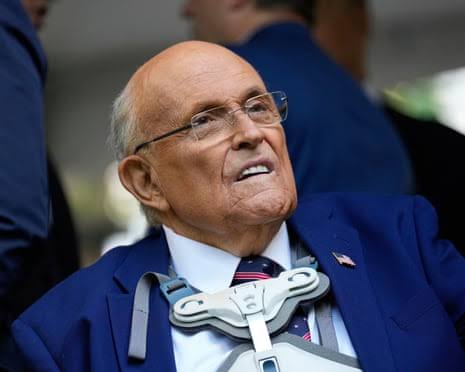
Former New York City Mayor Rudy Giuliani is raising explosive allegations about the election that sent Zohran Mamdani to City Hall, accusing Democrats of cheating as a privately conducted review of voter records draws fresh attention to the 2025 mayoral race.
The numbers circulating online are certainly striking. But a closer examination shows an important difference between records an activist group considers questionable and votes officially proven to be fraudulent. So far, no New York election authority or court has determined that hundreds of thousands of illegal ballots were counted in Mamdani’s victory.
Mamdani really did win by 207,570 votes
One major number in the circulating claim checks out.
Official New York City Board of Elections results show 2,218,647 ballots were cast in the November 4, 2025 mayoral election. Mamdani received 944,950 votes on the Democratic line and another 169,234 on the Working Families line, for a total of 1,114,184 votes. Andrew Cuomo received 906,614 votes.
That puts Mamdani’s advantage over Cuomo at exactly 207,570 votes.
The controversy comes from an analysis promoted by Marly Hornik, founder of RealAmerica.Vote and New York Citizens Audit. Reporting on Hornik’s July 22 appearance on WABC said her organization had examined roughly one million voter records from the election and claimed about 7 percent could not be verified, 6 percent had what the group described as invalid Social Security information, and 10 percent appeared to involve people who did not live in New York City.
Hornik’s organization estimated about 230,000 records were potentially improper, a figure higher than Mamdani’s winning margin.
But Hornik herself stopped short of declaring that Mamdani definitely lost.
“I actually don’t know whether Mamdani won the mayoral race, and I’m not here to say that he didn’t,” she told WABC, according to reporting on the interview. She argued instead that her findings raised questions about whether election officials had adequately verified voter eligibility.
The viral numbers need an important warning label

The Facebook version of the story goes further, describing roughly 228,000 records as “questionable” and adding a claim that 1 percent of voters had no Social Security number.
That version does not perfectly match the publicly accessible reporting on Hornik’s findings. The Western Journal report describes 7 percent, 6 percent and 10 percent categories and gives a total of approximately 230,000. It does not present the additional 1 percent figure in the same calculation.
There is another major issue: a problematic voter record is not automatically a fraudulent vote.
Federal voter-registration rules illustrate why. Under the Help America Vote Act framework, applicants with a driver’s license generally provide that number. Those without one can provide the last four digits of a Social Security number. If a person has neither, the state can assign that voter a unique identification number.
That means the absence of a Social Security number by itself does not prove that someone voted illegally.
The federal Election Assistance Commission also warns against confusing duplicate registration transactions with duplicate voting. Its 2024 election administration report explains that duplicate registrations can occur when someone already registered submits the same registration again, perhaps online and by mail. Such transactions do not necessarily create another voter record and certainly do not prove that the person voted twice.
Giuliani takes the allegation much further
The Facebook post attributes a sweeping accusation to Giuliani, quoting him as saying he believes Democrats cheated in the election and calling the party “the most crooked enterprise in the history of the United States.”
I could not independently locate that exact Giuliani quotation in a primary recording or transcript during verification, so it should be attributed specifically to the circulating post rather than presented as independently confirmed.
That distinction matters because Giuliani has a long and highly controversial history involving election-fraud allegations. He was disbarred in Washington after disciplinary proceedings connected to false claims he promoted following Donald Trump’s 2020 election defeat. He had previously lost a major defamation case brought by two Georgia election workers whom he falsely accused of manipulating ballots.
None of that automatically disproves a new allegation. It does mean new claims require evidence that can withstand independent examination.
Hornik said during a July 19 interview that her organization had performed identity verification on a sample of 10,000 voters and claimed it could not verify critical information for 7 percent. She also said another 6 percent had Social Security numbers her organization considered invalid and said the material had been turned over to federal investigators and prosecutors.
The existence of an allegation or referral to investigators, however, is not the same as an official finding of wrongdoing.
For now, Mamdani’s certified victory remains unchanged. The official record shows his 207,570-vote advantage over Cuomo. The private analysis has generated serious accusations and calls for scrutiny, but there is currently no verified finding that 228,000 or 230,000 fraudulent ballots were cast, or that fraud changed the outcome of the 2025 New York City mayoral election.
That is where the story stands: a dramatic accusation, a private analysis demanding attention, and a very large gap between identifying possible database anomalies and proving enough illegal votes to overturn an election.