Letitia James’ Medicaid Fraud Record Becomes a New Flashpoint in New York AG Race
New York’s attorney general race just got a lot more interesting, and this time, the fight is not about courtroom drama or national politics. It is about Medicaid money, fraud recoveries, and whether the state’s top legal office is doing enough to claw back taxpayer cash.
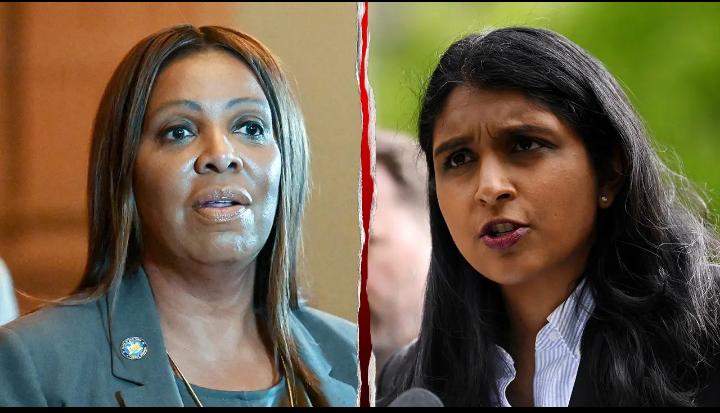
Republican attorney general candidate Saritha Komatireddy is taking direct aim at Attorney General Letitia James, accusing her of letting New York’s Medicaid fraud enforcement lose its bite. Her argument is simple: the fraud unit is getting more money, but recoveries have dropped sharply. In a state where Medicaid spending is already massive, that is the kind of claim that grabs attention fast.

Komatireddy, a former federal prosecutor, says this is not just campaign noise. She is framing it as a basic job-performance question. If people are stealing from Medicaid, she argues, the attorney general should be chasing them aggressively.
And now, with federal officials also paying closer attention to Medicaid fraud across the country, New York’s numbers are getting a second look.
The Attack: Recoveries Are Down, Spending Is Up
Komatireddy’s biggest punch is the recovery figure. According to the numbers she is highlighting, New York’s Medicaid fraud recoveries fell from $168 million in 2019, James’ first year in office, to $31 million in 2024. Her campaign also points to a low of $19 million in 2022.
That is the heart of the political problem for James. Medicaid fraud enforcement is not an issue that needs much explaining. Voters understand stolen public money. They understand fake billing. They understand the frustration of watching government programs grow while accountability seems to shrink.
Komatireddy put it bluntly in her campaign statement: “New York’s Medicaid spending is at record highs but its Medicaid Fraud enforcement is record lows.”
She also accused James of weakening what she described as a once-powerful fraud unit, saying the office had gone from recovering hundreds of millions of dollars and securing many convictions to doing only a fraction of that work.
Her proposed fix is just as direct. Komatireddy says she would add 20 criminal fraud prosecutors to the Medicaid Fraud Control Unit, expand civil fraud enforcement through the False Claims Act, and push more aggressive investigations.
“As New York’s next Attorney General, I will take on Medicaid fraud,” she said. “New Yorkers deserve better.”
That line is clearly built for the campaign trail. But the numbers behind the attack are what make it more than a slogan.
James’ Office Says It Is Still Fighting Fraud
James’ office has not been sitting quietly on Medicaid fraud. In fact, just days before this campaign fight heated up, James and state Comptroller Thomas DiNapoli announced the indictment and arrest of Maksim Grinberg, a New York City man accused of using eye care clinics to steal more than $9 million from Medicaid.
Prosecutors allege Grinberg and eight companies operating under the EyePic name billed Medicaid for eye surgeries that never happened. According to James’ office, the money was allegedly used for luxury purchases, including jewelry, travel, expensive cars, and a New Jersey mansion.
James had a sharp quote of her own: “Scammers who steal from Medicaid are corrupting our health care system and taking funds meant to support our state’s most vulnerable residents.”
DiNapoli also backed the enforcement message, saying, “Rooting out Medicaid fraud is a top priority of mine.”
That case gives James a strong counterpoint. Her office can say it is still bringing cases, still arresting defendants, and still pursuing fraud schemes that hit vulnerable New Yorkers and taxpayers.
There are other examples too. Earlier in June, James joined a bipartisan coalition and the U.S. Department of Justice in a CVS Medicaid settlement involving insulin prescription overbilling. The total national settlement was $36.5 million, with $2.25 million going to New York. In 2025, her office also announced more than $13 million in settlements connected to the takedown of transportation companies accused of defrauding Medicaid.
So the question is not whether James’ office has done anything. It clearly has.
The real question is whether it is doing enough.
Why This Fight Could Stick

This issue lands because it connects several things voters already worry about: health care costs, taxes, government waste, and trust in public officials. Medicaid is supposed to help low-income residents, people with disabilities, seniors, and other vulnerable New Yorkers. When fraud drains money from that system, it becomes more than a budget problem. It becomes a fairness problem.
There is also a national backdrop. The Department of Health and Human Services Office of Inspector General reported that Medicaid Fraud Control Units across the country recovered almost $2 billion in fiscal year 2025 and produced 1,185 convictions. Federal officials have also been pushing states to strengthen provider screening and revalidation, especially for high-risk Medicaid providers.
That broader federal focus gives Komatireddy’s attack more oxygen. She is not bringing up Medicaid fraud in a vacuum. The issue is already on Washington’s radar.
Still, voters should separate verified facts from campaign framing. It is verified that Komatireddy is attacking James over reduced Medicaid fraud recoveries. It is also verified that James’ office has recently announced cases and settlements involving Medicaid fraud. What the recovery decline alone does not prove is why the numbers changed. Lower recoveries could reflect enforcement priorities, case timing, settlement size, investigative strategy, or other legal factors.
But politics rarely waits for a perfect spreadsheet.
For James, the danger is that the story is easy to understand: more spending, lower recoveries, angry taxpayers. For Komatireddy, the opportunity is obvious: present herself as the prosecutor who will rebuild the unit and chase the money harder.
That makes Medicaid fraud one of the cleanest campaign issues in the race so far. It is about numbers, enforcement, and whether New York’s top legal office is protecting public money with enough force.
James can point to real cases. Komatireddy can point to a troubling trend. And New Yorkers are left with the question that may follow this race all the way to Election Day: if Medicaid fraud is still happening, is Albany doing enough to stop it?