Model Scout Investigated For Epstein Trafficking Ties Found Dead.
Daniel Siad, a veteran model scout whose extensive correspondence with Jeffrey Epstein placed him under intense legal and public scrutiny, has been found dead at his home in Colombes, northwest of Paris. The 69-year-old was discovered on Monday evening, July 20, as French investigators examined allegations that he helped connect young women to the convicted sex offender. An official cause of death has not been announced, and prosecutors have ordered an autopsy.
Siad’s attorney has said she believes he suffered a heart attack. Until medical examiners complete their work, however, that remains the lawyer’s account rather than an official finding. The distinction matters because Siad’s death has already attracted speculation online, even though French authorities have not publicly reported evidence of foul play. What we can establish is more consequential: a man who may have possessed valuable information about Epstein’s European contacts died before prosecutors formally questioned or arrested him.
Daniel Siad Found Dead Near Paris With Autopsy Results Pending
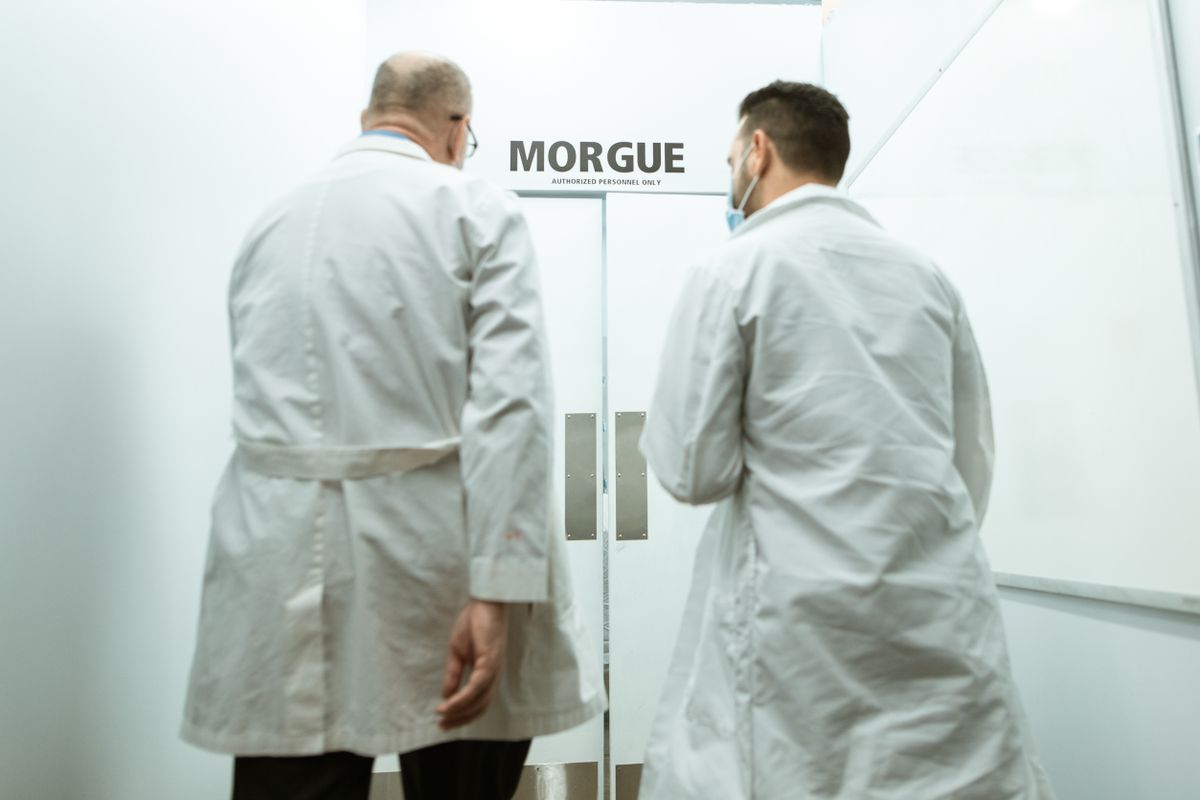
The Nanterre prosecutor’s office confirmed that Siad’s body was found at his residence in Colombes. Authorities immediately opened an inquiry to determine the cause of death and ordered an autopsy. Siad’s lawyer, Menya Arab-Tigrine, attributed the death to a suspected heart attack and argued that months of anxiety and damaging publicity had placed him under severe pressure.
We should not confuse that explanation with a completed medical conclusion. The official cause remained undetermined as of July 23, 2026. There is also no verified basis for portraying the death as proof of a conspiracy, cover-up or deliberate attempt to obstruct the Epstein investigation. The responsible focus is on what evidence remains, what questions Siad can no longer answer and how prosecutors intend to continue without his testimony.
Nearly 2,000 Epstein File Mentions Made Siad Impossible to Ignore
Siad’s importance did not arise from a passing acquaintance with Epstein. His name appeared nearly 2,000 times in records released through the U.S. Justice Department’s Epstein Library, according to Reuters and ABC News. The correspondence reportedly covered years of discussions about models, potential assistants, travel, introductions and women Siad encountered while scouting internationally.
The scale of the archive helps explain why French authorities returned to figures who had escaped sustained scrutiny during earlier stages of the Epstein case. In January 2026, the Justice Department said it had published nearly 3.5 million pages, more than 2,000 videos and about 180,000 images under the Epstein Files Transparency Act. The department also warned that the enormous production included material collected from multiple sources and could contain false submissions, meaning a name’s presence alone does not prove criminal conduct. Individual communications, corroborating testimony and financial records still require careful legal assessment.
Released Emails Put International Recruitment at the Center of Scrutiny
The documents reviewed by news organizations showed Siad discussing young women he had encountered in Sweden, France, Eastern Europe, Australia and other locations. In one 2014 exchange, he listed women from several countries whom he expected Epstein to meet. Follow-up correspondence reportedly referred to additional potential recruits between 15 and 17 years old. Epstein’s replies frequently requested names, photographs or updates about new women.
Those messages do not, by themselves, establish that Siad knowingly participated in sexual exploitation. They do show a recurring system of scouting, selection and referral that prosecutors had reason to examine. The central question was no longer whether Siad knew Epstein. It was what Siad understood about Epstein’s intentions, what representations he made to aspiring models, whether any introductions involved deception and whether payments or travel arrangements supported allegations of organized recruitment.
French Prosecutors Had Expanded the Epstein Investigation Before Siad’s Death
France opened broad investigations in February after the new U.S. files generated leads involving possible human trafficking, money laundering, corruption and tax fraud. Paris Prosecutor Laure Beccuau assigned magistrates and national investigative offices to centralize records, review old complaints and compare evidence from the United States with alleged activity on French soil. She described the undertaking as a vast analytical task because the archive contained millions of pages and potentially overlapping offenses.
By the time Siad died, 24 women had reportedly come forward as alleged victims or witnesses concerning conduct attributed to Siad or other people within the broader inquiry. Investigators had used special surveillance measures, including telephone interception, but prosecutors said the evidence obtained had not reached the threshold needed to justify his immediate arrest. Roughly 10 investigators were continuing to work on the case after his death.
Siad Denied Trafficking Allegations and Had Not Been Convicted
Siad repeatedly denied knowingly recruiting victims for Epstein. He said his dealings with the financier were professional and connected to legitimate modeling work. He claimed Epstein presented himself as someone with influence in the fashion industry and convinced him that introductions could lead to castings, agency opportunities or assistant positions. Siad also denied rape and human-trafficking allegations made against him in France.
That defense must remain part of any accurate account. Siad had not been convicted, and French authorities had not reached the stage of placing him under formal judicial investigation before he died. His attorney said he had offered to speak with investigators and insisted that the absence of arrest showed prosecutors lacked sufficiently serious or corroborated evidence. Prosecutors, however, said the preliminary inquiry remained active and that investigative measures were still underway.
Women Who Came Forward Now Face a New Accountability Gap
Siad’s death matters most to the women who believed he could answer questions about how they entered Epstein’s orbit. One woman identified publicly by the pseudonym Anya told the BBC that Siad introduced her to Epstein under circumstances she described as deliberately arranged. She alleged that the introduction led to years of manipulation and abuse by Epstein. Siad denied knowing that any woman he referred was being harmed.
Other complainants accused Siad of offenses separate from his Epstein contacts. French reporting cited at least five women who alleged rape or human trafficking, though the accusations had not been tested at trial. Lawyers representing complainants argued that his death deprived their clients of a critical opportunity to see him questioned, confronted with evidence and potentially held accountable through a public judicial process.
The loss of a living subject does not erase documentary evidence. Emails, bank transfers, photographs, travel records, devices and witness statements may still reveal how relationships operated. Yet documents cannot always explain intent. They cannot be cross-examined, challenged with contradictory records or asked why certain girls and women were selected. Siad’s death therefore changes the investigation from a possible prosecution of one individual into a deeper exercise in reconstruction.
The Jean-Luc Brunel Parallel Adds to France’s Epstein Reckoning
Siad is the second prominent model-industry figure linked publicly to Epstein to die in France before the full allegations surrounding him could be resolved at trial. Jean-Luc Brunel, the modeling executive who founded MC2 Model Management with Epstein’s financial backing, was arrested in 2020 and accused of sexual offenses. Brunel denied wrongdoing and denied participating in Epstein’s trafficking operation. He was found dead in a Paris prison cell in February 2022 while awaiting trial.
The parallel is significant without proving any connection between the deaths. Brunel died in custody; Siad died at home, with an autopsy pending. What links the cases is the same institutional problem: allegations involving the modeling industry, international recruitment and Epstein’s network remained unresolved for years. In both cases, death ended the possibility of a completed criminal trial and left alleged victims searching for answers through documents, civil actions and investigations of surviving participants.
The Broader Epstein Inquiry Does Not End With One Man
French prosecutors have made clear that Siad’s death will not close the larger investigation. The inquiry covers alleged acts involving multiple people, potential financial offenses and information contained across the vast U.S. archive. Investigators can continue examining payments, communications, travel patterns and individuals who may have helped arrange introductions or conceal the purpose of Epstein’s relationships.
We can therefore expect the next phase to focus heavily on evidence preservation. Authorities may seek access to Siad’s phones, computers, accounts, contact lists and private correspondence, subject to French law and judicial authorization. They may also revisit witnesses who previously described modeling offers, assistant jobs or international travel opportunities that allegedly became gateways to exploitation. This is an inference from the investigation’s stated scope rather than a confirmed list of future actions.
Siad’s Death Leaves Questions, but It Does Not Establish Answers
The discovery of Daniel Siad’s body creates an unavoidable vacuum. He can no longer be asked what he knew about Epstein’s behavior, why he continued communicating with him after Epstein’s 2008 conviction, how he chose prospective recruits or what services Epstein believed he was purchasing. Those questions now sit inside emails, witness accounts and investigative files rather than across from a suspect in an interview room.
The most important story is not an unsupported mystery surrounding Siad’s death. It is the unfinished search for accountability surrounding Epstein’s European network. An autopsy may determine how Siad died. Only a sustained investigation can determine what role, if any, he played in the exploitation alleged by women who came forward—and whether other people still alive possess the answers he can no longer provide.