Supreme Court Upholds State Sports Bans on Transgender Women, and Schools Across America Are Now Facing a National Debate Over Fairness and Inclusion.
The United States Supreme Court has reinforced the authority of states to restrict transgender women and girls from participating in female school and college sports, a decision that immediately reshapes the legal and cultural landscape of athletics across America.
At the center of the ruling is a long-running question that has now been answered at the highest judicial level: states may define eligibility for women’s sports based on biological sex. The Court concluded that such policies do not automatically violate the Equal Protection Clause of the Fourteenth Amendment or federal Title IX protections, especially in the context of competitive athletics where physical differences are considered relevant to fairness and safety.
The decision effectively validates a wave of state laws already in place across the country and gives legal stability to school districts and athletic associations that had been operating under uncertainty.
But the legal clarity has triggered something far more complex on the ground: a nationwide debate inside schools, gyms, locker rooms, and governing boards about what fairness actually means in modern sports.
A Turning Point for Women’s Sports Policy in America

The ruling marks a decisive moment in how the United States structures women’s and girls’ athletics. By affirming state authority, the Court has allowed legislatures to enforce sex-based eligibility rules in public-funded school sports programs.
In practical terms, this means that transgender women can be excluded from female sports categories in states that choose to enforce such bans. These laws apply to middle school teams, high school athletics governed by state associations, and many college programs that fall under state or public university systems.
Supporters of the ruling argue that it restores competitive balance in women’s sports, pointing to biological differences in strength, speed, and endurance that they believe affect fairness in competition. They also argue that female athletic categories were originally created to protect equal opportunity for women, not to merge all categories into a single category.
Opponents, however, argue that the ruling institutionalizes exclusion. They say it forces transgender youth to choose between their identity and participation in school life, where sports often serve as a core part of belonging, discipline, and social development.
How Title IX Became Central to the Legal Fight
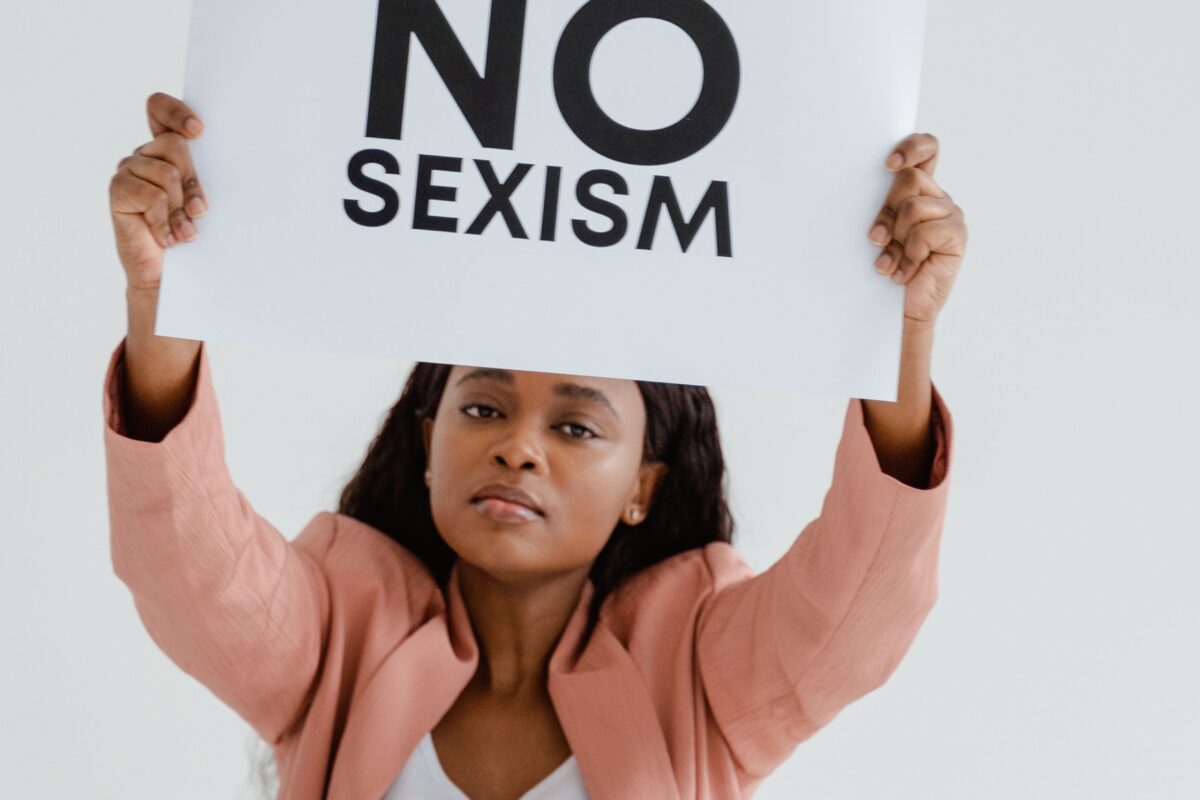
At the heart of the dispute is Title IX, the 1972 federal law that prohibits sex-based discrimination in education programs receiving federal funding.
For decades, Title IX has been credited with transforming American education by expanding athletic opportunities for girls and women. It led to the creation of structured women’s sports programs, scholarships, and funding equity across schools and colleges.
The Supreme Court’s interpretation in this case reinforces a key point: Title IX permits sex-separated athletic categories when they are used to preserve fairness and competitive structure. In the Court’s reasoning, this separation is not only lawful but foundational to how women’s sports developed in the United States.
That interpretation has now become the legal foundation for state-level bans on transgender women competing in female categories.
Critics argue that this reading narrows the spirit of Title IX, which they say should evolve alongside modern understandings of gender identity. Supporters argue the opposite: that the law’s original intent was to protect female athletes as a distinct competitive group.
The Equal Protection Debate That Divides the Court
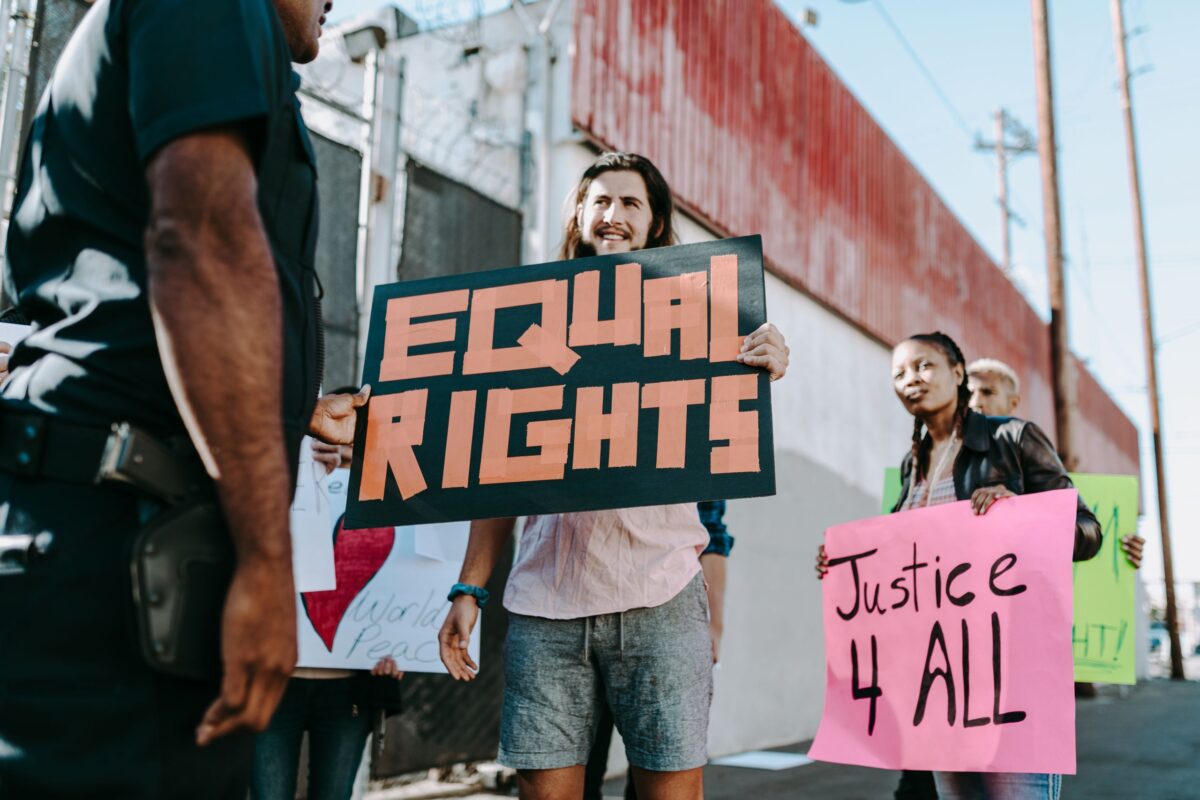
The constitutional argument rests on the Fourteenth Amendment’s Equal Protection Clause, which requires states to treat individuals equally under the law.
The Court held that sex-based distinctions in athletics can be legally valid when they serve legitimate state interests such as fairness, safety, and competitive balance. In this framework, sports are not treated as neutral spaces but as structured environments where physical differences can affect outcomes.
That reasoning allows states to maintain separate male and female categories without automatically violating constitutional protections.
However, dissenting justices warned that the ruling risks narrowing protections for transgender individuals in other areas of public life. They argued that exclusion from school sports can have broader consequences, including mental health challenges, social isolation, and reduced educational engagement.
The divide reflects a deeper philosophical disagreement inside the Court: whether equality means equal access regardless of identity, or equal treatment within biologically defined categories.
Schools and Colleges Now Carry the Practical Burden
While the ruling is a legal decision, its immediate impact is administrative and deeply practical.
School districts must now adjust eligibility rules in line with state law. That includes updating student athlete registration systems, revising participation policies, and training staff to handle compliance questions.
College programs face similar pressures, especially where recruitment and scholarships depend on high school performance in regulated sports systems.
Administrators are also confronting difficult real-world scenarios, including:
- Students transferring between states with different eligibility rules.
- Parents challenging school decisions about team participation.
- Athletic associations are rewriting competition guidelines.
- Coaches are navigating emotionally charged disputes between teammates.
In many cases, schools are becoming the frontline of enforcement for laws shaped far above them in courtrooms and legislatures.
A Patchwork System of Sports Eligibility Emerges
One of the most immediate consequences of the ruling is the acceleration of fragmentation in the national system.
Some states have adopted strict bans on transgender participation in female sports. Others have implemented partial restrictions, allowing participation under specific conditions. A smaller number continue to allow inclusion based on gender identity.
The result is a country where eligibility for girls’ and women’s sports is no longer uniform.
A student-athlete in one state may be fully eligible to compete, while another student with the same background may be barred from the same sport simply by crossing a state line. That inconsistency is already creating tension in inter-state competitions and national school sports events.
Athletic organizations are under growing pressure to standardize rules for tournaments that involve students from multiple states, but legal differences make uniformity difficult.
The Debate Inside American Schools Is Intensifying
Beyond courts and legislatures, the most visible impact is unfolding inside schools themselves.
For many students, sports are more than competition. They are social identity, mental health support, and a pathway to scholarships and higher education. That makes eligibility rules deeply personal.
Supporters of the bans argue that female athletes deserve protected spaces where competition remains fair and physically balanced. They point to concerns about biological differences underlying puberty-related advantages in strength and endurance.
Opponents argue that exclusion sends a message of rejection to transgender students at a critical stage of development. They emphasize inclusion, belonging, and schools as spaces that serve all students equally.
This tension is now embedded in school culture, where coaches, teachers, and administrators must navigate competing expectations from students, parents, and state authorities.
Legal Pressure Is Likely to Continue
Even with the Supreme Court’s ruling, the legal debate is far from settled.
Future challenges are expected to focus less on whether states can restrict participation and more on how those restrictions are implemented. Questions about privacy, enforcement, and discrimination claims are likely to return to lower courts.
At the federal level, lawmakers may attempt to revise or clarify Title IX, potentially redefining how gender identity is treated in education law. Any such effort would likely face significant political division and further litigation.
For now, schools remain responsible for interpreting and applying rules that continue to evolve.
The Broader Meaning of the Ruling
This decision sits at the intersection of law, identity, and public life. It not only defines eligibility for sports teams; it also reflects a broader national struggle over how fairness is understood in modern America.
The Court has affirmed that states may define women’s sports based on biological sex. That legal principle now shapes how schools organize athletics across much of the country.
But beyond the legal framework, a more complex question remains unresolved inside classrooms and communities: how to balance competitive fairness with inclusion in a way that reflects both law and lived experience.
That question is now at the center of American school sports, and it is unlikely to fade anytime soon.