Netanyahu Warns ICC Could Target Trump and U.S. Troops as War Criminals as Showdown With Mamdani Escalates
Israeli Prime Minister Benjamin Netanyahu has transformed his increasingly bitter dispute with New York City Mayor Zohran Mamdani into a broader warning for President Donald Trump and the U.S. military. Netanyahu argued that the International Criminal Court could eventually accuse Trump or American service members of war crimes, just as it has accused him over Israel’s military campaign in Gaza.
Netanyahu made the comments during a July 28 interview with Fox News host Sean Hannity after meeting Trump at the White House. His warning was hypothetical. Neither Netanyahu nor the Fox report identified a current ICC warrant or publicly announced case targeting Trump or American troops involved in the present conflict with Iran.
Netanyahu says he will confront Mamdani in New York
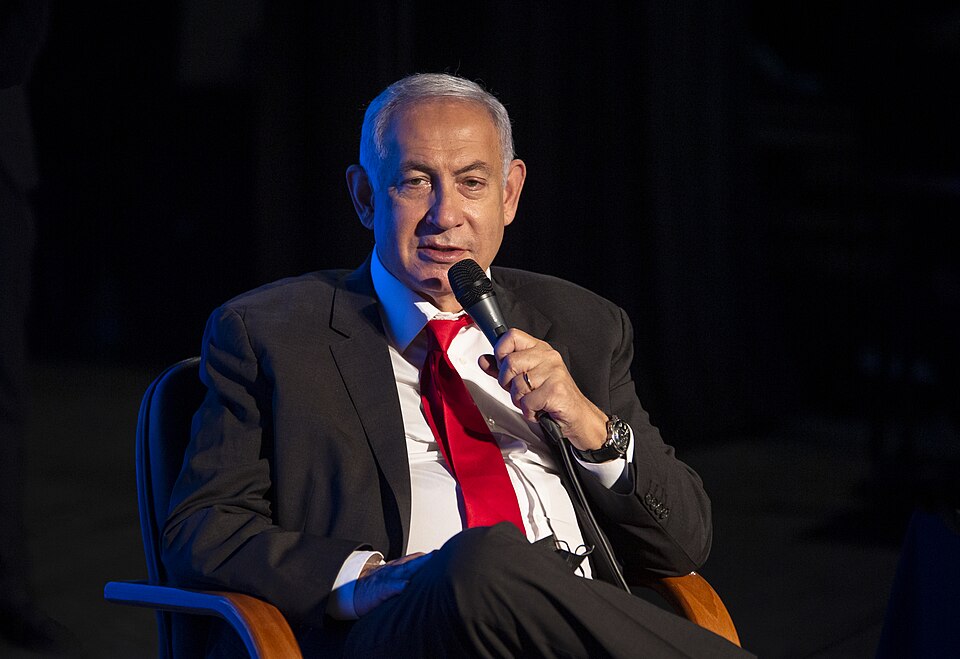
Netanyahu confirmed that he intends to attend the United Nations General Assembly in New York this September, despite Mamdani repeatedly saying the Israeli leader is not welcome. “I’m going to New York,” Netanyahu declared, promising to challenge what he described as the mayor’s inflammatory rhetoric. He accused Mamdani of turning communities against Jewish New Yorkers and compared the political atmosphere to the hatred of the 1930s.
The dispute began during Mamdani’s mayoral campaign, when he promised to explore having the New York Police Department arrest Netanyahu under an ICC warrant. Mamdani has called Netanyahu a war criminal and accused him of overseeing genocide in Gaza. Netanyahu rejects those accusations, says Israel targets Hamas rather than civilians, and has denounced the ICC as a “corrupt, evil organization.”
Netanyahu’s latest response goes further than simply defending himself. He argued that accepting the ICC’s authority over Israel could create a precedent that leaves American leaders and troops vulnerable. He said the court could claim that Trump or American personnel fighting alongside Israel against Iran were war criminals.
The warning landed during an especially tense moment in the Middle East. The United States and Israel remain involved in a widening confrontation with Iran, and the U.S. military said it intercepted Iranian ballistic missiles aimed at American forces on July 28. Netanyahu’s reference to troops fighting “shoulder to shoulder” therefore connected his ICC argument directly to an active war involving U.S. personnel.
Mamdani retreats on arrest power but keeps pressure on Washington
Mamdani has now acknowledged that New York City cannot independently enforce the ICC warrant. After his administration reviewed the available legal options, he said the city lacked the authority to order Netanyahu’s arrest. That represented a major shift from his campaign promise, although the mayor insisted that his position on Netanyahu’s conduct had not changed.
Instead, Mamdani urged the federal government to join the ICC and execute the warrant itself. Trump quickly shut down that possibility, declaring that Netanyahu would not be arrested anywhere in the United States. The White House position effectively ends any realistic prospect of federal officers detaining the Israeli leader during his September visit.
The legal dispute is more precise than the political slogans surrounding it. In November 2024, ICC judges issued warrants for Netanyahu and former Israeli Defense Minister Yoav Gallant after finding reasonable grounds to suspect responsibility for the alleged war crime of using starvation as a method of warfare and crimes against humanity, including murder, persecution and other inhumane acts. The warrant does not constitute a conviction, and Israel denies the accusations while rejecting the court’s jurisdiction.
The ICC also issued a warrant for Hamas military commander Mohammed Deif over alleged crimes connected to the October 7 attack, including murder, torture, sexual violence and hostage-taking. Judges later terminated the case after receiving sufficient information that Deif had died. That history complicates Netanyahu’s suggestion that the court ignored Hamas, although he argued during the Hannity interview that prosecuting a commander who was already dead did not amount to meaningful accountability.
Could the ICC actually target Trump or U.S. troops?
The United States and Israel are not parties to the Rome Statute, the treaty that established the ICC. However, nonmembership does not automatically place every American or Israeli beyond the court’s reach. The ICC claims jurisdiction when alleged crimes occur on the territory of a member state, when the accused is a citizen of a member state, when a nonmember voluntarily accepts jurisdiction, or when the United Nations Security Council refers a situation.
That principle has previously affected Americans. In 2020, the ICC Appeals Chamber authorized an investigation into alleged crimes committed in Afghanistan, including conduct potentially involving U.S. military and intelligence personnel. Afghanistan had joined the court, giving the ICC a territorial basis for examining alleged crimes there even though the United States was not a member.
Netanyahu’s warning therefore has a legal foundation in theory, but it should not be mistaken for news of an actual ICC case against Trump. The court would need jurisdiction over the relevant territory or another recognized legal basis. Prosecutors would also need evidence of specific offenses and judicial approval before any arrest warrant could be issued. His comments were best understood as an argument against the institution’s power, not an announcement that Trump has already entered its legal crosshairs.
The Trump administration already shares much of that hostility. On July 13, the State Department announced what it called a campaign to disable the ICC’s ability to target American officials and service members. The department said it was considering additional sanctions, visa restrictions and diplomatic pressure on countries that continue cooperating with the court.
September could bring protests, but not an arrest
Netanyahu’s planned appearance at the United Nations now promises to become a major political spectacle. Mamdani has said New Yorkers will retain their right to protest, while Netanyahu has promised to use the international stage to answer his critics. Trump’s guarantee, federal control over foreign policy and the city’s admitted lack of enforcement authority make an arrest extraordinarily unlikely.
The larger fight will unfold outside the courtroom. Mamdani is testing how far a city mayor can push a foreign-policy argument that resonates with progressive voters. Netanyahu is using that challenge to portray the ICC as a danger not only to Israel, but also to the United States. Trump, positioned between them, has chosen Netanyahu’s side while escalating Washington’s campaign against the international court.
What began as a mayor’s campaign promise has now become a clash over presidential power, international justice, the Gaza war and America’s military exposure abroad. Netanyahu will almost certainly reach New York without handcuffs. The political confrontation waiting for him may prove far harder to avoid.