How a Swarm of Bees Grounded a Delta Jet in Cancún
In aviation, flights are delayed by thunderstorms, crew timing, and technical issues. Then there are those delays that defy expectations, like the one that happened on Thursday afternoon at Cancún International Airport, when a Delta Air Lines Boeing 737 was kept on the ground by something small yet surprisingly tenacious: a swarm of bees clinging to the aircraft’s wing.
The incident, shared widely in aviation and general-interest online communities, shows that modern air travel still sometimes collides with plain old nature in bizarre and unexpected ways. Here’s what we know, what has been verified, and how this moment fits into a larger pattern of unlikely problems on the tarmac.
When Bees Become Unscheduled Passengers
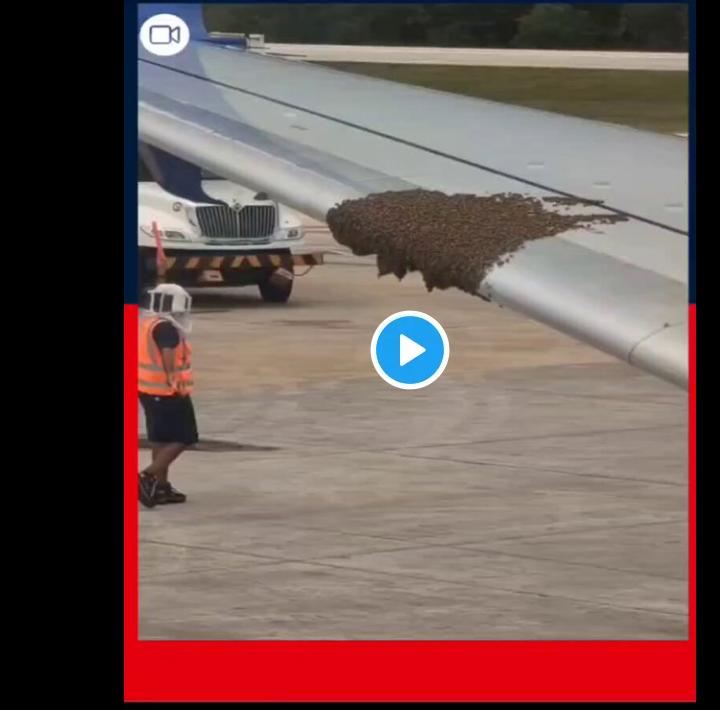
The first public account of the incident came earlier Friday, June 12, 2026, via a post on Reddit’s aviation community: “A Delta Air Lines flight was delayed in Cancún on Thursday after a swarm of bees settled on the 737’s wing. The issue was soon resolved with some forward speed on takeoff!”
Though it’s important to note that no official statement from Delta Air Lines or airport authorities had been publicly released at the time of this report, the social‑media update reflected a broader understanding: a cluster of bees had gathered along the wing surface and contributed to a delay in departure.
The natural question that follows is whether anything like this is actually possible. To answer that, we turn to documented cases from recent years.
History Shows Bees Can and Do Interrupt Flights
Though rare, aircraft encounters with bee swarms are not unheard of. The most closely documented precedent involves Delta Air Lines Flight 1682, where a swarm of bees latched onto the winglet of a Delta Airbus A320 at George Bush Intercontinental Airport in Houston on May 3, 2023.
That incident involved a flight bound for Hartsfield‑Jackson Atlanta International Airport, and the delay lasted for about three hours, according to official airline statements and multiple press reports.
Delta’s public statement at the time leaned into the surreal nature of the event:
“Bee‑lieve it or not, Delta flight 1682 … took a delay this afternoon after a friendly group of bees evidently wanted to talk shop with the winglet of our airplane, no doubt to share the latest about flying conditions at the airport,” a Delta spokesperson told CBS News.
Passengers on that flight watched the situation unfold in real time. Journalist Anjali Enjet, who was aboard when the swarm was discovered, live‑tweeted her disbelief:
“My flight leaving Houston is delayed because bees have congregated on the tip of one of the wings. … Won’t they leave the wing when we take off?” she asked in a tweet that quickly went viral.
Delta later reported that using ground equipment to push the plane back from the gate caused the bees to disperse naturally, and once that happened, passengers were allowed to board and the flight departed without further issue.
Cases like this show that when bees swarm onto aircraft, airports must decide on a case-by-case basis what is safest for passengers, crew, and the insects themselves.
Why Bees Land on Planes in the First Place

Understanding how a swarm of bees can end up on a jet’s wing starts with how bees swarm.
In spring and early summer, honeybee colonies may divide. A new queen emerges, and a portion of the hive, sometimes thousands of worker bees, will leave their original home in search of a new one. During this process, they often pause mid‑journey on the first large, solid object they find while scouts search for a suitable nesting site.
This may include fences, poles, carts, and in rare cases, airplanes.
Experts say that such behavior is resting behavior, not aggression:
“Swarming is reproductive behavior. … While they’re searching, they’ll stop to rest on the first solid object they can find,” explained beekeeper Steve Repasky to Air & Space Magazine in a prior case.
In other words, the bees weren’t trying to sabotage air travel; they were just following instinct.
What Happened in Cancún
No official airline or airport statement has been released to confirm the precise timeline, flight number, or actions taken in the Cancún case, leaving the public report still anchored in social‑media accounts rather than formal communications.
However, the widespread social attention suggests this was truly reminiscent of the Houston event, a situation in which a bee swarm temporarily delayed an aircraft on the ground.
In the Reddit posts that spread most widely on Friday, commentators echoed a common understanding among aviation watchers:
“Bee swarms on aircraft are uncommon but not unheard of. … Airlines and airports typically follow procedures for such events: they may wait for the swarm to disperse naturally, use non‑lethal deterrents if safe, or (as here) proceed with takeoff if it’s deemed low‑risk, since aerodynamic forces quickly remove them,” one top comment read.
That latter point, that forward motion on takeoff can be enough to remove the bees, lines up with how the Houston flight was eventually cleared. On that occasion, turning on the engines and pushing back from the gate caused the insects to leave their perch on the winglet without requiring active removal.
In Cancún, it appears something similar happened: as the aircraft began its takeoff roll, the airflow across the wing likely caused the bees to lose hold, allowing the jet to depart once the runway roll commenced.
Airport Safety and Wildlife Management
Encounters like these remind us that airports are not sealed environments. Birds, insects, and other wildlife interact with runways, taxiways, and aircraft daily, and airports invest in wildlife management for safety reasons.
Airports worldwide have implemented a variety of strategies ,from trained detection teams to habitat modification and even pollinator gardens designed to give bees safer places to land away from aircraft operations.
However, such precautions can’t eliminate every chance encounter. And when a swarm is already airborne, resting on a plane wing may simply be the result of happenstance.
Currently, Delta Air Lines has not issued an official press release about the Cancún delay, and airport authorities have not publicly detailed operational responses. But the social sharing suggests an event that captured the imagination, and the confusion of frequent flyers and aviation enthusiasts alike.
Ultimately, the bee swarm in Cancún becomes part of a small but real cluster of events, from Houston to other airports, where modern aviation briefly met the age‑old instincts of nature.
For many travelers who have sat through long delays hoping for a clear explanation, this one might just be unforgettable: a moment when bees, not bureaucracy, grounded a plane , even if just for a little while.