Massive FBI Takedown Across West Virginia and Maryland Signals Summer Push Against Guns, Drugs, and Violent Crime.
A major federal takedown across West Virginia and Maryland marks a new phase in the FBI’s summer crime crackdown, sending a clear message to violent offenders, drug networks, and gun traffickers that law enforcement agencies are acting early, together, and with force.
The operation, known as Operation Turf War, resulted in 32 narcotics and weapons-related arrests, according to the FBI. Officials say the sweep also launched Operation Summer Heat 2.0, a nationwide seasonal push targeting violent crime during a time of year when many cities and communities often brace for higher public safety concerns.
The FBI described the takedown as a coordinated effort involving federal, state, and local partners working across two states. It centered on dismantling a suspected drug trafficking organization operating in West Virginia and Maryland, with the Eastern Panhandle of West Virginia playing a major role in the investigation.
For residents in places like Martinsburg, Berkeley County, and surrounding communities, the announcement lands as more than a federal headline. It speaks to the everyday concerns of families, business owners, teachers, drivers, and neighbors who want safer streets and fewer weapons tied to narcotics activity.
A Large Operation With a Local Beginning
According to the FBI, Operation Turf War was led by the FBI Pittsburgh Field Office’s Eastern Panhandle Drug and Violent Crime Task Force in close coordination with West Virginia’s Homeland Security Task Force.
The investigation did not come together overnight. The FBI said the case began in August 2025, starting with work by an FBI Pittsburgh task force officer from the Martinsburg Police Department. By January 2026, the investigation had intensified, with authorities executing six search warrants in one day.
That timeline matters because it shows the sweep was not a random roundup or sudden show of force. It resulted from months of investigation, surveillance, coordination, and preparation.
Federal authorities said the June 2 takedown was designed to disrupt a drug trafficking organization connected to narcotics and firearms offenses. The arrests took place across West Virginia and Maryland, underscoring how local crime concerns can extend beyond county lines and become regional law-enforcement problems.
What Authorities Say They Seized

The FBI reported that over the course of the investigation, agents and partner agencies seized approximately 13 kilograms of cocaine, about 110 pounds of marijuana, roughly two ounces of psychedelic mushrooms, and between 5 and 10 grams of fentanyl.
Authorities also seized more than 20 firearms, magazines, ammunition, 29 cellular devices, and about $273,035 in cash.
Those details matter because they show why the operation was framed as a violent crime and drug trafficking effort, not simply a narcotics case. Firearms and drug distribution often create the combination that most alarms law enforcement and residents: illegal markets protected by weapons, cash, threats, and intimidation.
For communities affected by street-level drug activity, those numbers are not abstract. They can represent the traffic on neighborhood roads, the late-night activity near apartment complexes, the violence that follows unpaid debts, and the fear that spreads when guns become part of a drug economy.
The FBI Says the Summer Crackdown Is Just Beginning
Operation Turf War also served as the opening move for Operation Summer Heat 2.0.
FBI Director Kash Patel said the bureau plans to replicate similar efforts across the country over the next 95 days. The FBI described Summer Heat as a full-court press against violent crime, using direct language to underscore the campaign’s urgency.
That seasonal timing is not accidental. Summer is often a period when law enforcement agencies increase visibility and enforcement, especially in areas dealing with gun violence, drug trafficking, gang activity, or repeat violent offenders.
The FBI’s message is that this year’s effort will be built around partnerships. The operation involved multiple levels of law enforcement, including federal agencies, state police, sheriff’s offices, city police departments, prosecutors, and specialized task forces.
In major takedowns like this, no single agency usually carries the entire case. Local officers may know the neighborhoods. Federal agents may bring broader investigative tools. Prosecutors help turn evidence into indictments. Tactical teams handle high-risk arrests. Analysts connect the dots through phones, records, intelligence, and patterns.
That layered approach is what officials highlighted as the heart of the operation.
More Than 100 FBI Pittsburgh Personnel Supported the Effort
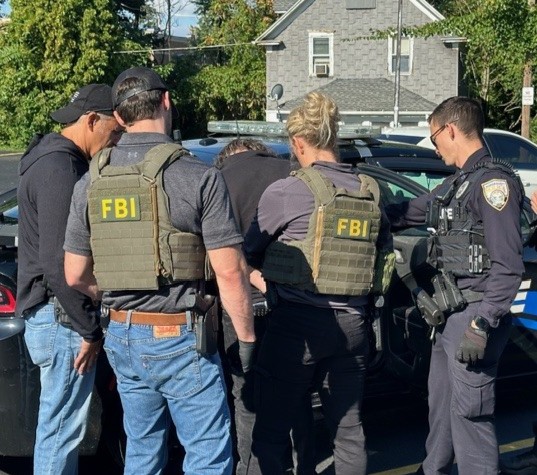
The scale of the operation was significant. It brought in seven SWAT teams from the Pittsburgh, Baltimore, and Washington field offices to support the takedown.
The FBI said seven SWAT teams from the Pittsburgh, Baltimore, and Washington field offices supported the takedown. More than 100 personnel from the FBI Pittsburgh were involved, including special agents, intelligence analysts, tactical specialists, and professional staff.
The bureau’s Criminal Division, Laboratory Division, Operational Technology Division, and Information Management Division also supported the operation.
That resource deployment shows how seriously federal officials treated the case. It also reflects the complexity of modern criminal investigations, where evidence can include physical contraband, digital communications, financial records, DNA, surveillance, and intelligence from multiple jurisdictions.
Large-scale drug cases are rarely built on a single arrest or a single search warrant. They often rely on patterns developed over time, including alleged supplier networks, distribution routes, phone evidence, informants, and repeated investigative steps.
Rapid DNA Technology Entered the Spotlight

One of the most notable parts of the FBI announcement was the use of Rapid DNA technology. The bureau said Operation Turf War marked the first-ever large-scale operational deployment of the FBI Laboratory Division’s Rapid DNA system in the FBI Pittsburgh area of responsibility, and the third such deployment in FBI history.
According to the bureau, Operation Turf War marked the first-ever large-scale operational deployment of the FBI Laboratory Division’s Rapid DNA system in the FBI Pittsburgh area of responsibility. It was also the third such deployment in FBI history.
Rapid DNA analysis allows authorities to use a mouth swab from an arrestee to develop a DNA profile without traditional lab processing or human review, with results available in about two hours.
For law enforcement, that can be a powerful tool in fast-moving investigations. It may help identify links between suspects, evidence, warrants, or other cases more quickly than traditional timelines allow.
For the public, the use of such technology also raises broader questions about how rapidly policing tools are evolving. In the FBI’s view, the technology helps move more quickly against alleged criminal networks, especially when arrests and searches occur within a compressed window.
The Agencies Behind the Takedown
The FBI credited a long list of partners for the operation.
Those partners included Homeland Security Investigations, the U.S. Marshals Service, the U.S. Attorney’s Office for the Northern District of West Virginia, the U.S. Attorney’s Office for the District of Maryland, the West Virginia Air National Guard, the Berkeley County Sheriff’s Office, Maryland State Police, West Virginia State Police, and the Washington and Baltimore High Intensity Drug Trafficking Area task force.
That list matters because it shows the operation crossed both geography and jurisdiction. Put simply, the takedown required coordination that matched the reach of the suspected network.
Drug trafficking organizations rarely respect county lines, state borders, or agency boundaries. A suspect may live in one state, store narcotics in another, move cash through a third location, and communicate through encrypted phones or social media apps. Law enforcement must coordinate in ways that match how criminal networks operate.
In this case, officials say that coordination was central to the result.
What This Means for Local Communities
For residents in West Virginia’s Eastern Panhandle and parts of Maryland, the takedown may bring a sense of relief. But it may also bring questions about what comes next.
Will the arrests reduce crime in the short term? Will other groups try to fill the vacuum? Will prosecutions lead to convictions? Will neighborhoods see a lasting difference, or only a temporary disruption?
Those are fair questions because a takedown is not the end of the story. It is the beginning of the legal process.
Arrests do not equal convictions. Defendants are presumed innocent unless proven guilty in court. Prosecutors must still present evidence, defense attorneys will challenge the government’s case, and courts will determine outcomes.
Still, enforcement actions like Operation Turf War can disrupt supply chains, remove weapons, seize cash, and send a message that law enforcement is watching closely. For communities tired of the visible signs of drug activity and gun violence, that message can matter.
For communities tired of the visible signs of drug activity and gun violence, that message can matter.
A Bigger National Strategy
The FBI is presenting Operation Summer Heat 2.0 as a national effort. That framing sets up a broader push beyond West Virginia and Maryland.
The bureau says the plan is to replicate the same aggressive partnership model nationwide, especially in communities dealing with violent crime. The name suggests urgency, pressure, and visibility.
Last year’s Operation Summer Heat, according to FBI remarks, produced thousands of arrests, searches, and major firearms and narcotics seizures. This year, the FBI says it intends to build on that model with another summer-long push.
The strategy is clear: identify violent offenders, target networks, coordinate with local agencies, and move before crime patterns deepen during the summer months.
Whether that approach produces lasting results will depend on what happens after the headlines fade. Communities need arrests, but they also need prosecutions that hold up, prevention programs that reach young people, and long-term investment that addresses why certain neighborhoods become vulnerable to drug networks in the first place.
A Strong Opening Move
Operation Turf War gives the FBI a dramatic opening to its summer campaign. Thirty-two arrests. Multiple states. More than 20 firearms. Large quantities of narcotics. More than a quarter of a million dollars in cash. Seven SWAT teams. More than 100 FBI Pittsburgh personnel. A first-of-its-kind Rapid DNA deployment for the region.
Those facts explain why federal officials are treating the takedown as a major public safety moment.
For residents, the deeper meaning is simpler. They want streets where families can live without the shadow of drug violence. They want fewer guns tied to criminal activity. They want fewer neighborhoods treated as operating zones for trafficking networks.
Operation Turf War may not solve every problem connected to drugs and violence in West Virginia and Maryland. No single takedown can do that. But it does show that federal, state, and local law enforcement agencies are trying to move together, move faster, and strike at networks rather than waiting for violence to spread.
And as Operation Summer Heat 2.0 begins, the message from the FBI is unmistakable: this was not the finish line. It was the opening warning.