More than 100 Venezuelans who were deported from the US hours before the earthquakes are missing
A mass deportation flight from the United States has collided with one of Venezuela’s deadliest natural disasters in recent memory, leaving more than 100 people unaccounted for after powerful earthquakes struck just hours after their arrival.
The group—146 Venezuelans deported from the U.S. and temporarily housed in a coastal hotel in La Guaira—was caught in the collapse and chaos that followed twin quakes measuring 7.2 and 7.5 in magnitude. What was meant to be a routine repatriation process quickly turned into a survival crisis as buildings fell, communications failed, and families were left scrambling for answers across borders.
For many relatives, the uncertainty has been unbearable. For survivors, the memories are fragmented, traumatic, and marked by desperate attempts to escape falling debris.
A Deportation Flight That Landed Into Disaster
The deportation flight departed Miami carrying men, women, and children, “among them 19 women and seven minors”, under ongoing U.S. immigration enforcement operations. According to flight tracking data cited by monitoring groups, deportation flights to Venezuela had resumed earlier in 2025 after more than a year of suspension.
Upon arrival, authorities transported the group to a hotel in La Guaira, a coastal region that later became one of the epicenters of the earthquakes. Survivors say they were told the stay would be temporary, with plans for documentation processing and onward transport. Instead, within hours, the ground began to shake violently.
“We Walked Through Rubble and Screaming Streets”
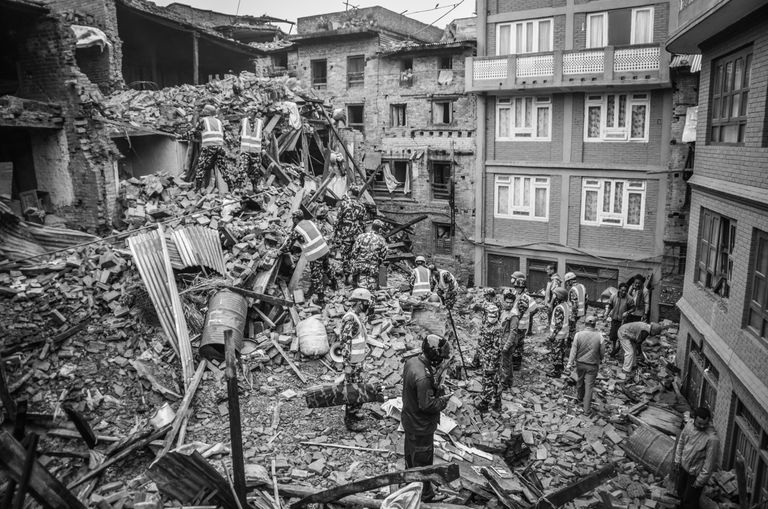
Survivors describe scenes of total collapse as the earthquakes struck in rapid succession. Walls cracked, ceilings fell, and entire sections of the hotel reportedly crumbled while people were still inside.
One survivor, Lisbeth Portillo, 58, described escaping from a second-floor room shared with more than a dozen women. She recalled being trapped under debris before managing to pull herself free as the structure shifted.
In the aftermath, groups of survivors wandered through damaged streets in search of safety. Some were barefoot. Others were injured. Many reported seeing people running through the chaos, covered in dust and blood, while buildings continued to collapse around them. With communications down, there was no immediate way to contact family members or authorities.
A City in Ruins and a Search for the Missing
Local authorities estimate that more than 1,700 people have died in the earthquakes, though recovery efforts are still underway and the full scale of the disaster is not yet known. For the deported group, however, the focus has shifted from official statistics to urgent questions: who survived, who is missing, and where people were taken after the collapse.
Some survivors managed to reach National Guard facilities, where they were finally able to contact relatives abroad. Others remain unaccounted for, with families in both Venezuela and the United States searching for information through fragmented channels.
Relatives of deportees say they have received conflicting or incomplete updates about where their loved ones were held after landing, deepening the confusion surrounding their whereabouts during the disaster.
Trauma, Displacement, and Separated Families
The emotional toll on survivors is severe. Many describe experiencing both forced removal and natural disaster within a single day—two life-altering events unfolding in rapid sequence. One survivor described crawling out from under rubble and walking for miles before finding help. Another recounted grabbing a fellow deportee’s clothing beneath debris to pull themselves free.
Several survivors have since been reunited with family members, but others remain missing or hospitalized, with conditions still unclear due to infrastructure damage and communication breakdowns. Families abroad report waiting for updates with little official coordination, relying instead on personal networks, social media, and scattered witness accounts.
Deportation Policy Meets Natural Disaster Reality
The incident has raised difficult questions about the intersection of immigration enforcement and emergency preparedness. Deportation operations typically involve rapid processing and transfer, often without long-term housing arrangements in destination countries.
In this case, survivors were reportedly placed in a hotel shortly after arrival, but the timing coincided with one of the most powerful earthquakes in recent Venezuelan history. While immigration authorities have not released detailed statements regarding the situation, the incident has intensified scrutiny of deportation logistics and the vulnerability of returnees placed into unstable environments.
Human rights advocates argue that deportation policies rarely account for sudden crises in destination countries, particularly when individuals are returned without long-term support systems in place.
Survivors Rebuild Contact Amid Chaos
In the days following the disaster, some survivors have managed to reconnect with relatives. One woman described calling her husband in the United States from a government facility after escaping the rubble, telling him she had survived despite initial disbelief.
Others are still waiting for similar moments of confirmation. Aid organizations and local authorities continue to search damaged structures, but progress is slow due to ongoing instability and limited communication infrastructure in affected areas.
A Crisis Defined by Collision, Not Coincidence
What makes this tragedy particularly striking is not just the scale of the earthquake or the deportation flight itself, but the timing of their intersection. A group already displaced by immigration enforcement found itself suddenly trapped in a natural disaster zone with no warning and limited protection.
For families on both sides of the border, the consequences are still unfolding. The missing remain unaccounted for, survivors are coping with trauma layered on trauma, and the full scope of what happened inside the collapsed hotel in La Guaira is still being pieced together.
In the absence of certainty, one reality remains: dozens of lives were placed at the intersection of policy and catastrophe, and the search for answers is far from over.