Russell Brand Says He Rejected Hollywood. The Bigger Question Is Whether Hollywood Rejected Him First
Russell Brand says he will never return to Hollywood, but his dramatic farewell comes after red carpets, studio comedies, and celebrity headlines have been replaced by online politics, religious testimony, and an approaching criminal trial.
“I’ll never be in Hollywood again,” Brand told an audience at Turning Point USA’s AmericaFest in December 2025. He said he was no longer interested in what he described as deception, illusion, false idols and celebrity.
It was a sweeping rejection of the world that once made him internationally famous. It was also a statement guaranteed to divide an audience.
Supporters may see a man abandoning fame for faith and independence. Skeptics may hear a celebrity declaring that he rejected an institution that appears to have stopped offering him a meaningful place inside it.
That tension makes Brand’s exit more than a personal announcement. It raises a broader question about celebrity reinvention, accountability and who controls the story when a public career changes direction.
From Hollywood troublemaker to Hollywood critic

Brand’s American breakthrough came through films such as “Forgetting Sarah Marshall,” “Get Him to the Greek,” “Arthur” and “Rock of Ages.” His appeal was built around excess. He played loud, unpredictable characters while bringing similar energy to talk shows and tabloid coverage.
For a time, Brand did not merely participate in celebrity culture. He appeared to embody it.
His identity later shifted. Film roles became less central, and Brand built an independent digital audience around politics, wellness, free speech, spirituality and criticism of mainstream institutions. He moved from being interviewed by major media organizations to regularly challenging their values and credibility.
Brand’s latest declaration completes that transformation. Hollywood is no longer presented as the summit of his career. It is presented as a world of false meaning that he claims to have outgrown.
The framing is powerful because it turns professional distance into moral choice. Instead of appearing excluded from mainstream entertainment, Brand casts himself as the person walking away.
That does not make his spiritual change insincere. People can genuinely reconsider fame and ambition. But a public figure who built his reputation inside celebrity culture will naturally face questions when he later condemns the same system.
His farewell cannot be separated from his legal reality
Brand’s remarks also land under the shadow of a serious criminal case in Britain.
He is scheduled to stand trial in October 2026 on seven charges involving six women. The charges include three counts of rape, three counts of sexual assault and one count of indecent assault, connected to alleged incidents between 1999 and 2009.
Brand has pleaded not guilty and denied engaging in nonconsensual sexual activity. The accusations remain allegations unless proved in court, and he is entitled to a fair trial.
That context matters because “I’ll never be in Hollywood again” can sound like a simple spiritual decision when presented alone. The fuller story is more complicated.
Brand is not merely a former actor choosing podcasts over movie sets. He is a defendant awaiting trial while defining his public identity outside the entertainment institutions that once elevated him.
None of that proves his criticism of Hollywood is false. It does mean readers should be cautious about treating the announcement as an uncomplicated tale of a celebrity voluntarily giving up fame.
Public reinvention can be sincere and strategic at the same time.
He left celebrity culture without leaving the spotlight
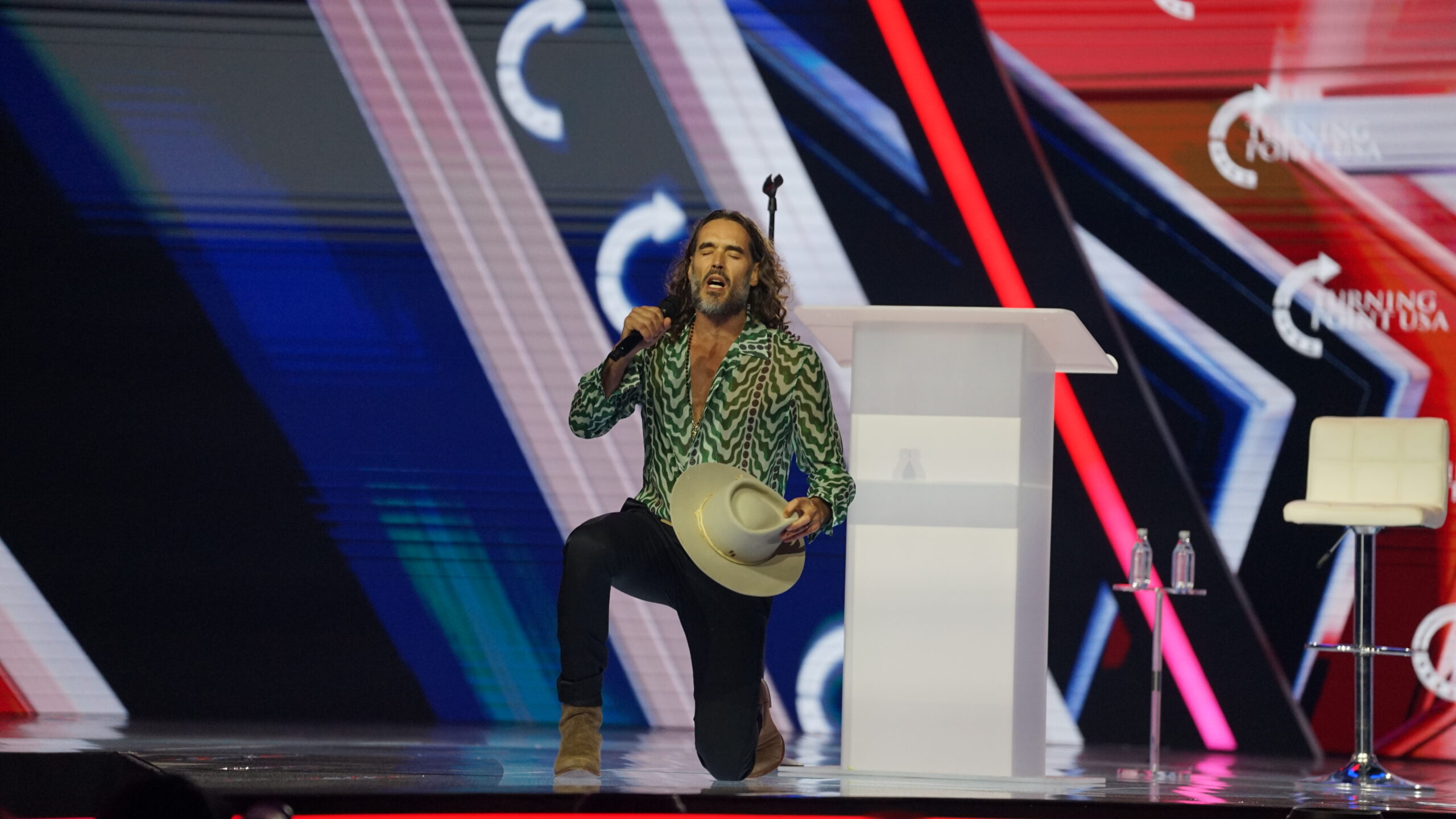
Xuthoria, CC BY-SA 4.0, via Wikimedia Commons Licensed under Russell Brand
Brand says he is no longer interested in celebrity, but he has not disappeared from public life.
He continues speaking before large political audiences, publishing online content and participating in high-profile interviews. His platform still depends on visibility, engagement and the attention of millions of viewers.
The spotlight has changed, not vanished.
Traditional celebrity was built through movie studios, television networks, agents and entertainment reporters. Brand’s newer version is built through podcasts, social media, political events and direct relationships with followers.
That model gives him more control. He can speak without a studio shaping his message, cultivate an audience that distrusts mainstream media and present criticism as evidence that powerful institutions oppose him.
This is why his anti-Hollywood message travels effectively. Supporters can see him as independent rather than diminished, spiritually transformed rather than culturally displaced.
Critics will argue that rejecting “false idols” is easier after movie offers have slowed and controversy has changed how institutions respond to you.
Supporters will answer that losing access to the old system may be exactly what allowed him to see it clearly.
The real story is who controls the ending
Hollywood has a long history of celebrities announcing that they are finished with fame, only to continue building businesses and audiences around their famous names.
Brand’s case is more combustible because his farewell combines religion, politics, cultural grievance and unresolved criminal charges. Every part attracts a different audience, and each sees a different man.
Some see a former addict and entertainer who found Christianity and rejected empty status. Others see a skilled performer using a new stage to rewrite the meaning of his fall from mainstream acceptance.
The honest conclusion may be less satisfying than either narrative.
Brand may genuinely believe Hollywood promotes values he no longer accepts. Hollywood may also have little interest in restoring the career he once had. Both things can be true.
His statement is compelling not because it closes the story, but because it exposes the battle over how that story will be remembered.
Did Russell Brand walk away from Hollywood after finding a deeper purpose?
Did Hollywood move away from Russell Brand before he announced that he was done with it?
Or is the public watching a famous performer turn rejection, controversy and spiritual conviction into one final act of reinvention?
Brand has given his answer.
The audience is unlikely to stop debating it.