Tesla’s $1.2 Trillion Gamble: Why Elon Musk May Have to Choose Between China and SpaceX
Tesla is facing one of the biggest strategic decisions in its history as Elon Musk’s vision of combining Tesla and SpaceX collides with the complicated reality of global politics. The electric vehicle giant is reportedly exploring ways to separate its China operations. This move could involve a business worth billions, a factory producing nearly 1 million vehicles a year, and one of the most important supply chains in the automotive industry.
The discussions reportedly come as Musk considers whether Tesla and SpaceX could eventually operate under one corporate structure. However, no merger agreement has been announced, and Tesla has not confirmed any plan to sell its Chinese business. The reported discussions remain focused on possible strategies, including creating more separation between Tesla’s China operations and the rest of the company.
The reason behind the possible restructuring is a growing conflict between Tesla’s dependence on China and SpaceX’s position as a major U.S. space and defense contractor. A combined Tesla-SpaceX company could face intense regulatory scrutiny because Tesla operates major facilities in China, while SpaceX works closely with U.S. government agencies on sensitive programs.
Tesla’s Shanghai Factory Has Become a Global Powerhouse
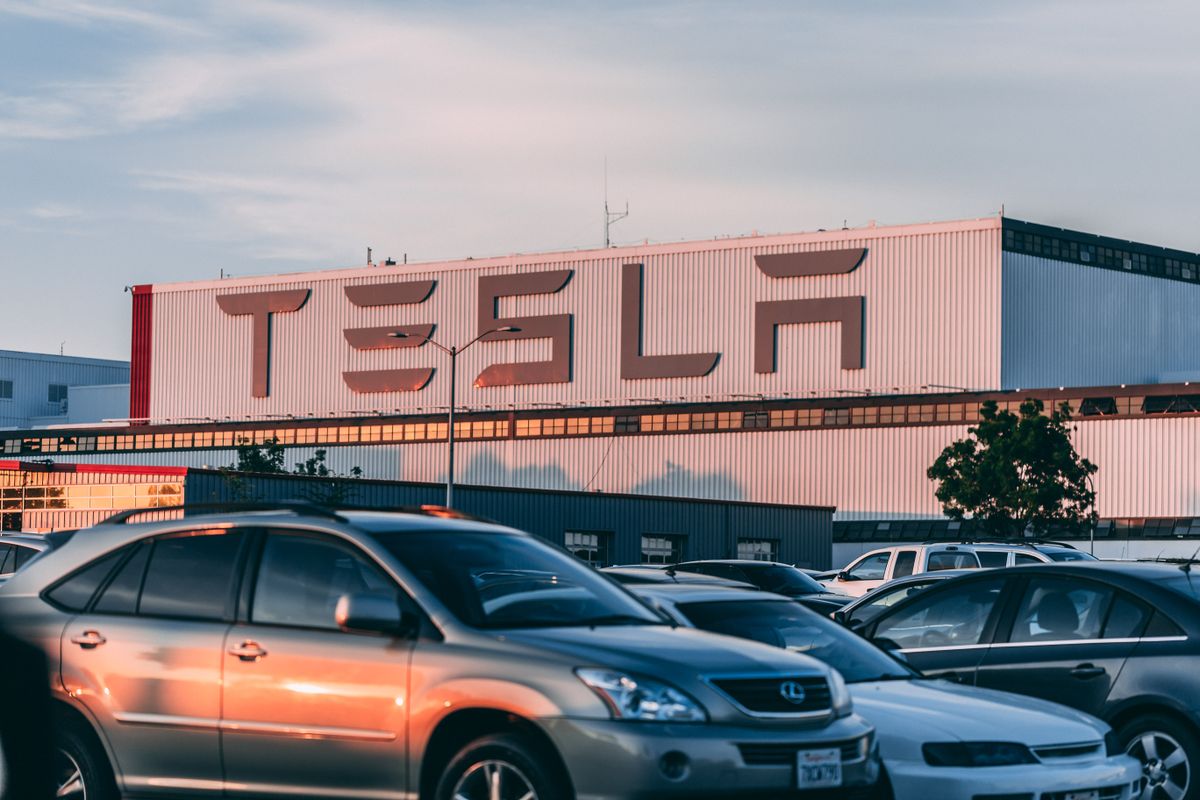
At the center of the debate is Tesla’s Gigafactory Shanghai, the company’s largest and most productive vehicle manufacturing facility. The factory has an annual production capacity of more than 950,000 vehicles, making it a critical part of Tesla’s global delivery network.
The Shanghai facility has historically produced more than half of Tesla’s worldwide vehicle deliveries and serves as a major export hub for markets across Europe and the Asia-Pacific region. Its importance goes far beyond China because vehicles built in Shanghai help supply customers around the world.
A separation of Tesla China would therefore involve much more than transferring ownership of a factory. The move could affect nearly 1 million vehicles of yearly production capacity, hundreds of suppliers, thousands of employees, and a manufacturing system that Tesla spent years building.
China has become Tesla’s second-largest market after the United States. The country provides Tesla with both a huge customer base and one of the most advanced electric vehicle manufacturing ecosystems on the planet.
Walking Away From China Would Come at a Major Cost
Tesla’s success in China has been built on a highly localized supply chain that gives the company significant production advantages. Tesla has previously said that more than 95% of components used in China-made Model 3 and Model Y vehicles are sourced locally.
The company’s Shanghai operations rely on a network of more than 400 domestic suppliers, with many also supporting Tesla facilities outside China. This network helps Tesla reduce costs, improve manufacturing speed and maintain competitive pricing in a crowded electric vehicle market.
China has helped Tesla achieve some of its lowest manufacturing costs globally. The country’s battery suppliers, component manufacturers and skilled automotive workforce have become essential parts of Tesla’s worldwide production strategy.
A complete separation from China could therefore create significant challenges. Tesla would have to consider how to maintain vehicle production, protect supplier relationships, manage exports and preserve the cost advantages that made Shanghai such a valuable asset.
The SpaceX Factor Changes Tesla’s Future
The possibility of a Tesla-SpaceX merger is what makes the China issue especially complicated.
Tesla operates primarily as a consumer technology company focused on electric vehicles, artificial intelligence, robotics and energy storage. SpaceX operates in a much more sensitive environment, with satellite systems, launch technology and government contracts connected to national security.
A combined company would bring together some of the world’s most advanced technologies. It could potentially unite electric vehicles, autonomous systems, artificial intelligence, satellite communications and space technology under one corporate umbrella.
However, that combination could also create regulatory concerns. Officials could examine issues involving cybersecurity, data access, employee permissions, technology sharing and foreign operations.
The challenge becomes even more complex because Tesla’s largest overseas manufacturing base is located in China, while SpaceX plays a major role in America’s strategic space infrastructure.
Musk Has Prepared Tesla for a More Divided World
The reported discussions appear connected to Musk’s previous efforts to create stronger separation between Tesla’s U.S. and China operations.
Reports indicate that Musk encouraged executives to maintain a clear division between the two sides of the company. The goal was reportedly to ensure Tesla could continue operating even if tensions between the United States and China created new restrictions.
That approach reflects a growing reality for multinational companies. Businesses operating across major geopolitical boundaries increasingly need strategies that protect operations from sudden political changes.
For Tesla, the stakes are enormous. The company has a market value of roughly $1.2 trillion, while SpaceX has reached a valuation above $1.4 trillion. Any decision involving both companies would affect investors, employees, suppliers and governments across the world.
Tesla’s Possible Options for Its China Business
One possible approach would be creating a separate Tesla China company. Under this structure, Tesla could allow its Chinese operations to function more independently while maintaining manufacturing relationships and protecting production capacity.
This option could reduce regulatory concerns by creating clearer boundaries between Tesla’s China operations and its American business. However, questions would remain about branding, software access, intellectual property and long-term control.
Another option would be selling Tesla’s China operations to another investor or company. A sale would provide the strongest separation and could remove one of the biggest obstacles to a potential Tesla-SpaceX combination.
However, selling Shanghai would also mean giving up direct control of one of Tesla’s most valuable assets. Finding a buyer capable of managing such a large and complex operation would be a major challenge.
Tesla could also consider spinning off its China business into a separate company. This could allow shareholders to maintain financial exposure while creating two independent organizations with different regulatory responsibilities.
A spin-off could preserve value, but regulators may still examine whether Tesla China remains too closely connected to Tesla’s American operations.
A Decision That Could Redefine Elon Musk’s Empire
The reported Tesla China discussions represent a much larger question about the future of Elon Musk’s business empire.
Tesla and SpaceX are two of the world’s most valuable technology companies, but they operate in very different environments. Tesla depends on global manufacturing and Chinese supply chains, while SpaceX operates at the intersection of technology, national security and space exploration.
Combining the companies could create one of the most powerful technology groups ever assembled. A merged organization could control major developments in transportation, artificial intelligence, robotics, satellites and space systems.
But the same factors that make the combination attractive also make it difficult.
Tesla cannot easily replace China’s manufacturing advantages, and SpaceX cannot ignore the regulatory expectations surrounding defense-related technology. The solution may require a careful restructuring that protects Tesla’s global business while creating enough separation for regulators to consider a future merger.
For now, Tesla has not announced a China sale, and a Tesla-SpaceX merger remains only a possibility. Yet the reported discussions reveal a major turning point for Musk’s companies, where business strategy, technology and geopolitics are becoming increasingly connected.
The next move could determine not only the future of Tesla’s China operations but also the shape of one of the largest technology empires in modern history.