
The 2026 Catastrophe Warning: What Scientists Are Really Saying About Population, Climate and Global Risk
A 2026 Warning That Is Not as Simple as “The World Will End”
A dramatic scientific warning tied to 2026 has returned to public attention, raising fresh questions about whether humanity is approaching a dangerous breaking point. The warning is often framed as a global alert, but the real story is more complex than a single doomsday date. It begins with a famous 1960 paper by physicist Heinz von Foerster and his colleagues, who used historical population data to argue that, if human population growth continued along the same mathematical path, it would approach an impossible “infinite” point on Friday, November 13, 2026.
That prediction was never a literal forecast that the planet would suddenly collapse on one specific day. It was a provocative mathematical warning about unchecked growth, limited systems, and the danger of assuming that human progress can expand forever without consequences. More than six decades later, the world has not reached an infinite population, but the underlying concern has not disappeared. We are now living through a period where population pressure, climate disruption, ecological damage, nuclear risk, artificial intelligence, food insecurity, migration, and political instability are colliding at the same time. The result is not a neat Hollywood-style catastrophe. It is a slower, more complicated pressure system that affects households, governments, cities, farms, hospitals, coastlines, power grids, and global markets.
The 1960 “Doomsday” Equation Behind the 2026 Date
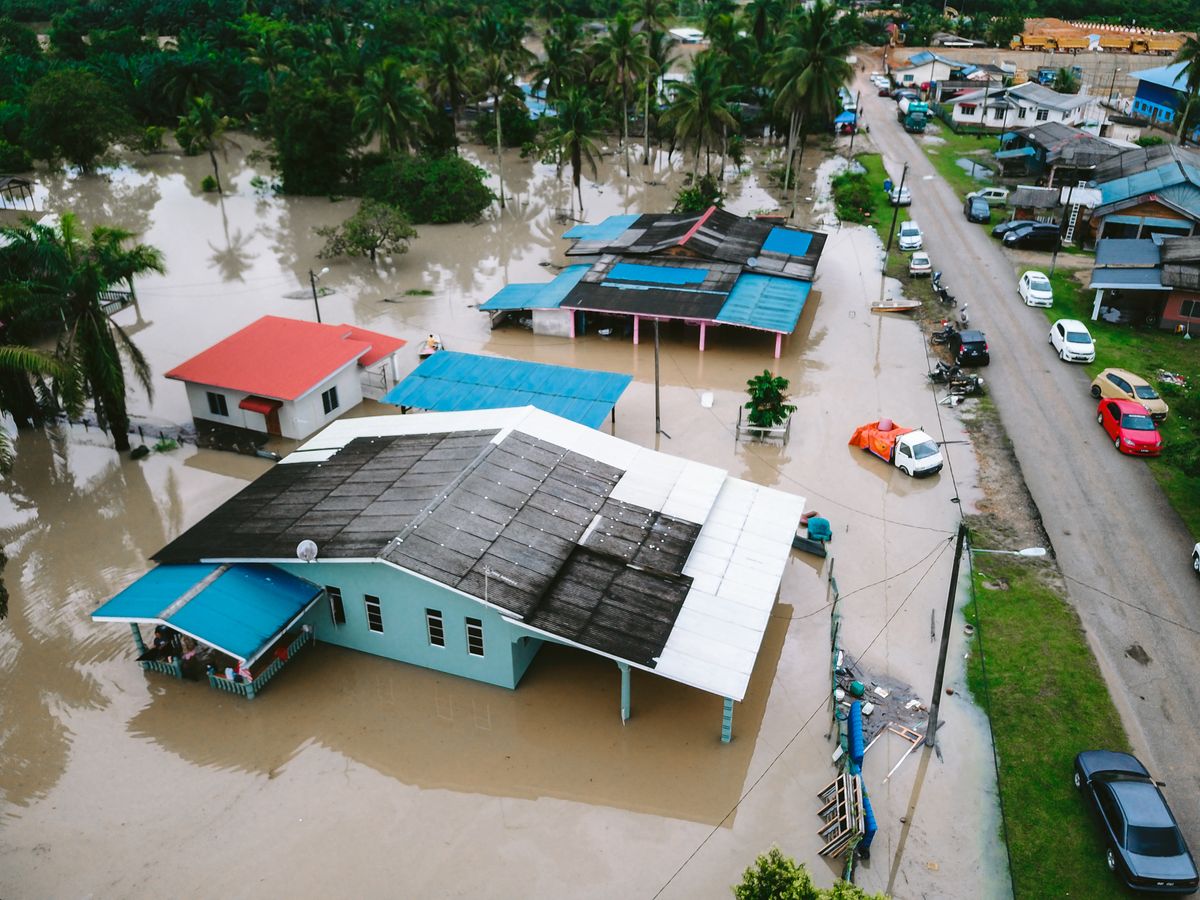
The 2026 warning comes from the 1960 Science paper “Doomsday: Friday, 13 November, A.D. 2026,” by Heinz von Foerster, Patricia Mora, and Lawrence Amiot. The authors examined long-term human population growth and found that the curve appeared to rise faster than ordinary exponential growth would predict. In simple terms, the model suggested that humanity’s numbers were increasing so quickly that the equation eventually broke down into a mathematical singularity. That “singularity” did not mean scientists expected an infinite number of people to physically exist. It meant the model had reached the limit of usefulness. When a growth curve points toward an impossible outcome, the message is not that the impossible will happen. The message is that the pattern must change.
In that sense, the 2026 date has always been less about a scheduled apocalypse and more about a warning sign. It showed that growth cannot continue forever inside a finite world. Population, consumption, energy use, industrial output, emissions, freshwater demand, land use, and waste all face limits. When those limits are ignored, societies do not fail all at once. They become more fragile.
Why Today’s Population Data Tells a Different Story
Modern population projections show that the original 2026 equation did not become reality in a literal sense. The United Nations now projects that the world population will continue to rise for several more decades and peak at around 10.3 billion people in the mid-2080s, rather than exploding toward infinity in 2026. This matters because the real global challenge has shifted. The fear is no longer just that the world will have “too many people” by 2026. The bigger issue is that population growth is uneven, consumption is unequal, and aging societies are emerging even as fast-growing regions face pressure on jobs, housing, schools, water, and infrastructure.
Some countries are already dealing with shrinking workforces and falling birth rates. Others are still trying to build enough roads, hospitals, power systems, and schools for rapidly growing populations. The global population story is no longer one simple curve. It is a divided map of aging nations, young nations, crowded cities, stressed food systems, and uneven opportunity.
The Real 2026 Risk Is System Pressure
The stronger interpretation of the 2026 warning is that humanity is entering a period in which multiple systems are under pressure simultaneously. The World Economic Forum’s Global Risks Report 2026 examines risks in the immediate, short- to medium-term, and longer-term, drawing on views from more than 1,300 experts worldwide. The report frames the current period as part of a turbulent decade in which governments and institutions must manage overlapping crises instead of isolated problems.
That is the important point. A food shock can worsen political unrest. A climate disaster can damage housing markets and insurance systems. A war can raise energy prices. A cyberattack can disrupt hospitals or supply chains. Artificial intelligence can accelerate the spread of misinformation during elections or crises. A public health emergency can expose weak infrastructure. These dangers become more serious when they interact. This is why scientists and risk analysts increasingly describe global danger as interconnected. The issue is not one single catastrophe waiting in 2026. The issue is a world in which several high-risk systems are simultaneously becoming unstable.
Climate Change Is the Most Visible Stress Test
Climate change remains one of the clearest examples of global system pressure. Heat waves, floods, wildfires, droughts, and extreme storms are no longer rare warnings from the future. They are present-day events that affect food prices, insurance costs, migration, public health, and national budgets. The Global Challenges Foundation’s Global Catastrophic Risks 2026 report lists climate change, biodiversity collapse, weapons of mass destruction, artificial intelligence in military decision-making, and near-Earth asteroids among the major risks facing humanity. The report describes global catastrophic risk as a possible event or process that could threaten a large share of humanity across multiple continents.
For ordinary people, climate risk is not only about temperature charts. It is about whether crops survive a brutal summer, whether power grids can handle demand, whether coastal homes remain insurable, whether water supplies hold, and whether governments can respond quickly enough when disasters strike. A warming planet turns local problems into national and global problems.
The Population Climate Connection
One reason the old 2026 population warning still attracts attention is that population growth and climate pressures have historically been linked to energy use. A 2025 study by physicist Victor M. Yakovenko re-examined long-term population growth and carbon dioxide emissions using data from 10,000 BCE to 2023. The study found that historical population growth did follow a hyperbolic pattern for a period, but instead of reaching an impossible singularity, the curve appears to bend away from that path.
The study also linked the acceleration of population growth to the Industrial Revolution and the massive use of fossil fuels. That connection is crucial. Modern population growth was supported by energy, fertilizers, transport, medicine, mechanized farming, and industrial production. Those advances helped billions of people live longer and escape extreme poverty, but they also increased greenhouse gas emissions and resource demand. This is the central tension of the 2026 warning: the same systems that enabled humanity’s growth have also created new vulnerabilities.
Nuclear Weapons, AI, and the Modern Catastrophe Map
The risk conversation in 2026 is not limited to population and climate. The Doomsday Clock, maintained by the Bulletin of the Atomic Scientists, was moved to 85 seconds before midnight in January 2026, the closest it has ever been. Reuters reported that the clock shift reflected concerns about nuclear tensions, conflicts, artificial intelligence, misinformation, and broader failures of global leadership.
This matters because modern catastrophic risk is no longer only natural or environmental. It is also technological and political. AI can improve medical research, logistics, education, and disaster response, but it can also accelerate the spread of disinformation, cyber threats, automated military decision-making, and social instability if deployed without safeguards. Nuclear risk remains especially severe because the consequences of miscalculation are immediate and irreversible. In a tense geopolitical environment, the danger is not only intentional war. It is also an accident, an escalation, a false warning, or a crisis spiraling faster than leaders can control.
Food, Water, and Migration Pressures
The 2026 catastrophe conversation also points toward basic survival systems: food, water, and safe shelter. Climate extremes can reduce harvests, damage farmland, and disrupt shipping routes. Water scarcity can intensify conflict between cities, farms, and industries. Rising seas and stronger storms can push families away from vulnerable coastlines.
These pressures do not affect every country equally. Wealthier nations may spend more on seawalls, insurance, air conditioning, crop technology, and emergency response. Poorer communities often face the harshest effects with fewer resources. That imbalance can drive migration, political tension, and humanitarian emergencies. This is where the word catastrophe should be understood carefully. It may not look like one global event. It may look like repeated local disasters that overwhelm communities one after another until national and international systems struggle to keep up.
What the 2026 Warning Means for Governments and Communities
The practical lesson is that 2026 should be treated as a warning point, not a prophecy. Governments need stronger disaster planning, better public health systems, more resilient power grids, safer AI rules, stronger food security planning, improved climate adaptation, and serious diplomacy on nuclear weapons. Cities need heat plans, flood defenses, updated building codes, emergency shelters, and transport systems that can survive extreme weather.
Businesses also face a direct stake. Supply chains, insurance costs, energy prices, worker safety, and consumer demand are all affected by global risk. Companies that treat climate, cyber, political, and infrastructure risks as distant concerns are likely to be caught unprepared. For families, the consequences are more personal. Risk shows up in grocery prices, utility bills, housing costs, medical emergencies, school closures, insurance premiums, and job stability. A global warning becomes real when it reaches the kitchen table.
A Warning Against Panic and Complacency
The biggest mistake is to read the 2026 warning as either guaranteed doom or meaningless hype. It is neither. The old population equation was wrong as a literal prediction, but useful as a warning about unchecked growth. Recent projections indicate that humanity has changed course in some respects, yet global risk has not disappeared. We should not panic over a single date. We should not dismiss the warning either.
The real message is that humanity is entering a high-pressure decade. The danger comes from the combined weight of climate disruption, resource demand, technological acceleration, political conflict, demographic imbalance, and weak global cooperation. These risks can still be reduced, but only if leaders, institutions, businesses, and communities treat them as connected problems rather than isolated headlines. The 2026 catastrophe warning is not a countdown to the end of the world. It is a reminder that the systems supporting modern life are under strain, and the choices made now will determine whether that strain becomes manageable pressure or a deeper global crisis.


