The No Getting Rich in Congress Act Takes Aim at Washington’s Wall Street Problem
For years, Americans have watched lawmakers debate the economy, regulate industries, and make decisions affecting millions of lives while some members of Congress have also held personal investments that could potentially benefit from government action. That tension has fueled a growing public debate over whether elected officials should be allowed to trade stocks and other financial assets while serving in office.
The proposed “No Getting Rich in Congress Act” enters that debate with a simple message: public service should come before personal profit. The legislation would target financial trading practices among the nation’s top elected officials, including the president, vice president, members of Congress, their spouses, and dependent children.
Supporters argue that lawmakers should not be able to profit from information they gain through their positions. They say Americans deserve confidence that government decisions are made for the public good, not influenced by personal investment opportunities.
The idea comes as trust in Congress remains deeply challenged. Many voters already believe Washington is too connected to wealthy interests, and concerns about lawmakers’ financial activities have become a major part of the broader conversation about ethics reform.
A Proposal Designed to Close the Congressional Trading Debate
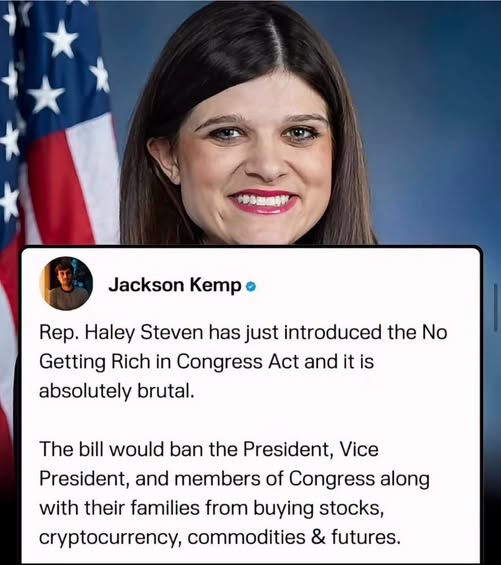
The No Getting Rich in Congress Act would create restrictions on certain types of financial trading by some of the most powerful people in the country. Under the proposal, covered individuals would face limits on trading stocks, cryptocurrency, futures, and commodities.
The goal is to prevent situations where lawmakers could make investment decisions based on information gained through their official responsibilities. Members of Congress frequently receive briefings on economic conditions, national security matters, technology developments, and industry changes before the public does.
Supporters believe that even the appearance of a conflict of interest can damage confidence in government. They argue that elected officials should avoid situations in which Americans question whether a policy decision was made because it helped the country or because it benefited someone’s personal finances.
The legislation reflects a broader push for stricter ethics rules in Washington. Similar proposals have gained attention in recent years as lawmakers from both political parties have faced criticism over stock trading controversies.
Why Supporters Say Congress Needs Stronger Financial Rules

Those backing the bill say the issue is not about accusing every elected official of wrongdoing. Instead, they argue the system itself creates unnecessary doubt when lawmakers are allowed to actively manage investments while making decisions that can affect entire industries.
For example, a member of Congress involved in shaping healthcare policy may also own healthcare stocks. Another lawmaker working on technology regulations could hold investments in major technology companies. Even when trades are legal, critics say the public may wonder whether private interests influence public decisions.
Supporters point to the principle that government officials should meet a higher ethical standard than ordinary investors. They argue that lawmakers voluntarily accept public responsibility and should therefore accept stricter rules designed to protect public trust.
The proposal also connects with a growing movement calling for greater transparency and accountability among elected leaders. Many Americans believe stronger financial restrictions would help reduce the influence of money in politics.
Critics Question Whether a Ban Alone Will Solve the Problem
Not everyone believes a trading ban is the complete answer. Critics argue that passing another ethics law will not matter unless there are strong enforcement mechanisms behind it.
They say the real challenge is ensuring that violations have meaningful consequences. Without clear penalties, independent oversight, and effective monitoring, opponents argue that even strict rules could become difficult to enforce.
Some critics also question whether broad restrictions could create unintended consequences. They argue that lawmakers should be careful when creating rules that affect personal financial decisions, even for public officials.
The debate highlights a larger question facing Washington: how can the country create ethical standards that prevent conflicts without creating unnecessary restrictions?
The Public’s Trust Is at the Center of the Fight
At its core, the debate surrounding the No Getting Rich in Congress Act is about confidence. Government depends on citizens believing that elected officials are acting in the nation’s interest.
When Americans see reports of lawmakers buying or selling investments connected to major policy debates, suspicion can grow quickly. Even if no laws are broken, the perception of unfair advantages can weaken faith in public institutions.
Recent years have shown that ethical issues can become powerful political topics because they tap into a common frustration among voters: the feeling that powerful people operate under different rules.
The proposed legislation attempts to answer that frustration by drawing a clearer line between public responsibility and private financial gain.
A New Test for How America Defines Public Service
The No Getting Rich in Congress Act represents a larger debate about what citizens expect from their leaders. Supporters see it as a necessary step toward restoring confidence and ensuring that elected officials focus entirely on serving the public.
Opponents argue that the success of any reform depends on the details, especially enforcement and accountability. A law without meaningful oversight, they say, may not change the culture it aims to fix.
The question now facing lawmakers is whether stronger financial restrictions are the right solution to Washington’s trust problem. For many Americans, the answer comes down to one simple expectation: elected officials should never leave voters wondering whether government decisions are being made for the country or for personal profit.