Trump Disaster Aid Delays Are Becoming a Hidden Tax on States, Cities and Storm Victims
When a tornado tears through a town or floodwater swallows a neighborhood, the first bills arrive long before federal assistance does. Families need hotel rooms. Counties must clear debris. Cities must reopen roads, restore utilities, and stabilize damaged public buildings.
Under President Donald Trump’s second administration, that gap between destruction and federal help has widened considerably. Trump has taken an average of approximately six weeks to approve major disaster declarations, longer than any president measured under the system established in 1989. Because states often spend several weeks assessing damage before requesting assistance, the overall wait after a disaster can exceed two months.
The political divide is equally difficult to ignore. Trump has approved roughly 80% of requests from Republican governors, compared with about 60% from Democratic governors. More than three-quarters of requests from states he carried in the 2024 election have been approved, but fewer than half from states he lost have received approval. Those figures do not prove that every denial was politically motivated, yet they create a pattern unlike anything previously recorded under any administration.
The more revealing story, however, is not simply that some states are hearing “no.” It is what happens to the bill after Washington walks away.
Trump’s Disaster Aid Record Shows Longer Waits and More Denials

Since returning to office in January 2025, Trump has approved about 65 major disaster requests and rejected more than two dozen applications submitted by states, tribes and territories following fires, floods, hurricanes, tornadoes, snowstorms and other emergencies. His administration has denied a higher percentage of requests than any presidency dating to 1989.
The pace of approval has also changed sharply:
| Administration | Average time to approve major disaster requests |
| Trump’s second term | About six weeks |
| Trump’s first term | About three weeks |
| Biden administration | About three weeks |
| Obama, George W. Bush, Clinton and George H.W. Bush | Less than two weeks |
Approximately 70% of Trump’s second-term approvals have taken at least one month. During his first term and President Joe Biden’s administration, only about one-quarter took that long. Fewer than 10% reached the one-month mark under earlier presidents.
The White House says the slower timetable reflects a more rigorous review designed to ensure that federal money supplements state efforts instead of replacing them. Critics argue that a lengthy review cannot be separated from the hardship it imposes on residents and governments that must act immediately.
The Six-Week Average Tells Only Half the Story
The official approval clock begins when a governor, tribal leader, or territorial executive submits a formal request. The disaster clock begins much earlier.
Before reaching the president, officials may need to inspect damaged homes, calculate infrastructure losses, determine insurance coverage, and demonstrate that the event exceeds state and local capacity. FEMA evaluates the submission and sends a recommendation to the White House, but the final decision rests with the president.
This creates two periods of uncertainty. The first runs from the disaster to the state’s application. The second runs from the application to the president’s decision. When both stages consume several weeks, residents can spend months waiting for programs meant to address urgent housing and recovery needs.
Disaster Aid Denials Function Like a Hidden Tax
When Washington rejects a disaster declaration, the recovery cost does not vanish. It is redistributed.
State governments may draw from emergency reserves. Counties may postpone road repairs, equipment purchases, or public projects. Municipalities may borrow money. Property owners may rely on savings or credit cards. Insurers may face higher losses, which can eventually influence premiums and market availability.
Trump’s FEMA Review Council has recommended a broader transfer of financial responsibility. One proposal would move away from the traditional 75% federal minimum contribution and establish a federal cost share ranging from 50% to 75%, potentially tied to state performance. The lower share would require congressional approval.
The difference looks dramatic when converted into actual dollars:
| Eligible recovery cost | Federal share at 75% | State and local share | Federal share at 50% | State and local share |
| $100 million | $75 million | $25 million | $50 million | $50 million |
| $500 million | $375 million | $125 million | $250 million | $250 million |
| $1 billion | $750 million | $250 million | $500 million | $500 million |
Under the proposed lower rate, the nonfederal burden on a $500 million recovery would rise from $125 million to $250 million. That is not merely a budgeting adjustment. It is a doubling of the amount that states, cities, and counties must find through reserves, borrowing, spending reductions, or taxes.
Blue-State Denials Also Reach Republican Communities
The national debate often treats each disaster request as a contest between a Republican president and a Democratic governor. Real disasters do not follow that political structure.
A state that votes Democratic can contain conservative suburbs, Republican rural counties, and politically mixed communities. A statewide request may cover residents who supported both presidential candidates. When assistance is denied, FEMA does not separate damaged homes according to the owner’s ballot.
Four Democratic states, Massachusetts, New Jersey, New York, and Rhode Island, were recently denied assistance requested after a February snowstorm. Democratic members of Rhode Island’s congressional delegation accused the administration of attempting to shift a heavier burden onto blue states. The White House denied that politics played any role.
This creates an important contradiction in the partisan framing. Even when a denial appears to punish a Democratic state government, its financial effects can fall on Republican voters, independent business owners, local emergency workers, and politically diverse municipalities.
The relevant question is therefore not simply whether a governor belongs to the president’s party. It is whether residents facing comparable damage receive comparable treatment.
FEMA Decisions Matter More Where Insurance Stops
Federal disaster assistance is not intended to replace insurance. It is designed partly to address essential losses that insurance does not cover. FEMA’s housing assistance can help eligible survivors with uninsured expenses connected to temporary housing and essential home repairs after a presidential declaration.
That safety net becomes particularly important after flooding because standard homeowners insurance generally excludes flood damage. Separate flood coverage is usually required, and most flood policies are provided through FEMA’s National Flood Insurance Program.
Hurricane Helene demonstrated the size of this protection gap. Treasury officials reported that Helene caused up to $75 billion in direct damage, with estimated insured losses ranging from $12.4 billion to $18.4 billion. Of more than 200,000 damaged homes across North Carolina, South Carolina, and Tennessee, fewer than 1% of the affected homes in North Carolina and Tennessee carried National Flood Insurance Program coverage. In South Carolina, fewer than 3.7% did.
Except for approximately $2 billion in wind damage, most residential losses in those three states were uninsured, according to the Treasury discussion.
That example exposes the danger of viewing a FEMA denial as a dispute between two levels of government. A homeowner may already have been rejected by an insurance company because the damage was caused by flooding. Without a presidential declaration, the same household may also lose access to federal assistance.
The result is a recovery gap with no obvious payer.
Rural Communities Face a Disproportionate Recovery Penalty
A wealthy state may be able to absorb a delayed federal decision temporarily. A large city may issue bonds, reallocate staff, or maintain a full-time team devoted to federal grants. Small rural communities often have none of those advantages.
The Government Accountability Office has found that rural jurisdictions may have fewer emergency-response employees, limited awareness of available federal programs, and weaker broadband or cellular coverage. Many federal applications must be completed online, making communication problems another barrier to assistance.
Rural residents may also face a shortage of temporary housing. A small community may have few hotels or rental homes, and the arrival of emergency workers can consume much of the available space. Displaced families may then need to move farther from jobs, schools, and support networks.
This makes longer presidential reviews especially costly. Rural governments may continue emergency work without knowing whether reimbursement will come, even though they have the least capacity to carry those expenses.
A stricter federal model could therefore produce a paradox: communities considered too small to justify extensive federal intervention may be the same communities least capable of recovering without it.
States May Be Asked to Replace Programs They Do Not Have
The Trump administration has pushed FEMA toward a more state-centered approach. Recent operational changes have included greater reliance on state and local assistance centers and reduced use of FEMA-operated recovery centers and door-to-door outreach.
Yet state capacity is uneven. Officials from four states affected by Hurricanes Helene and Milton told GAO that their states did not operate independent assistance programs for disaster survivors. State and federal officials also warned that governments would need sufficient time to prepare before assuming responsibilities currently handled by FEMA.
That is a crucial detail in the reform debate. “Let the states handle it” sounds simple until we identify which states have:
- Established household disaster programs.
- Trained caseworkers.
- Temporary housing systems.
- Online application infrastructure.
- Fraud-prevention processes.
- Cash reserves are large enough to fund assistance.
- Staff capable of serving elderly, disabled, and rural residents.
Without those systems, transferring responsibility does not automatically create local efficiency. It may simply remove federal support before an effective replacement exists.
Faster Payments Could Come With Harder Qualification Rules
The FEMA Review Council’s recommendations provide meaningful benefits to communities that receive approval. The council proposed delivering federal funds to governments within 30 days of a disaster declaration, rather than requiring them to spend first and wait months or years for reimbursement.
That could significantly improve local cash flow. Cities would have less need to finance cleanup and rebuilding costs while waiting for reimbursement.
The tradeoff is that fewer events could qualify. The council proposed revising declaration criteria, including a prerequisite that states, territories and tribes meet annual minimum expenditure requirements. It also recommended consolidating several forms of individual assistance into a single payment focused on households whose homes are uninhabitable.
The emerging model can be summarized in one sentence: faster money for communities that clear a higher bar, but potentially less federal help for everyone else.
Presidential Discretion Needs Greater Public Transparency
Federal law establishes disaster criteria, but the president retains broad discretion over final declarations. That authority becomes controversial when decisions take longer and approval rates diverge sharply by political affiliation.
Trump’s first-term record makes the current divide even more striking. During his first administration, states that opposed him received a higher approval share than states that supported him. During Barack Obama’s second term, Democratic governors received approval for 87% of requests and Republican governors for 79%, but the approval rate was identical when states were grouped by how they voted in presidential elections.
A transparent decision system would help both the administration and its critics. Every request could include a public record showing:
| Transparency measure | What it would reveal |
| Date of the disaster | When community losses began |
| Date of the governor’s request | When presidential review started |
| FEMA recommendation date | How long agency evaluation took |
| Presidential decision date | How long the White House waited |
| Estimated eligible damage | The scale of the event |
| State fiscal-capacity calculation | Whether local resources were sufficient |
| Written reason for denial | Which criteria were not met |
| Appeal status | Whether reconsideration is underway |
Without this information, supporters can claim that every denial reflects financial discipline, and critics can claim that every denial reflects political retaliation. Detailed written decisions would allow the evidence to settle more of that argument.
FEMA Leadership Changes Add Another Layer of Uncertainty
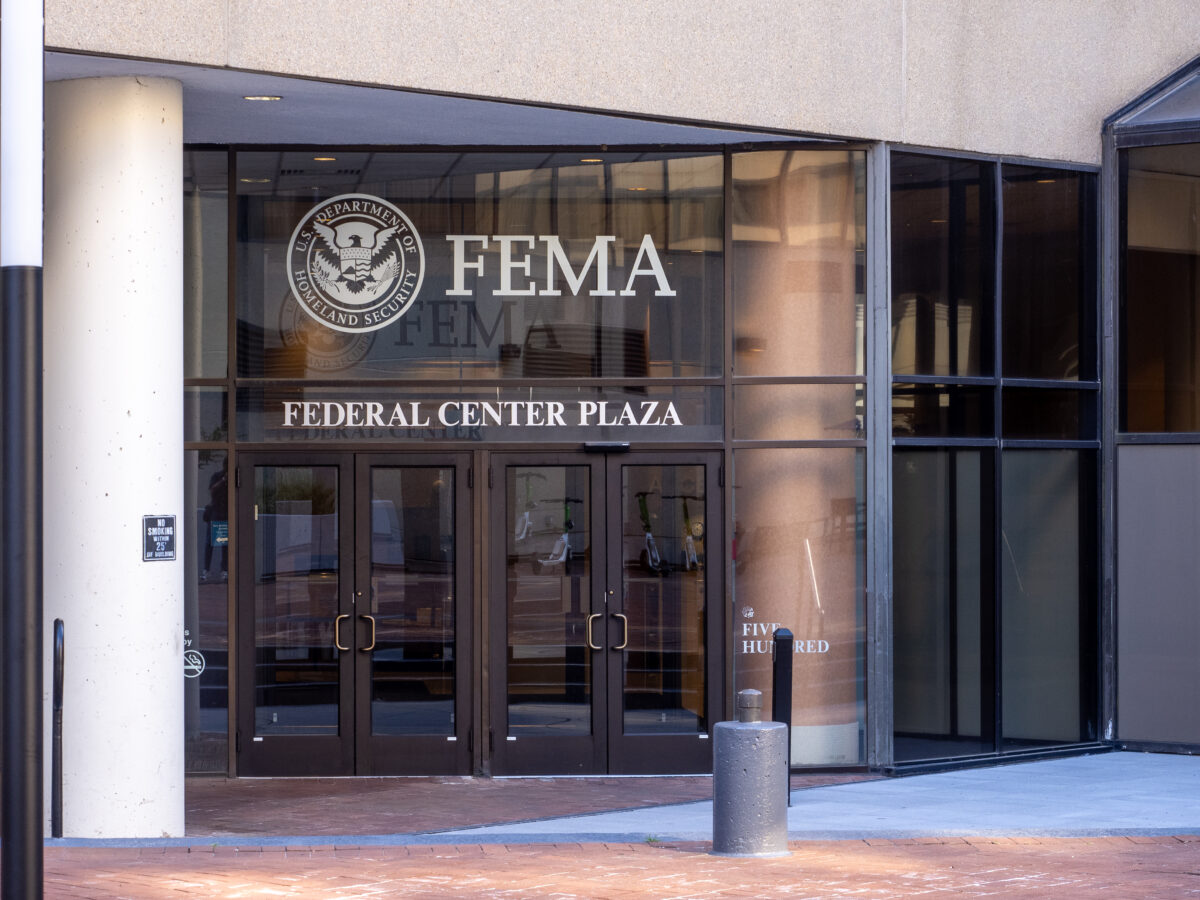
FEMA has had four temporary leaders since Trump returned to office. Cameron Hamilton, who previously served as acting administrator, is awaiting Senate confirmation to lead the agency permanently. He has pledged to speed up decision-making on declarations and reimbursements while making FEMA’s recommendations objective, fair, and reasonable.
Hamilton’s position is notable because he was removed as acting administrator in May 2025 after publicly disagreeing with Trump’s proposal to dismantle FEMA. His return suggests that the administration may now prefer an extensive restructuring rather than eliminating the agency outright.
A permanent administrator may improve operational stability, but FEMA cannot independently approve a major disaster declaration. The final decision remains with the president. Faster agency processing will matter only if it produces faster decisions at the White House.
America Is Redefining Who Pays After Disaster Strikes
We are not witnessing a narrow argument over paperwork. We are watching the federal government reconsider its role as the nation’s disaster backstop.
The administration’s approach would require states to demonstrate greater preparedness, contribute more money and carry more responsibility for survivors. Supporters view that shift as overdue discipline for an expensive and complicated federal system. Critics see a retreat that will expose poorer states, rural governments, and uninsured families to losses they cannot absorb.
Both positions deserve scrutiny. FEMA has long faced concerns about complexity, delays, and administrative inefficiency. GAO has repeatedly found that survivors struggle to navigate federal assistance, and the broader recovery system remains fragmented.
Yet reform cannot be measured only by how much Washington saves. It must also be measured by what happens after the cost is transferred.
A denied declaration can mean a county postpones road repairs. A reduced federal share can mean a state borrows millions more. A delayed decision can mean a family spends another month in temporary housing. An insurance exclusion can leave a homeowner waiting for federal help that never arrives.
Disaster aid may begin with a presidential signature, but the consequences of delay are paid far from the White House. They appear in municipal budgets, insurance premiums, household debt, and communities forced to rebuild before anyone tells them who will cover the bill.