The Strange Story of How Tater Tots Were Invented
Few foods bring back childhood memories quite like a pile of crispy Tater Tots. They showed up on school cafeteria trays, alongside Friday night burgers and in the bottom of countless casseroles. For many families, a bag of them in the freezer meant dinner was handled.
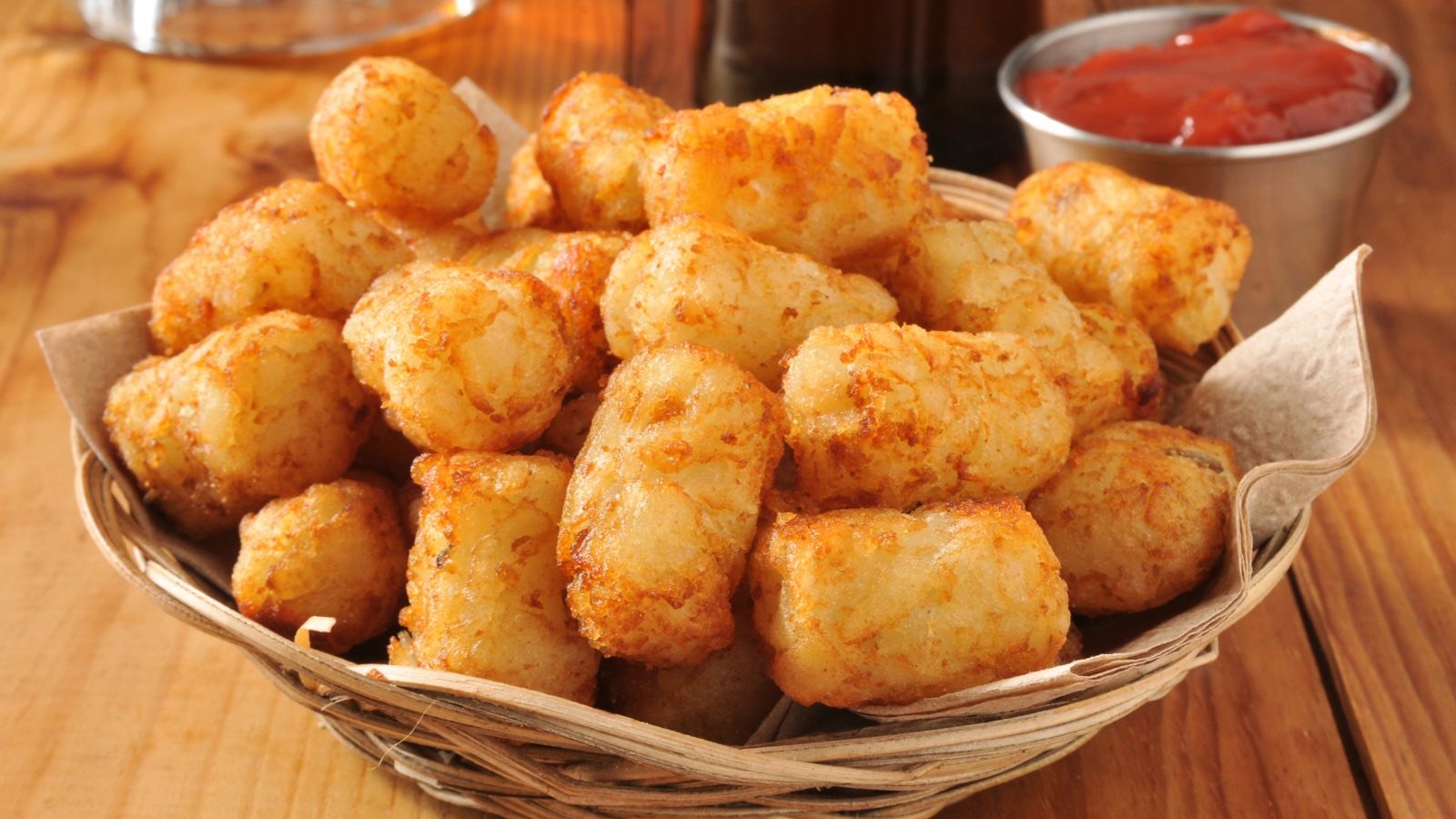
But the little golden cylinders weren’t born from a chef’s careful planning or a food company’s big marketing push. They were invented to solve a much more practical problem: what to do with a pile of potato scraps nobody wanted. In a sense, one of America’s favorite side dishes started out as leftovers.
The story involves two brothers in a small town on the Oregon-Idaho border, a giant machine, a thesaurus and a pricing lesson that surprised even the people who made them. Here’s how Tater Tots came to be, and how they ended up in nearly every freezer in America.
Two Brothers and a Potato Plant
The story starts in the early 1950s with Nephi and Golden Grigg, two brothers who ran a frozen food business in Ontario, Oregon, right on the Idaho border. They had built a plant that processed potatoes and corn, and they eventually named their company Ore-Ida, a blend of Oregon and Idaho.
Frozen French fries were becoming popular, and the Griggs were busy cutting and freezing potatoes. As the Oregon Encyclopedia explains, their company grew into one of the biggest names in frozen potatoes. But making fries left them with a problem that every potato processor faced.
The Leftover Problem
When you cut potatoes into neat, uniform fries, you end up with a lot of odd-shaped slivers and scraps. Those pieces were too small to sell as fries, and at the time, much of that leftover potato was sold cheaply as livestock feed. It was a waste of perfectly good potato.
The Griggs and their partners started experimenting. According to the history of the product on Wikipedia, the team chopped up the leftover slivers, mixed them with flour and seasoning, pushed the mixture through holes and sliced it into bite-sized pieces. The result was a small, crispy potato nugget that could be fried and frozen. The year was 1953.
Naming the New Snack
The new product needed a name, and the company wanted something catchy. According to the story, a member of Ore-Ida’s research team pulled out a thesaurus looking for a fun, alliterative name. “Tater,” short for potato, paired with “Tot,” meaning something small, did the trick.
Tater Tot was trademarked, and it’s still a registered Ore-Ida trademark today. That’s why you’ll often see store brands sold under other names, like potato puffs, crowns or rounds. But most people still call any version a Tater Tot, the same way many people call any tissue a Kleenex.
A Slow Start and a Surprising Fix
Tater Tots hit grocery store shelves in 1956, but sales weren’t exactly booming at first. Part of the problem, the company believed, was the price. Ore-Ida had priced the tots very cheaply, since they were made from what had once been scraps.
Shoppers, it turned out, didn’t trust a product that seemed too cheap. A bargain price made people think the tots must be low quality. When the company raised the price, sales took off. By 1960, Ore-Ida had captured a quarter of the frozen potato market, a remarkable turnaround for a product that started as leftovers.
How Tots Took Over America
The timing was perfect. The 1950s and 1960s were the golden age of frozen and convenience foods. More women were working outside the home, freezers were becoming standard in American kitchens and families were looking for quick dinners. A bag of Tater Tots could be baked in the oven with almost no effort.
Tots also found a home in school cafeterias, where they became a lunchtime favorite for generations of kids. Many baby boomers and Gen Xers can still picture them on a molded lunch tray next to a square of pizza or a sloppy joe. They became part of the classic convenience foods that filled mid-century kitchens.
Heinz Takes Over
Ore-Ida’s success caught the attention of a much bigger company. In 1965, the H.J. Heinz Company bought Ore-Ida, and the brand has been part of Heinz ever since. Today, it belongs to Kraft Heinz, one of the largest food companies in the world.
Under Heinz, Ore-Ida grew into a national giant in frozen potatoes, from fries to hash browns. But Tater Tots remained the star of the show. The little product that started as a way to use up scraps became one of the company’s most famous items.
The Tater Tot Hotdish
In the Midwest, especially in Minnesota and the Dakotas, Tater Tots became the crown of a beloved casserole known as hotdish. The classic version layers ground beef, vegetables and a can of cream soup in a baking dish, then tops it with neat rows of frozen tots before baking until golden.
Tater tot hotdish became a staple of church suppers, potlucks and family dinners. It’s cheap, filling and easy to make for a crowd. For many Midwestern families, it’s as much a part of winter as snow shovels, and arguments over the “right” way to make it can get surprisingly heated.
Still a Favorite Today
Tater Tots never really went out of style. Americans eat roughly 70 million pounds of them every year, according to estimates cited on Wikipedia. That works out to billions of little tots disappearing from plates across the country.
In recent years, they’ve even gone upscale. Restaurants and bars serve “totchos,” a twist on nachos made with tots, along with loaded tots topped with cheese, bacon and sour cream. Air fryers have made them even more popular at home, since they turn out extra crispy without a pot of hot oil.
A Lesson in Never Wasting Anything
The story of the Tater Tot is a reminder of an old kitchen wisdom that grandmothers knew well: almost nothing should go to waste. What began as a pile of potato scraps destined for animal feed became a product that has fed generations of American families.
Next time you pull a tray of crispy tots out of the oven, you can thank two brothers in Oregon who didn’t want to throw anything away. Did you grow up eating Tater Tots, and do you still keep a bag in the freezer?