Oklahoma’s Famous Onion Burger Started as a Money-Saving Trick, Then a Whole Town Fell for It
Some burgers get attention by piling on more: another patty, another slice of cheese, another topping threatening to slide into your lap. Oklahoma’s fried onion burger took a different route. Cooks stretched a modest portion of beef with a generous helping of onions, pressing the two together on a hot griddle. What began as an affordable meal became El Reno’s signature food, a Route 66 town where three longtime restaurants still carry the tradition forward.
The important word here is into. This isn’t simply a hamburger with grilled onions dropped on top before serving. The thinly sliced onions cook directly against the meat, becoming part of the patty rather than an optional accessory. That distinction explains both the burger’s appeal and its staying power: an economical adjustment produced something worth keeping long after the original need to stretch the beef.
A Budget Burger With a Backstory Worth Getting Right
El Reno’s familiar origin story centers on Ross Davis, who operated the Hamburger Inn. The city’s account,drawing on food writer John T. Edge’s research, credits Davis with pressing shredded onions into small beef patties because onions cost less than meat. A half-onion’s worth of shreds helped make a five-cent burger look more substantial while adding flavor. Other local restaurants adopted the approach, helping turn one establishment’s practical solution into a town specialty.
The timeline deserves some care. Onion burgers are often described as a Great Depression invention, but the historical marker funded by the William G. Pomeroy Foundation dates their introduction to the 1920s. Its accompanying research notes that Oklahoma’s agricultural economy was already struggling as early as 1921, when falling commodity prices hurt farmers and the towns that depended on them. The most defensible account places the burger’s beginnings in those earlier hard times, rather than automatically assigning its invention to the 1930s.
Burger historian George Motz adds another piece of context in a 2026 Southern Living article, linking Davis’s improvisation to hardship surrounding the 1922 railway strike. Accounts differ in their emphasis, but the central story stays consistent: an El Reno restaurant operator used inexpensive onions to stretch his ground beef. The marker captures that history without overcomplicating it, describing shredded onions fused with limited amounts of meat as “an affordable local specialty.”
Calling it a “Depression burger,” then, conveys the spirit of the food more reliably than a precise birthday.It belongs to a tradition of making limited ingredients go further without giving up a satisfying meal. The Hamburger Inn itself is gone, but the method outlasted its original home. In El Reno, the story continued through working restaurants, not merely through recipes saved in a cookbook or a plaque explaining what people once ate.
The Onions Aren’t a Topping. They’re the Whole Point.
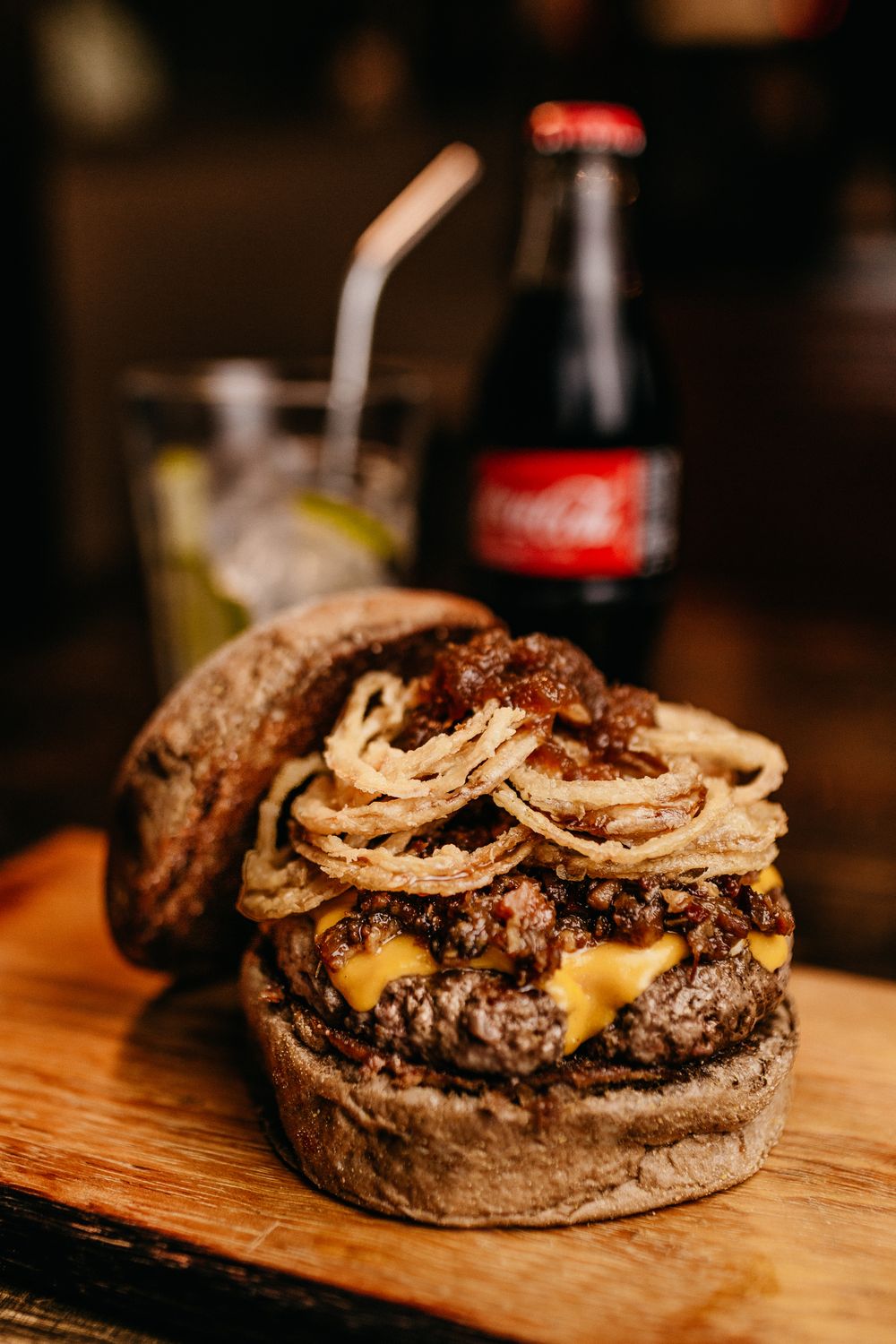
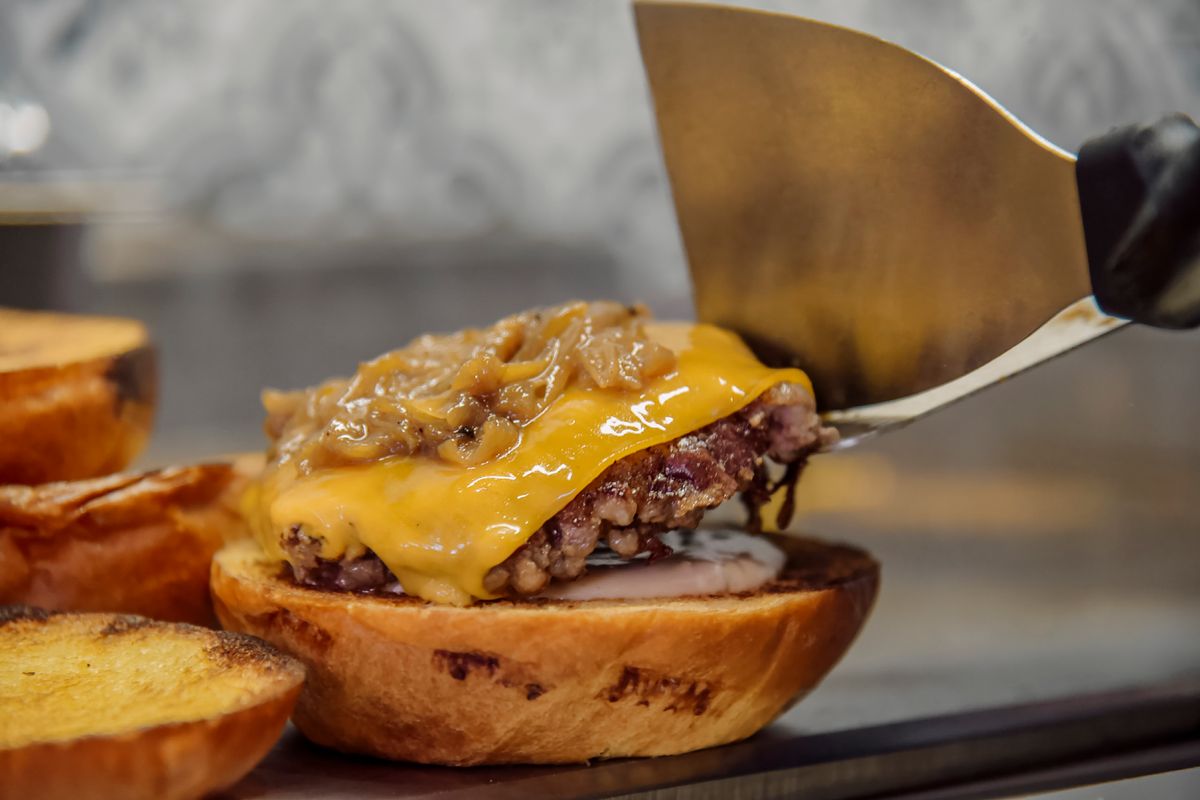
At Sid’s Diner, Motz describes cooks pressing a mound of thinly sliced Spanish onions into a portion of beef with a stiff spatula fashioned from a bricklayer’s trowel. The patty is flipped, and the onions cook in the rendered beef fat until they fuse with the browned meat. It is an uncomplicated process, but the order matters: the onions and burger develop together instead of arriving at the bun as separate components.
That cooking method gives the burger its distinctive personality. Browned onions, griddled beef, and loose strands extending beyond the bun, hardly a sandwich designed for a perfectly tidy photograph. Describing Sid’s version, Motz writes, “The fried-onion burger is a lesson in pure science.” His account makes the appeal easy to understand: the same ingredient that once reduced the amount of beef needed also helps define the finished burger’s flavor and texture.
The supporting cast stays fairly restrained. Motz describes Sid’s burger arriving on a soft white bun with pickles on the side, noting that mustard is the Oklahoma preference. Cheese and pickles are also recognized additions in the Pomeroy Foundation’s account. Personal preference matters, but the defining feature isn’t an elaborate sauce or towering arrangement. It is the relationship between the beef, the onions, and the hot cooking surface.
Related: Why Cutting Onions Makes Your Eyes Water And 6 Ways to Reduce It
Three Restaurants Keep El Reno’s Griddle Tradition Going
The names to know are Robert’s Grill, Johnnie’s Grill and Sid’s Diner. Motz reported in 2026 that the three operate within two blocks of one another, keeping this local specialty concentrated in downtown El Reno. Robert’s dates its history to 1926, while Travel + Leisure places Johnnie’s beginnings in the 1940s. Sid’s joined the neighborhood later, opening in 1989, but has become an important part of the same restaurant tradition.
Sid’s also brings a family story to the griddle. Marty Hall built the diner and named it after his father, who died shortly before it opened. By the time KFOR profiled Hall in 2017, he had spent 50 years cooking in diners and had seen television crews arrive to document the restaurant. “It seems like the world is fascinated with Route 66,” he told the station, a fitting observation from someone whose everyday work had become part of travelers’ road-trip plans.
The next chapter is already underway. Motz’s 2026 account reports that Marty has retired but still appears regularly at Sid’s, while his son Adam carries on the cooking and customer conversations. That detail gets to the heart of El Reno’s restauranttradition. Preserving this burger means more than remembering who first smashed onions into beef; it also means someone else showing up, working the griddle, and serving the version customers recognize.
El Reno celebrates the obsession on a much larger scale at its Fried Onion Burger Day Festival. Organizers describe an enormous community burger weighing more than 850 pounds, which volunteers cook and share with visitors. They also direct festivalgoers to the town’s three established burger restaurants. The spectacle draws attention, but those smaller griddles tell the enduring story: a money-saving idea became a local specialty because generations of restaurant people kept making it worth ordering.