People Who Make Small Talk With Grocery Store Cashiers May Have These 5 Personality Traits
You know the shopper who never seems to leave a grocery store checkout without exchanging a few words with the cashier? Maybe they comment on how busy the store is, ask how someone’s day is going, or make a quick joke while their groceries are being scanned.
Meanwhile, other shoppers prefer to pay, collect their bags, and head straight home. Neither approach is wrong, but those little conversations can offer interesting clues about how people interact with others.
Here are five personality traits that may be associated with people who enjoy making small talk with grocery store cashiers.
They May Be Comfortable Making the First Move
Starting a conversation with someone you have never met isn’t always easy. There is that brief moment when you wonder whether the other person wants to talk or would rather get on with their day.
People who regularly make small talk with grocery store cashiers may be more comfortable crossing that little social barrier. They might casually ask whether the store has been busy or comment on the weather without spending much time thinking about it.
This behavior can be consistent with extraversion, a personality trait associated with sociability, assertiveness, and talkativeness. However, it doesn’t automatically mean someone is an extrovert.
Research by Nicholas Epley and Juliana Schroeder, published in 2014, explored conversations between strangers during their daily commutes. Participants who were instructed to connect with strangers generally reported more positive experiences than those instructed to remain disconnected. Interestingly, people often underestimated how interested others would be in talking.
That research suggests that starting a conversation may feel more intimidating than it actually turns out to be. A shopper who casually greets a cashier may simply be comfortable taking that first small step.
They May Show Interest Through Responsive Listening
There is a difference between talking to someone and actually engaging with what they are saying.
Some shoppers might ask a cashier how their day is going and genuinely listen to the answer. If the cashier mentions that the store has been unusually busy, the shopper might respond with a sympathetic comment or ask whether the rush has lasted all afternoon.
This kind of exchange suggests an interest in making conversations feel reciprocal rather than treating them as opportunities to speak.
Research by Karen Huang and colleagues in 2017, titled It Doesn’t Hurt to Ask: Question-Asking Increases Liking, examined how asking questions influences conversations. The researchers found that people who asked more questions, particularly follow-up questions, tended to be better liked by their conversation partners. Asking questions was also associated with being perceived as more responsive.
This doesn’t mean every person who chats with a cashier has exceptional listening skills. However, someone who pays attention, acknowledges an answer, and responds naturally may be showing a conversational habit that helps others feel heard.
Sometimes, a simple follow-up question makes an ordinary exchange feel a little more personal.
They May Appreciate Small Moments of Connection
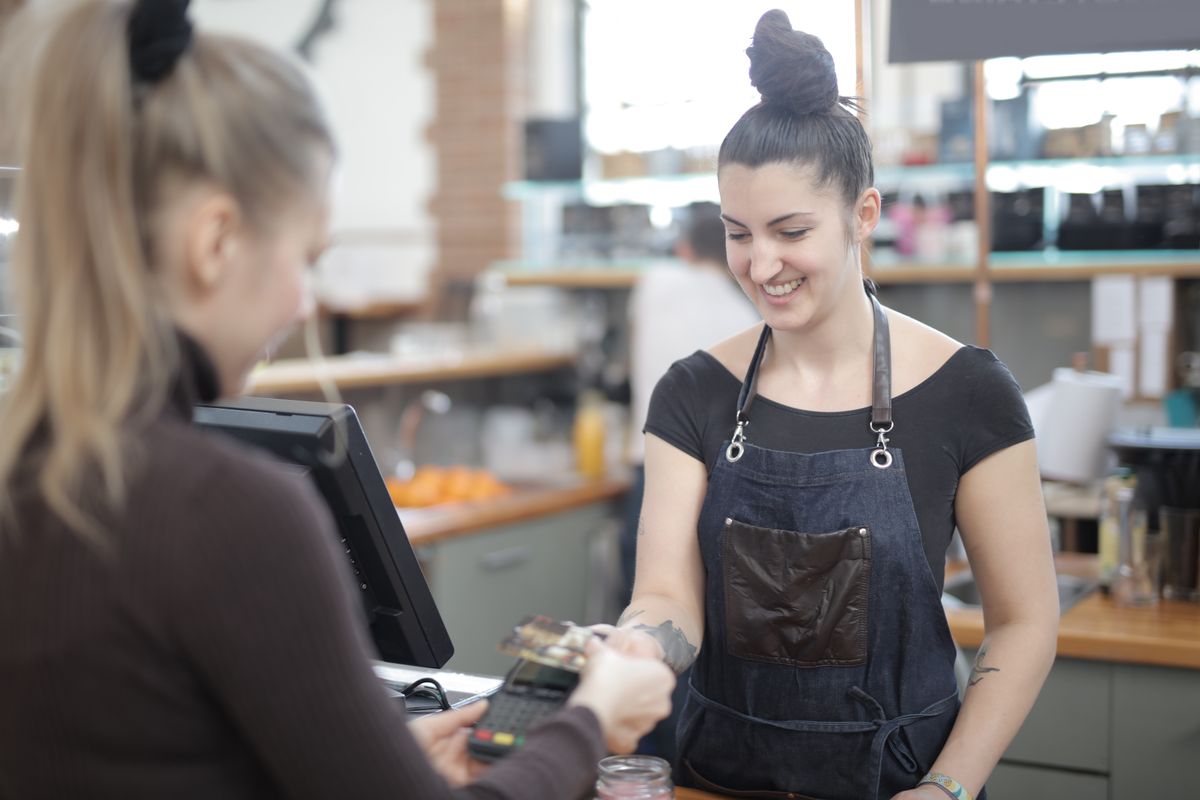
For some people, a trip to the grocery store is more than a quick errand. It is also an opportunity to exchange a few friendly words with people they encounter along the way.
They might recognize a cashier they have seen several times, ask how their weekend went, or share a quick laugh about something happening in the store. These interactions may last less than a minute, but that doesn’t mean they are meaningless.
Research by Gillian M. Sandstrom and Elizabeth W. Dunn, published in 2014, examined the effects of minimal social interactions. In their study, customers who smiled, made eye contact, and briefly interacted with a barista reported more positive feelings than those instructed to keep their transactions efficient and disconnected. The researchers also found initial evidence that feelings of belonging helped explain the difference.
The study focused on interactions with baristas, not grocery store cashiers. Still, it offers an interesting insight into everyday social behavior.
People who enjoy chatting during checkout may appreciate these small opportunities to feel connected to the world around them. They don’t necessarily need to become friends with everyone they meet. Sometimes, a familiar face and a pleasant exchange are enough to make an ordinary afternoon feel a little less routine.
They May Have Practiced Conversational Confidence
Not everyone who makes small talk has always been comfortable doing it. For some people, starting conversations may have become easier through repeated experiences.
Think about someone who once struggled to make conversation with strangers but gradually became more comfortable greeting shop workers, speaking to neighbors, or asking simple questions in public. That kind of ease can develop through practice.
A 2022 study by Sandstrom, Boothby, and Cooney examined an intervention in which participants repeatedly approached and talked to strangers over the course of a week. Compared with participants in the control group, those who completed the intervention became less pessimistic about rejection and more optimistic about their conversational abilities. Some of these benefits remained at least a week later.
This research suggests that conversational confidence is not necessarily something people are born with. It can also grow through experience.
Someone who regularly chats with grocery store cashiers may have become comfortable with these brief interactions simply because they have done it so many times. What once felt awkward might now feel completely natural.
That doesn’t mean they are socially confident in every situation. They may still feel nervous speaking in front of a crowd or attending a large gathering. Comfort with everyday conversations is its own thing.
They May Express Warmth in Everyday Interactions
Some people have a naturally pleasant way of interacting with others. They acknowledge people, use a friendly tone, and make small efforts to keep everyday exchanges comfortable.
At a grocery store checkout, this might look like thanking the cashier with a smile, responding kindly to a comment, or making a lighthearted observation about the number of groceries in the cart.
These small gestures may be consistent with warmth and agreeableness, a personality dimension in the Big Five framework.
Agreeableness generally describes tendencies such as kindness, consideration, cooperation, and getting along with others. However, the available research does not establish that people who make small talk with grocery store cashiers score higher in agreeableness.
It is more useful to look at the behavior itself. A person who consistently treats service workers with courtesy and makes an effort to keep interactions pleasant may be expressing a considerate side of their personality.
Of course, someone can be warm and respectful without enjoying conversation. A quiet shopper who offers a sincere thank-you is showing courtesy, too.
The difference is simply that some people express their warmth through a few extra words.