The Sun Broadcast a 19-Day Radio Signal, Setting a New Record
The Sun has always been a powerhouse of energy, but in August 2025, it stunned scientists by producing a solar radio signal that refused to fade for an unprecedented 19 days. This was no ordinary solar flare. Most solar radio bursts vanish within hours or a few days, yet this one persisted through nearly three full weeks, defying previous understanding of how energetic particles behave in the Sun’s atmosphere.
The discovery shattered old records and forced heliophysicists to rethink the Sun’s magnetic capabilities. A signal of this duration is more than a curiosity; it’s a glimpse into a rare, long-lived magnetic trap capable of holding energetic electrons, potentially rewriting the rules for predicting solar activity and protecting satellites and astronauts from space-weather hazards.
A Radio Burst That Refused to Quit
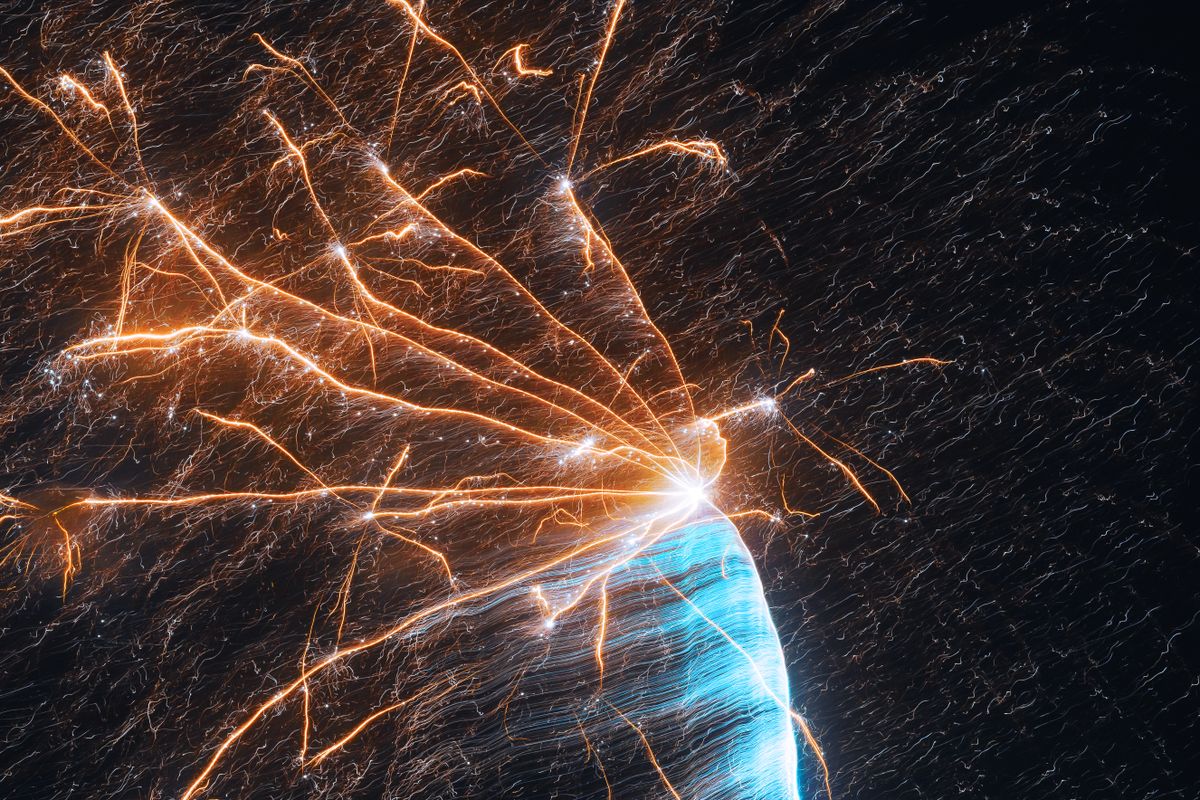
Solar radio bursts are triggered when energized particles spiral along the Sun’s magnetic fields, emitting radio waves detectable across the solar system. Type IV bursts, like this record-breaking one, are associated with trapped electrons in massive magnetic loops, known as helmet streamers. Unlike short-lived bursts, this 19-day signal persisted as a single, coherent structure rotating with the Sun.
This is critical because long-duration bursts indicate a stable magnetic reservoir in the corona, capable of storing energy far longer than anyone expected. That stability raises the stakes for space-weather forecasting: signals that appear to fade within hours may actually hide in magnetic traps, waiting to re-energize and affect satellites, spacecraft, and communications systems throughout Earth’s orbit.
Multi-Spacecraft Teamwork Reveals the Signal
Tracking a signal that lasts for weeks is no simple task. The Sun rotates, causing its features to drift across spacecraft views. To capture the full event, NASA and ESA scientists combined data from the Parker Solar Probe, Wind, STEREO, and the Solar Orbiter mission. Each spacecraft observed part of the burst, revealing that the structure was continuous rather than a series of isolated flares.
This multi-angle observation confirmed the burst moved in perfect step with the Sun’s rotation. By stitching together the partial views, researchers traced the signal back to its source, revealing the remarkable persistence of the helmet streamer that confined the electrons.
Helmet Streamers: The Sun’s Magnetic Bottles

Helmet streamers are towering, pointed loops of magnetic fields in the Sun’s corona, visible during solar eclipses. They form where magnetic polarities collide, creating a natural cage that traps plasma and electrons. In this case, the streamer acted like a magnetic bottle, holding the particles in place while the Sun rotated, maintaining the radio emission for days on end.
Yet the confinement alone did not fully explain the burst’s longevity. Trapped electrons gradually lose energy, and a 19-day signal required a mechanism to continuously replenish these particles.
Coronal Mass Ejections Kept the Burst Alive
During the 19 days, three coronal mass ejections erupted from the same solar region. Each CME injected fresh energetic electrons into the helmet streamer’s magnetic loops, effectively refueling the system. This created a “corotating electron reservoir,” a magnetic trap that rotates with the Sun and is continually replenished to sustain the radio emission.
This revelation highlights a rare synergy between solar eruptions and magnetic structures. A short-lived flare might fade harmlessly, but repeated injections in a stable magnetic environment can maintain a persistent, high-energy signal. For space-weather forecasters, this understanding is essential: some long-duration signals might signal a prolonged period of potential satellite risk rather than a single isolated event.
Distorted but Dangerous Signals

The Sun’s coronaMagda Ehlers, making sources appear larger and fuzzier than they truly are. The 19-day burst looked 20 degrees wide about 60 times larger than its actual size. Without correction, forecasters could vastly overestimate the scale of a solar event.
By accounting for scattering effects caused by the solar wind, scientists refined the burst’s location, revealing the compact helmet streamer at its core. This technique may improve early warning systems for satellites and space missions, providing more accurate predictions of hazards posed by trapped solar particles.
Timing and Solar Cycle 25
The Sun was in an active phase of Solar Cycle 25,increasing the frequency of sunspots, flares, and CMEs. Active periods create tangled magnetic fields that can host these persistent bursts. While long-duration Type IV bursts are rare, the cycle’s activity set the stage for this record-breaking event.
Even in such active times, no one had observed a Type IV burst sustaining itself for nearly three weeks. This extraordinary signal pushes the boundaries of what scientists thought was possible in solar magnetism and particle confinement.
What Remains a Mystery
Despite the breakthrough, the exact mechanism confining the electrons for 19 days remains unresolved. Scientists can explain how the helmet streamer trapped the electrons and how CMEs replenished them, but why the system remained stable for nearly three weeks is still a puzzle. Future observations may uncover whether such long-lived structures are rare anomalies or more common than previously believed.
Why This Matters to Earth

While the radio waves pose no threat to Earth, the energetic particles associated with them can disrupt satellites, navigation, and communications. Understanding how the Sun traps and replenishes these electrons provides forecasters with a more precise tool for predicting space-weather events. The 19-day burst provides a tangible example of the Sun’s capacity to store and release dangerous energy, underscoring the need for constant vigilance as humanity relies more heavily on space-based systems.
This burst was not just another solar signal. It was a stark demonstration of the Sun’s hidden magnetic power, a reminder that even familiar cosmic processes can surprise us with scale, persistence, and implications for Earth’s space infrastructure.