These Major U.S. Cities Keep Getting Called “Boring,” but the Real Story Is More Complicated
A city can have 500,000 people, 100 restaurants, 20 parks, and still leave visitors asking the same painful question: “Is that it?” That is the uncomfortable debate now circulating in several major U.S. cities after Reddit users singled out places like Bakersfield, San Jose, Bridgeport, Mesa, and Charlotte as among the most boring big-city stops in America.
For travelers spending $150 to $300 a night on hotels, $40 to $80 on dinner, and hundreds more on gas or flights, “boring” is no longer a harmless insult. It is a warning label. In a country with more than 19,000 cities, towns, and villages, travelers want a destination that feels worth the money before the weekend is over.
Why Americans Are Debating Boring Cities Now
The debate hits harder in 2026 because travel has become expensive, intentional, and brutally competitive. If a family only has 2 or 3 vacation days, they are less willing to gamble on a city that looks large on paper but feels sleepy on the ground.
That is why this conversation is not really about insulting cities. It is about value. A place with 400,000 to 1 million residents creates big expectations, and when the nightlife, downtown energy, walkability, scenery, or cultural identity does not match the size, visitors notice fast.
Bakersfield, California: More Than 417,000 People, but Still Treated Like a Stopover
Bakersfield had an estimated population of about 417,468 in 2024, yet many travelers still treat it as a 1-night pause between Los Angeles, Yosemite, the Central Coast, and Sequoia Country. That is the problem: the city is large enough to feel important, but its tourism identity often gets buried under highways, heat, agriculture, oil, and long Central Valley drives.
The city has real claims to culture, including the Bakersfield Sound, Basque restaurants, and more than 170 miles of bike trails, lanes, and paths. Still, if a visitor comes expecting the visual drama of San Francisco, the beach life of San Diego, or the entertainment pull of Los Angeles, Bakersfield can feel quiet within the first 24 hours.
The more interesting angle is that Bakersfield may be less “boring” than poorly packaged. A city with over 400,000 residents, a strong country music history, and deep culinary roots should have a clearer visitor pitch, but many people see only gas stations, chain hotels, and freeway exits before moving on.
San Jose, California: Nearly 1 Million People, but Not Enough Tourist Spark

San Jose had an estimated population of about 989,814 in 2025, making it one of the largest cities in California. On size alone, visitors expect a city with 7-day energy, packed streets, famous landmarks, and a weekend itinerary that writes itself.
Instead, San Jose often feels like a city built for work first and travel second. It sits at the heart of Silicon Valley, but office parks, tech campuses, commuter routes, and expensive neighborhoods do not always create the kind of street-level excitement tourists want in 48 hours.
That does not mean San Jose is empty. The city has the Winchester Mystery House, San Pedro Square Market, Santana Row, The Tech Interactive, SAP Center, the Municipal Rose Garden, and the San Jose Museum of Art. The issue is that these attractions are scattered across a city of nearly 1 million people, so the experience can feel quieter than the population would suggest.
San Jose’s boredom problem is really an expectation problem. If travelers come looking for technology, food, museums, hockey, and Bay Area access, they can build a solid 2-day trip. If they come expecting the instant magic of San Francisco, they may leave wondering how such a wealthy city can feel so subdued.
Bridgeport, Connecticut: Only 16 Square Miles, but a Heavy Reputation
Bridgeport is smaller than the other cities on this list, with about 151,599 residents in 2024, but it packs that population into roughly 16 square miles. That gives it a density of more than 9,000 people per square mile, which should create an urban feel, but density alone does not guarantee a memorable trip.
The city has real assets, including Seaside Park, Connecticut’s Beardsley Zoo, the Barnum Museum, waterfront areas, and old industrial character. Yet for many outsiders, Bridgeport’s image is shaped by aging buildings, safety concerns, and the sense that its best attractions are not integrated into a single, easy visitor experience.
This is where Bridgeport becomes a different kind of “boring.” It is not boring because nothing exists. It can feel boring because visitors may not know where to go, which areas to explore, or how to turn 3 or 4 separate attractions into a smooth, full day.
Bridgeport’s story is also tied to the struggle of many older Northeastern cities. A place can have more than 150,000 people, a waterfront location, and historic bones, but still lose weekend travelers to cleaner, branded destinations 30, 60, or 90 minutes away.
Mesa, Arizona: More Than 517,000 People Spread Across Desert Suburbia
Mesa had an estimated population of about 517,151 in 2024 and covers roughly 139 square miles, which helps explain why some visitors call it dull. The city is big, sunny, and growing, but its size can feel stretched out rather than concentrated.
For travelers, that matters. A city with more than half a million people sounds like it should have a strong downtown pulse, but Mesa’s appeal is often spread across desert recreation, neighborhoods, spring training baseball, shopping areas, and road-based activities.
Mesa’s strongest case is outdoors, not nightlife. The city markets itself as a gateway to the Sonoran Desert and Tonto National Forest, with kayaking, paddleboarding, Salt River activities, spring training, golf, and desert trails. That is a good vacation for some people, but it is not the same as a weekend in a walkable city.
So Mesa is not boring for travelers who want sunshine, desert views, baseball, and 2 or 3 outdoor activities. It becomes boring when visitors expect an urban destination and instead find a car-dependent metro landscape where every worthwhile stop feels 15 to 30 minutes apart.
Charlotte, North Carolina: Nearly 965,000 People and Still Fighting the “Generic” Label
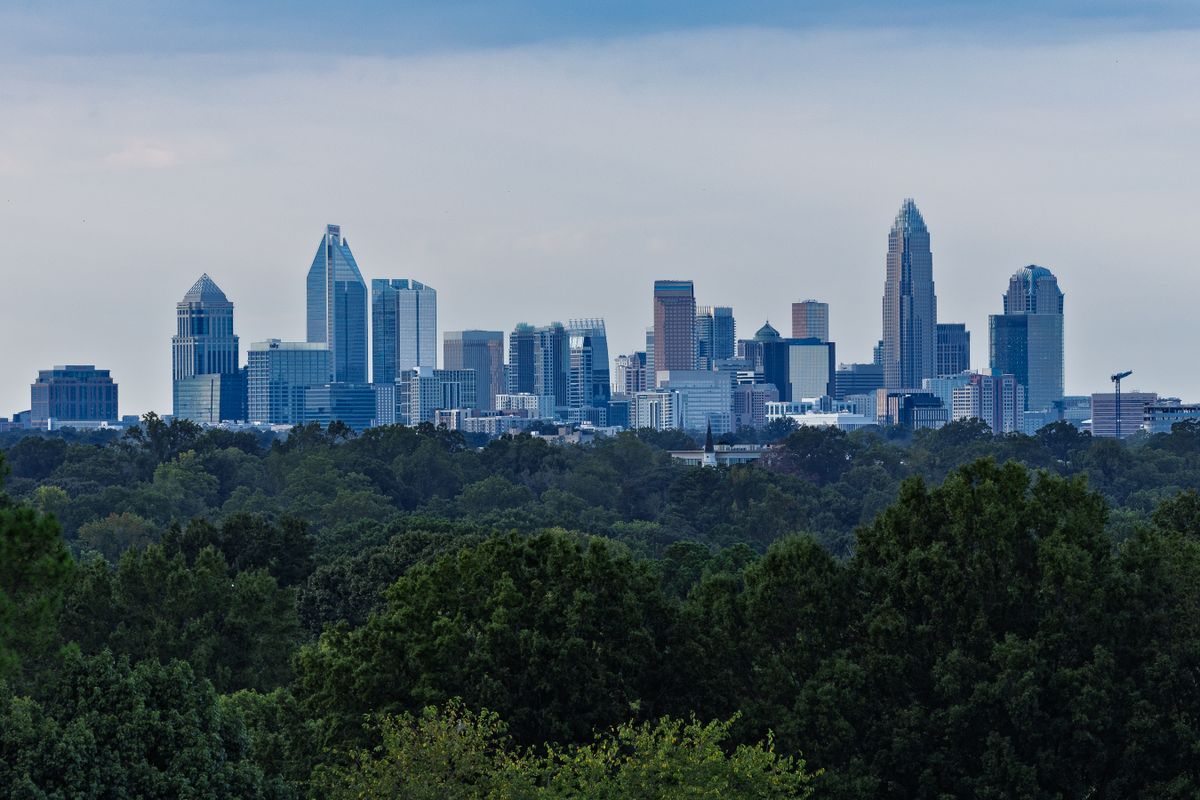
Charlotte had an estimated population of about 964,784 in 2025, which makes the “boring” label especially interesting. This is not a forgotten city. It is one of the fastest-growing major urban centers in the Southeast, with a skyline, a major airport, an NFL team, an NBA team, banking power, breweries, restaurants, concerts, museums, and a steady stream of new residents.
Yet some travelers still call Charlotte boring because growth does not always equal personality. The city can feel polished, corporate, and spread out, especially to visitors expecting the older character of Charleston, the music identity of Nashville, the food memory of New Orleans, or the historic density of Boston.
Charlotte has major attractions, including the NASCAR Hall of Fame, Discovery Place Science, professional sports, the nearby U.S. National Whitewater Center, greenways, food halls, and a large brewery scene. The city’s official tourism guide even promotes more than 100 things to do, which makes the boring label feel both unfair and revealing.
The problem is that Charlotte often works better with a plan. A visitor who books 2 nights downtown, catches a Panthers or Hornets game, visits the NASCAR Hall of Fame, eats through NoDa or South End, and adds a brewery stop may have a great trip. A visitor who arrives with no plan may see apartment towers, office buildings, traffic, and restaurants that feel similar to 20 other growing American cities.
The Real Reason These Cities Feel Boring
The 5 cities on this list show that boring is rarely about population. San Jose has nearly 1 million people; Charlotte is close behind; Mesa has more than 500,000; Bakersfield has more than 400,000; and Bridgeport has more than 150,000.
The deeper issue is identity. Tourists forgive a small city of 50,000 for being quiet, but they are less forgiving when a major city charges major-city prices without giving major-city memories.
A strong travel city usually gives visitors at least 3 easy wins: a walkable district, a famous attraction, a local food scene, a nightlife pocket, a scenic view, or a cultural story that feels different from anywhere else. When those wins are hidden, scattered, or weak, the city starts to feel boring by lunchtime on day 1.
What These Cities Should Teach Travelers
The smartest move is not to avoid every city Reddit calls boring. The smarter move is to match the city to the trip. Bakersfield works better as a food-and-music stop; San Jose works better as a Silicon Valley and Bay Area base; Bridgeport works better as a targeted day trip; Mesa works better for outdoor recreation; and Charlotte works better for sports, food, and brewery-focused weekends.
Travelers should also stop judging every destination by the same 5 standards. A desert city, a tech city, a post-industrial city, a banking city, and a Central Valley city will never deliver the same kind of weekend.
Still, the criticism matters. If a city with 500,000 or 900,000 residents wants tourism dollars, it needs more than population growth and hotel rooms. It needs an experience that visitors can understand quickly.
What This Really Means
The “most boring U.S. cities” debate is really a conversation about disappointment. People do not complain because a city has zero restaurants, zero parks, or zero history. They complain because they expected 10-out-of-10 energy and got a 5-out-of-10 weekend.
Bakersfield, San Jose, Bridgeport, Mesa, and Charlotte all have something worth seeing, but each has a gap between its size and its excitement. For locals, these cities may be home, work, family, and routine. For visitors spending real money, they have to become something more.
That is the challenge. In 2026, a big population will not be enough. If a major U.S. city wants travelers to remember it, it has to give them a reason before the hotel checkout clock starts ticking.
Factual details were grounded in U.S. Census Bureau QuickFacts population and land area data for Bakersfield, San Jose, Mesa, Charlotte, and Bridgeport, as well as official tourism or visitor resources for local attractions and travel positioning. Bakersfield’s bike-trail and Basque food details come from Visit Bakersfield and Visit California; San Jose attractions come from San Jose’s official tourism site; Mesa’s desert and outdoor positioning comes from Visit Mesa; Charlotte’s attractions and NASCAR details come from official Charlotte and NASCAR visitor resources.