These Spinach-and-Feta Hand Pies Turn a Few Basic Ingredients Into a Great Snack
Spinach, feta, and store-bought pastry can do considerably more than fill another predictable lunch. FoodieCrush’s spinach-and-feta hand pies wrap a savory filling in butter-brushed phyllo, then bake it into golden triangles. Lemon zest, toasted pine nuts, and a chopped shallot round out the mixture, turning familiar ingredients into something that works as a snack, an appetizer, or part of a meatless meal.
One expectation is worth setting immediately: these are not five-minute pastries or a three-ingredient shortcut. The published recipe calls for 40 minutes of prep and 30 minutes of cook time, for a total of 1 hour and 10 minutes. Its practical advantage is using ready-made phyllo instead of making pastry from scratch, and portioning the filling into individual hand pies rather than serving a large pie by the slice.
The Filling Has More Going On Than Spinach and Cheese
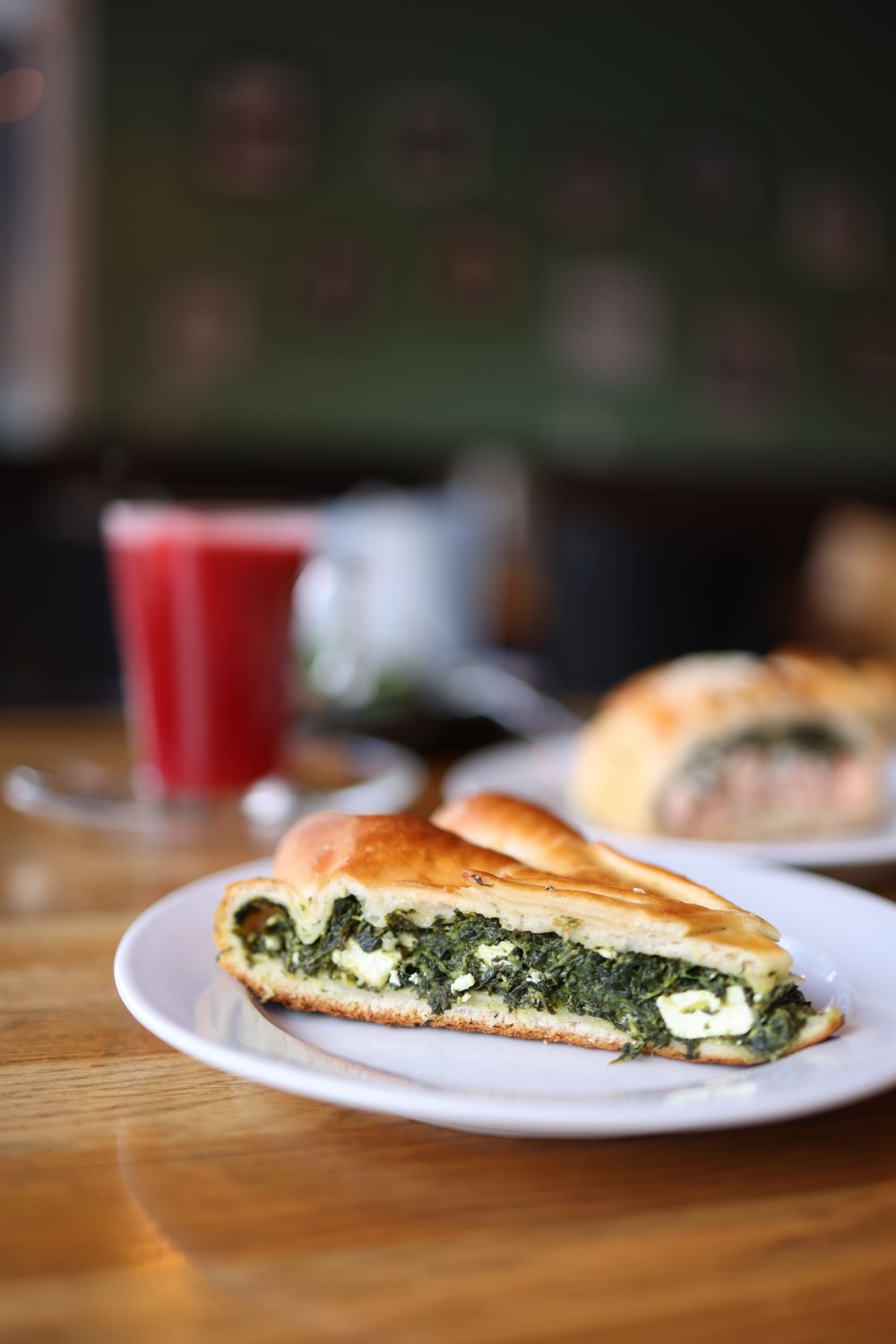
FoodieCrush founder and recipe writer Heidi Larsen describes the pastries as a Greek-inspired appetizer and recommends serving a few with lemon orzo pasta for a simple meatless meal. Their versatility is part of the attraction. “One of the things I like best about these beauties is they’re equally as tasty warm from the oven or cooled at room temperature so they’re perfect for entertaining too,” she writes. That is her serving assessment, not permission to leave them unrefrigerated indefinitely.
The recipe uses one pound of fresh spinach, one chopped shallot, one and one-half cups of crumbled feta,one cup of toasted pine nuts, the zest of one lemon, two beaten eggs and one-half cup of panko breadcrumbs. Butter and salt finish the filling, while an eight-ounce sleeve of thawed frozen phyllo provides the wrapper. The pine nuts are therefore a substantial ingredient, not a decorative pinch scattered on top at the end.
Those additions give the recipe a clear identity. Feta provides the cheese component, lemon zest adds citrus flavor without a separate lemon-juice step, and the shallot cooks with the spinach. The breadcrumbs and eggs are mixed into the filling before assembly. Follow the published combination rather than assume any spinach-and-feta filling will behave the same inside the pastry. Different recipes use different proportions and supporting ingredients.
The recipe also specifies phyllo, not puff pastry, refrigerated pie crust, or homemade dough. Larsen’s method stacks thin sheets, brushes them with butter and folds strips around the filling. That layered construction is part of the recipe’s intended result. Substituting another pastry might make an enjoyable snack, but it would need its own handling and baking instructions rather than a casual swap in this formula.
Related: Why a Recipe Card in a Loved One’s Handwriting Is Worth Preserving and How to Do It
The Most Useful Step Is Squeezing the Spinach
Start by melting two tablespoons of butter in a nonstick frying pan over medium heat. Add the chopped shallot and cook for one to two minutes. Then add the fresh spinach in three batches, tossing each batch until it wilts before introducing the next. Season with salt to taste and cook for about eight minutes, as directed. Working in batches lets you handle a pound of leafy spinach without forcing it into the pan all at once.
Transfer the spinach mixture to a colander, gently squeeze out excess water, then put it in a large bowl. Take this step seriously rather than treating it as optional cleanup. Food Network Kitchen’s separate spanakopita hand-pie recipe likewise directs cooks to drain their greens and squeeze out as much liquid as possible. Both recipes deliberately reduce the greens’ moisture before enclosing the filling in pastry.
Next, combine the spinach mixture with the lemon zest, beaten eggs, panko, feta, and toasted pine nuts. Stir until the ingredients are incorporated. The recipe doesn’t specify a substitution for frozen spinach or an equivalent frozen quantity, so the clearest first attempt is to use the fresh spinach it calls for. Likewise, adding extra greens or cheese would change the filling-to-pastry balance rather than simply make the same batch bigger.
For assembly, melt the remaining one-half cup of butter. Lay out a sheet of phyllo, brush it lightly with butter, and build a three-sheet stack, leaving the top sheet plain. Cut the stack into long, three-inch-wide strips. Put a scoop of filling at the bottom corner of each strip, then fold diagonally from corner to corner, continuing up the strip in the flag-folding pattern described in the recipe. Brush the final edge with butter to seal.
Golden Pastry, a Simple Serving Plan and No Guesswork
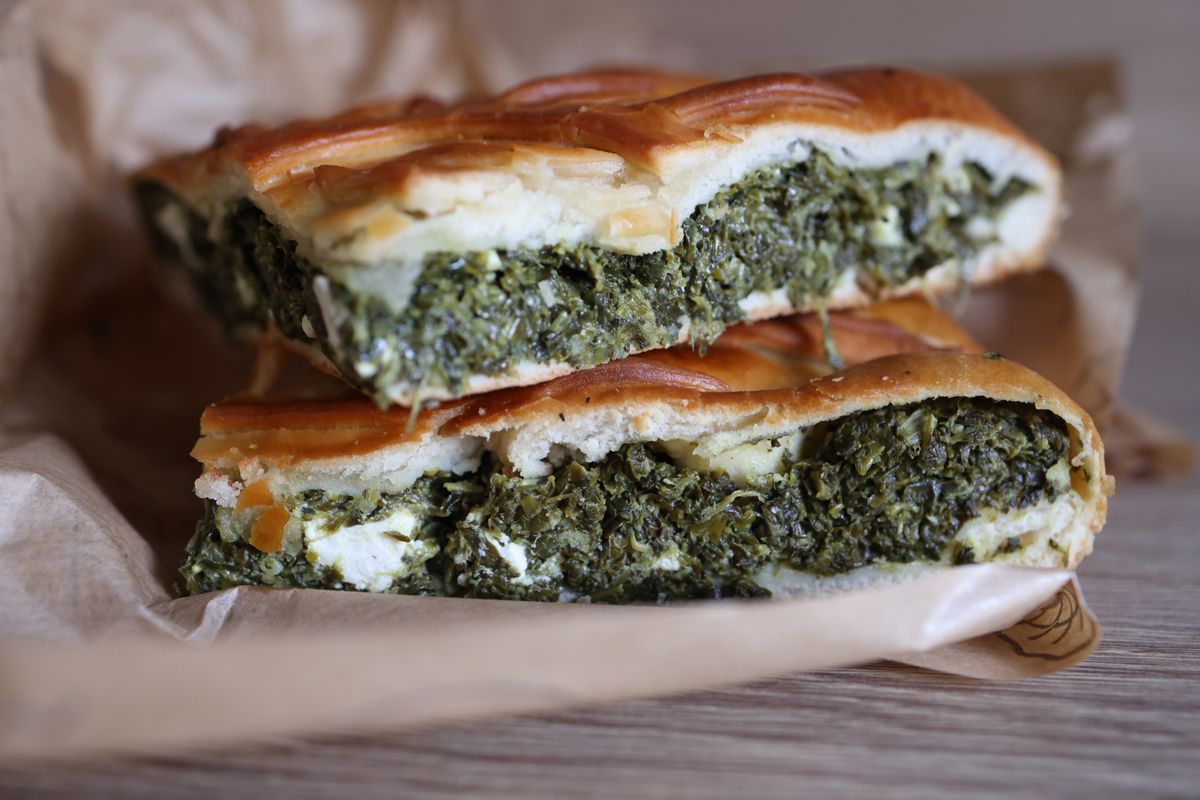
Transfer each triangle to a baking sheet, cover the assembled pies lightly with a dish towel, and continue with the rest. Once ready, brush the tops with butter and bake at 375°F for about 30 minutes, or until golden. The color cue matters alongside the timer. This recipe is oven-baked; it does not supply air-fryer settings, frying instructions or a tested conversion for a different pastry format.
The recipe card lists 16 servings but doesn’t specify how many triangles each batch yields. Its instructions call for “a scoop” of filling rather than a measured amount per strip, so presenting a precise hand-pie count would add certainty the source does not provide. Keep portions consistent enough to fold and seal, and follow the pastry dimensions rather than overfilling each triangle to reach an arbitrary number.
Serve the pies warm or let them cool for Larsen’s suggested room-temperature presentation. For a fuller meal, use her lemon-orzo pairing; for an appetizer spread, the individual shape keeps serving straightforward. The published page does not provide a storage duration or a freezing-and-reheating method, so those should not be invented. It does offer a complete baking approach that lets the spinach-and-feta combination move beyond a bowl or a large casserole.
The payoff is a homemade snack with a little ceremony built into the preparation: sauté, drain, mix, fold, and bake. It takes more effort than opening a packet, but none of it involves making the pastry itself. With store-bought phyllo doing the wrapping and a well-drained filling inside, these triangles give a familiar pair of ingredients a golden, shareable finish.
Other Post You Might Also Like
.8 healthy recipes that prove you need to use your 8×8 pan more