Trump’s Mail Voting Push Hits Appeals Court Wall as 2026 Election Deadlines Close In
President Donald Trump’s attempt to reshape mail-in voting before the 2026 midterm elections has run into another major legal barrier. A federal appeals court has refused to let the administration enforce key parts of its plan in 23 states while the underlying legal fight continues.
The decision is about far more than envelopes, postal rules, or government databases. It addresses a fundamental constitutional question: Can a president use executive power to change how states administer federal elections without approval from Congress?
For now, the answer from the Boston-based 1st U.S. Circuit Court of Appeals is no.
What the appeals court decided

In a 2-to-1 decision issued Saturday, July 25, the appeals court rejected the Trump administration’s request to suspend a lower court injunction.
That means U.S. District Judge Indira Talwani’s June 25 order remains in effect while the administration pursues its appeal. The injunction protects the 23 states that challenged the policy, along with the District of Columbia, through the November 3, 2026, elections.
The ruling does not permanently settle every question surrounding Trump’s executive order. It does, however, prevent the administration from implementing the blocked provisions in the plaintiff states during a critical period of election preparation.
The Justice Department argued that the lawsuit had arrived too early because federal agencies had not completed all the rules needed to implement the president’s directive. The appellate judges were not convinced.
“The Plaintiff States have no practical choice but to respond to the executive order now,” the majority wrote, pointing to approaching election deadlines and the need to explain voting procedures to election workers and the public.
That timing matters. States are already preparing ballots, training workers, testing equipment, updating voter information and ordering election materials. A last-minute federal rule could force officials to redesign systems while an election is already taking shape.
What Trump’s order sought to change
Trump signed Executive Order 14399 on March 31. Titled “Ensuring Citizenship Verification and Integrity in Federal Elections,” it directed federal agencies to take a larger role in determining who could receive and return a ballot through the mail.
One provision instructed the Department of Homeland Security to use federal citizenship and naturalization records to assemble state-by-state lists of confirmed citizens eligible to vote.
Another ordered the U.S. Postal Service to develop a system under which mail ballots would be connected to approved voter lists. Proposed postal regulations also called for special envelope formatting and unique Intelligent Mail barcodes.
Under the proposed system, states would provide the Postal Service with each mail voter’s name, address, and identifying ballot barcodes. Ballot mail that failed to meet the new requirements, or that involved someone missing from the approved participation list, could be rejected rather than delivered.
The order also told the Justice Department to prioritize investigations and prosecutions involving state or local officials who provided federal ballots to people considered ineligible.
Trump presented the measures as safeguards against voting by noncitizens. Voting in federal elections by noncitizens is already illegal. The larger dispute is whether the president can independently create a new federal enforcement structure that changes the responsibilities of state election officials and the Postal Service.
Why states said the plan could cause chaos

The states argued that the order would disrupt systems they had already built under their own laws. Many had purchased ballot envelopes and other supplies before the federal requirements were proposed.
The Postal Service’s rulemaking contemplated new design standards for outgoing and returned ballot envelopes. According to a multistate letter opposing the proposed rules, states could be required to submit voter names, addresses and ballot barcodes to the Postal Service before mail ballots would be accepted and delivered.
That is not a small technical update. It could require new software, new data-sharing procedures, redesigned envelopes, additional employee training and public education campaigns.
State officials also warned that incomplete federal citizenship records could incorrectly flag qualified voters. Naturalized citizens, people who recently changed their names, and voters whose government records contain errors could face greater risks of being excluded.
Judge Talwani concluded that the president lacked the authority to direct the Department of Homeland Security to create voter eligibility lists for states. She also found that the Postal Service did not have statutory authority to impose binding mail-voting requirements of the kind envisioned by the order.
Her ruling further rejected what she described as an attempt to pressure election officials into relying on necessarily incomplete citizenship lists under the threat of prosecution.
The Constitution sits at the center of the dispute.
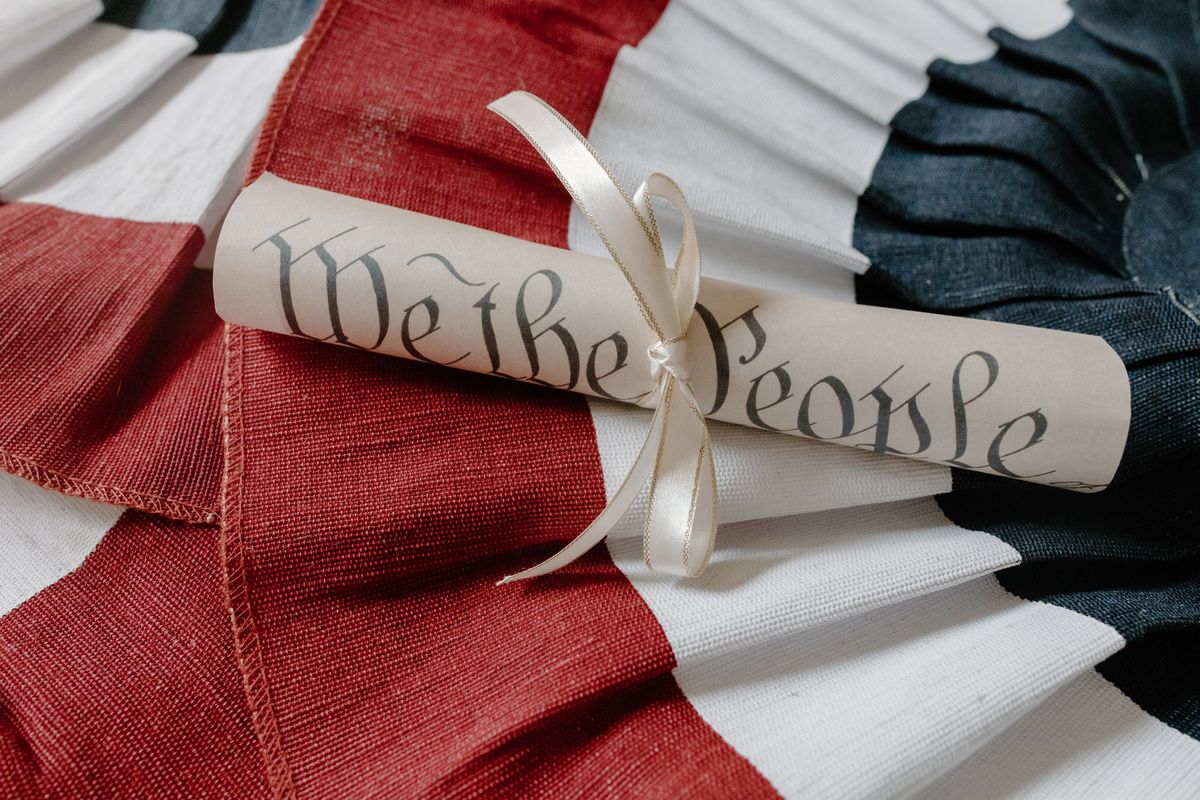
The Constitution gives states the initial authority to determine the “times, places and manner” of congressional elections. It also gives Congress the power to alter those rules.
The president is not assigned that same independent election-regulating power.
That division of authority is central to the states’ case. Their argument is not simply that Trump proposed a bad policy. They contend that he tried to exercise power the Constitution gives to states and Congress.
The appeals court noted that the executive order would involve federal officials in state election administration at an extraordinary level. It found that the plan affected the states’sovereign authority to create and enforce their own election laws.
This distinction is important. Congress can pass national voting legislation within its constitutional authority. Federal agencies can also enforce valid election laws. But an executive order cannot create powers that neither the Constitution nor Congress has granted to the president.
What the ruling means for voters
For voters in the plaintiff states, the decision means the blocked federal requirements cannot be applied to their 2026 elections while the injunction remains in force.
It does not eliminate existing state eligibility rules. It does not allow noncitizens to vote. It does not prevent election officials from checking registration records or investigating possible violations.
Instead, it preserves the current state-run framework while courts decide whether the administration’s proposed federal system is lawful.
The decision also reduces the immediate risk that voters could have mail ballots delayed or rejected because of newly created Postal Service lists, barcode requirements or mismatched federal records.
Rules for requesting and returning a mail ballot still vary by state. Voters should rely on official information from their state or local election office, especially regarding application deadlines, identification requirements and when completed ballots must arrive.
The legal battle is not finished.

The Justice Department could continue its appeal or ask the U.S. Supreme Court to intervene. Reuters reported that the department had warned it might seek Supreme Court review if the 1st Circuit refused to lift the injunction.
That makes Saturday’s decision a powerful pause, but not necessarily the final word.
The administration could also pursue election changes through Congress, where lawmakers would have to debate and vote on the proposals. That path would be slower and politically difficult, but it would place the issue before the branch that has explicit constitutional authority to regulate federal elections.
For election officials, every week now matters. Primary contests are underway or approaching, ballot materials are being finalized, and the November midterms are drawing closer. Legal uncertainty itself can become an operational problem when thousands of local jurisdictions must prepare workers, machines, and voters.
The latest ruling preserves the existing system in the states that sued. More broadly, it sends a clear message about presidential power: A national concern about election integrity does not automatically give the White House authority to rewrite state voting procedures.
The next stage may reach the Supreme Court. Until then, Trump’s mail-voting plan remains blocked where the challenge was brought, and the constitutional boundary between federal power and state-run elections remains the central issue.