Pritzker Blasts Trump Over SNAP and Medicaid Cuts as Jan. 6 Payout Fund Fight Returns
Illinois Gov. JB Pritzker is accusing President Donald Trump of revealing a deeply troubling set of priorities: tightening access to food and health benefits while defending a plan that could have paid some of his political allies, including people prosecuted over the Jan. 6 Capitol attack.
The comparison lands at a particularly sensitive moment. Thousands of Illinois residents have already lost food assistance under new federal rules, while state officials are preparing for years of reduced Medicaid funding.
Meanwhile, Trump has again spoken warmly about compensating people he believes were unfairly prosecuted, even as he says the controversial $1.8 billion “anti-weaponization” fund created for that purpose is now dead.
For Pritzker, the argument is simple. Washington says difficult cuts must be made when families need groceries or medical care, but money somehow appears when Trump’s allies are involved.
Pritzker Turns a Budget Fight Into a Question of Priorities
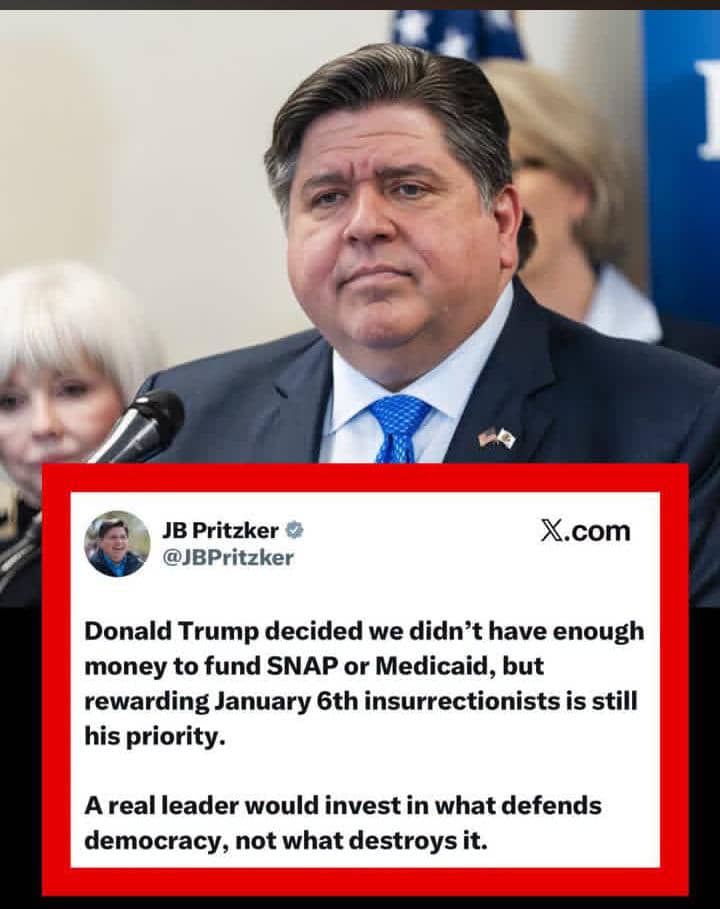
Pritzker has repeatedly attacked the Trump administration over changes to the Supplemental Nutrition Assistance Program, better known as SNAP, and Medicaid.
In May, after the Justice Department announced the anti-weaponization fund, Pritzker accused Trump of using public money to benefit loyalists. He said the president wanted to “reward his closest allies, billionaire cronies, and January 6 insurrectionists.”
The governor connected that fund directly to the administration’s domestic agenda, arguing that families were being asked to accept reductions in food and health assistance. At the same time, politically connected figures were positioned to seek compensation.
That criticism has become more immediate in Illinois.
Pritzker’s administration launched the $70 million Families Receiving Emergency Support for Hunger program, known as FRESH, on Aug. 1. It provides a one-time payment of $400 per eligible household member to certain Illinois residents who lost SNAP eligibility because of expanded federal work requirements.
Approximately 100,000 people were expected to receive initial payments, with additional residents potentially receiving help as funding remained available.
“At a time when the cost of groceries, gas, and utilities are all rising,” Pritzker said, Trump and congressional Republicans had stripped food assistance from nearly 100,000 Illinois residents.
The state program offers some breathing room, but it is not a permanent replacement for federal SNAP benefits. Pritzker acknowledged that reality, saying no individual state could fully replace the assistance affected by the federal law.
That is where his attack on Trump’s priorities gains its political punch. A $400 payment may help fill a shopping cart for a while. It does not settle what happens the following month.
What the Federal Law Actually Changed
The dispute is bigger than one Illinois program or one sharp political statement.
Trump signed the 2025 budget reconciliation law on July 4, 2025. The measure expanded SNAP work requirements, narrowed some exemptions, and transferred additional administrative and benefit costs to states.
The nonpartisan Congressional Budget Office estimated that the work requirement changes would reduce SNAP participation by roughly 2.4 million people in an average month between 2025 and 2034.
The law also limits future increases in SNAP benefits. CBO projected that the average monthly benefit in 2034 would be $213 under the law, compared with $227 under its earlier baseline.
Medicaid faces even larger financial changes.
CBO estimated that the reconciliation law would reduce federal Medicaid spending by about $911 billion from 2025 through 2034. KFF reported that the changes are expected to lower enrollment and leave millions more Americans without health coverage as various provisions take effect.
Supporters of the law say the requirements encourage employment, reduce improper payments, and make federal benefit programs more accountable. Agriculture Secretary Brooke Rollins has argued that the administration is targeting fraud and ensuring assistance reaches eligible Americans.
Critics counter that many people who lose benefits will not necessarily be ineligible or unemployed. They may instead miss deadlines, struggle with paperwork, work irregular hours, or fail to document an exemption correctly.
That distinction matters because hunger and illness do not wait patiently for an eligibility dispute to be resolved.
In Illinois, state officials said nearly 150,000 residents had lost SNAP benefits by July because of the federal changes, although some later regained assistance. Nearly 100,000 remained without federal benefits when the FRESH program began.
The Jan. 6 Fund Is “Dead,” but the Political Fight Is Not
The anti-weaponization fund began as part of a Justice Department settlement involving Trump’s lawsuit against the Internal Revenue Service over the disclosure of his tax records.
The Justice Department initially announced that the fund would receive $1.776 billion from the federal Judgment Fund. A five-member panel appointed by the attorney general would have reviewed claims from people alleging politically motivated government mistreatment.
The proposal did not specifically reserve money for Jan. 6 defendants. However, lawyers representing hundreds of those defendants said their clients could apply, and administration officials did not initially rule out payments to people convicted of assaulting police.
That possibility triggered opposition from Democrats and several Republicans.
Sen. Jacky Rosen of Nevada introduced proposals that would have blocked the fund and redirected the money toward SNAP, Medicaid or law enforcement programs. Her efforts were blocked in the Senate
Republican Sens. Thom Tillis and John Cornyn have also demanded written assurances that the fund will not return. Their objections have delayed the confirmation of acting Attorney General Todd Blanche.
Trump told reporters on July 31 that the fund was dead, but he did not hide his disappointment.
“It is dead, but I wish it weren’t,” Trump said, adding that he believed some people had been “horribly treated.
That statement kept the controversy alive. Tillis said Trump’s continued defense of compensation was precisely why formal action was needed to prevent the fund from being revived.
No payouts from the proposed fund have been reported, and the administration says it will not proceed. Still, the clash has handed Pritzker a ready-made political contrast.
On one side are food benefits, hospital funding and access to medical care. On the other is a proposed compensation system that Trump continues to defend, even after members of his own party pushed back.
That does not mean the $1.8 billion fund could single-handedly replace nationwide SNAP or Medicaid reductions. The programs operate on vastly different financial scales.
But politics is often about what leaders choose to spotlight.
Pritzker is betting voters will understand his message without needing a federal budget spreadsheet: When families are told there is not enough money for food or health care, they pay close attention to whom Washington is still willing to reward.