ICE Agents Leave New Jersey Starbucks After Viral Crowd Confrontation Sparks Immigration Debate
A routine coffee stop in New Jersey quickly turned into a heated public confrontation when two people identified by demonstrators as federal immigration agents were surrounded by customers, shouted at, and followed out of a Starbucks.
A video shared online on July 16, 2026, appears to show two alleged Immigration and Customs Enforcement agents standing near the store counter as several people draw attention to their presence. Within moments, chants and accusations filled the coffee shop, transforming an ordinary visit into another flashpoint in America’s increasingly bitter immigration debate.
The agents eventually walked out without collecting their order. Members of the crowd followed them to their vehicle while continuing to film and criticize them.
A Coffee Run Turns Into a Public Protest
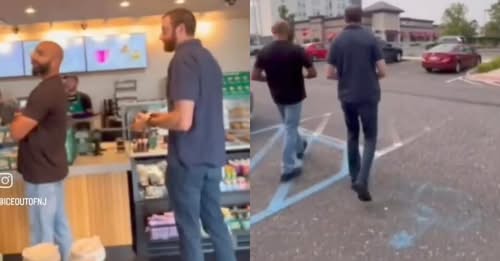
The confrontation began when a woman inside the Starbucks shouted, “Who wants coffee without ICE?”The person recording the scene then pointed the camera toward two individuals at the counter and described them as ICE agents. The video does not show the people introducing themselves or independently confirming their employment, but they appear to be wearing clothing associated with federal immigration enforcement.
Once the crowd’s attention shifted toward them, several people began shouting about ICE operations and the agency’s treatment of immigrant families.
“ICE agents separate families,” one voice yelled.
The criticism rapidly became more personal. One woman called the pair “disgusting” and told them they should feel ashamed of their work.
“You shouldn’t be comfortable going anywhere,” she said. “You shouldn’t be able to sleep at night.”
The agents did not appear to respond to the accusations. Instead, they remained near the counter briefly before turning toward the exit.
As they left, the person recording celebrated the fact that they had apparently abandoned their coffee order.
“That’s right, you aren’t getting your coffee,” she said.
What began as a verbal protest inside the store did not end at the front door.
Several members of the group followed the two people into the parking area. The crowd continued to record, question, and insult them as they walked toward their car.
One woman asked whether they had families of their own, apparently referencing longstanding criticism surrounding immigration arrests, deportations and the separation of parents from their children.
Another voice told the agents they could not expect to live like ordinary members of the community while participating in enforcement operations that protesters considered harmful.
“You wanna just get coffee like a normal person?” the person filming shouted. “You aren’t normal people. You are monsters.”
The video ended after the two individuals entered their vehicle and drove away.
Online Viewers Split Over the Crowd’s Actions
The footage spread rapidly across social media, where it produced sharply divided reactions. Supporters of the confrontation argued that immigration agents should expect public accountability wherever they appear. Some praised the demonstrators for making the agents uncomfortable and described the encounter as a peaceful form of resistance against federal immigration policies.
One commenter characterized the agents’ departure as a public humiliation. Another argued that the encounter forced them to experience rejection because of their identity and occupation.
Critics, however, said the demonstration crossed the line from protest into harassment.
They argued that the two people were attempting to purchase coffee and that they were not shown arresting anyone, conducting a raid, or performing any official duties inside the business. From that perspective, surrounding them, following them outside, and using dehumanizing language was unnecessary and potentially dangerous.
Some supporters of immigration enforcement also claimed ICE plays an important role in investigating trafficking, illegal employment practices, and other serious crimes. They accused the crowd of ignoring those responsibilities while treating every immigration officer as personally responsible for controversial federal policies.
The incident therefore raised a difficult question: When does public protest become targeted intimidation?
Political demonstrations often focus on government offices, detention facilities, courthouses, and organized events. Confronting individual officials during private activities creates a different debate involving personal boundaries, public accountability, and the right to protest.
The people in the video were not physically attacked, and the footage does not appear to show the crowd blocking their vehicle. Still, the repeated insults and decision to follow them into the parking area intensified concerns about how quickly a tense public encounter could have escalated.
Immigration Enforcement Remains a National Flashpoint
The Starbucks incident did not occur in isolation. Immigration enforcement remains one of the most emotionally charged political issues in the United States.
Critics of ICE frequently point to workplace raids, arrests near homes and courthouses, detention conditions, and cases involving separated families. For immigrant communities, the presence of federal agents can create immediate fear, particularly when residents worry that relatives, neighbors, or coworkers could be detained.
Supporters of the agency argue that federal immigration laws must be enforced and that agents are often tasked with pursuing people accused or convicted of serious crimes. They also warn that aggressive confrontations with officers could place both protesters and bystanders at risk.
That divide was clearly reflected in the reactions to the New Jersey video.
On one side, the crowd represented citizens refusing to allow immigration enforcement agents to move through public spaces without confronting the human impact of their work.
To the other, the scene showed two people being publicly humiliated while attempting to complete an ordinary purchase.
The exact location of the Starbucks was not identified in the circulated clip, and it remains unclear whether the people shown were on duty, whether the store’s employees asked them to leave or whether they voluntarily departed to prevent the confrontation from escalating.
There was also no indication in the shared footage that Starbucks refused to serve them. The available video suggests they left before receiving their order as the crowd’s shouting intensified.
That distinction matters because online descriptions of viral confrontations can quickly become more dramatic than the images actually establish.
What the footage clearly captures is the depth of anger surrounding immigration enforcement. A coffee order became a stage for a national argument, with strangers turning one quiet moment into a public judgment of federal policy, personal responsibility and the limits of protest.
The two alleged agents may have driven away without their drinks, but the debate surrounding the encounter remained far from settled.