Trump’s White House Correspondents’ Dinner Return Exposes the Growing Divide Between Politics and the Press
The White House Correspondents’ Dinner was supposed to represent resilience after a shocking interruption, but President Donald Trump’s return to the event revealed a deeper conflict over media, power, and political identity in modern America.
The White House Correspondents’ Dinner returned to Washington under extraordinary circumstances. What was once known as an evening of political humor and media recognition became a highly watched moment after the original event was disrupted by gunfire months earlier. President Donald Trump’s appearance carried the weight of that history, turning a traditional gathering into a reflection of the country’s ongoing political divisions.
The rescheduled dinner at the Waldorf Astoria in Washington, D.C., attempted to restore a sense of normalcy. Journalists, government officials, entertainers, and political figures gathered to complete a program that had been abruptly stopped. Yet the evening showed that returning to tradition does not automatically repair the tensions surrounding it.
Trump’s speech captured that contradiction. He honored those who responded to the earlier attack and acknowledged the role of the press, but he also criticized journalists and political opponents. The result was an event that combined remembrance, political messaging, and a public display of the complicated relationship between the presidency and the media.
A Night Designed for Celebration Returned With the Weight of a Crisis

The rescheduled White House Correspondents’ Dinner carried a different meaning because attendees were returning to a room shaped by fear, security concerns, and unfinished business.
The original dinner in April was expected to follow decades of tradition. The annual White House Correspondents’ Association event typically brings together reporters, presidents, lawmakers, and public figures for an evening that blends journalism recognition with carefully crafted political humor.
Instead, the gathering was interrupted before the program could unfold. Authorities said Cole Allen opened fire inside the Washington Hilton, creating chaos among thousands of attendees who had gathered for the celebration of the First Amendment.
The incident changed the emotional context of the event. A dinner normally associated with jokes and speeches became connected with questions about political violence, public safety, and the risks surrounding high-profile gatherings.
Allen later pleaded not guilty to charges including attempting to assassinate the president, transporting a firearm with intent to commit a felony, discharging a firearm during a crime of violence, and assaulting a federal officer with a deadly weapon.
The attack also highlighted the actions of Secret Service officer Victor Gonzales. Officials said Gonzales was struck by a bullet that hit his protective vest while he continued responding to the threat.
At the rescheduled White House Correspondents’ Dinner, Gonzales received recognition for his actions. The Washington Hilton staff was also honored for continuing to assist guests during the emergency.
The recognition offered one of the evening’s strongest moments of unity. In a politically divided environment, honoring those who protected lives became a rare point of agreement between people from different backgrounds and viewpoints.
The return of the White House Correspondents’ Dinner demonstrated an important aspect of American public life: institutions often attempt to continue even after moments that challenge their sense of security.
The Speech That Started With Unity Quickly Returned to Familiar Political Ground
Trump’s White House Correspondents’ Dinner remarks showed the difficulty of balancing presidential diplomacy with the confrontational style that has defined his political career.
Trump began his speech by addressing the earlier attack and emphasizing that political violence should not determine whether public traditions continue.
“As I said three months ago, the show must go on,” Trump said during his opening remarks.
The statement reflected the central theme of the evening. The dinner was not only about completing an interrupted program. It was also about demonstrating that fear would not prevent journalists and political leaders from gathering publicly.
Trump also recognized the journalists in attendance, praising the profession despite years of disagreements with parts of the media.
“I have tremendous respect for the people in this room,” Trump said.
However, the tone changed as the speech continued. Trump criticized several reporters and directed attacks toward Democratic figures, including former President Joe Biden, Senate Democratic leader Chuck Schumer, California Gov. Gavin Newsom, Minnesota Rep. Ilhan Omar, Massachusetts Sen. Elizabeth Warren, and California Sen. Adam Schiff.
The shift reflected one of the defining characteristics of Trump’s communication style. He frequently combines moments of cooperation with direct criticism, creating speeches that appeal strongly to supporters while often provoking disagreement from opponents.
The White House had previewed the speech as a combination of unity and sharp humor. Press Secretary Karoline Leavitt described it as “unifying yet vicious” and “serious yet hilarious.”
The final result reflected that description. The speech contained appreciation, jokes, criticism, and political commentary within the same performance.
For the White House Correspondents’ Dinner, that balance created a complicated atmosphere. The event was designed around conversation between political rivals, yet it also revealed how difficult meaningful dialogue has become in a deeply divided political environment.
A Dinner Celebrating Journalism Highlighted the Strained Relationship Between Trump and the Media
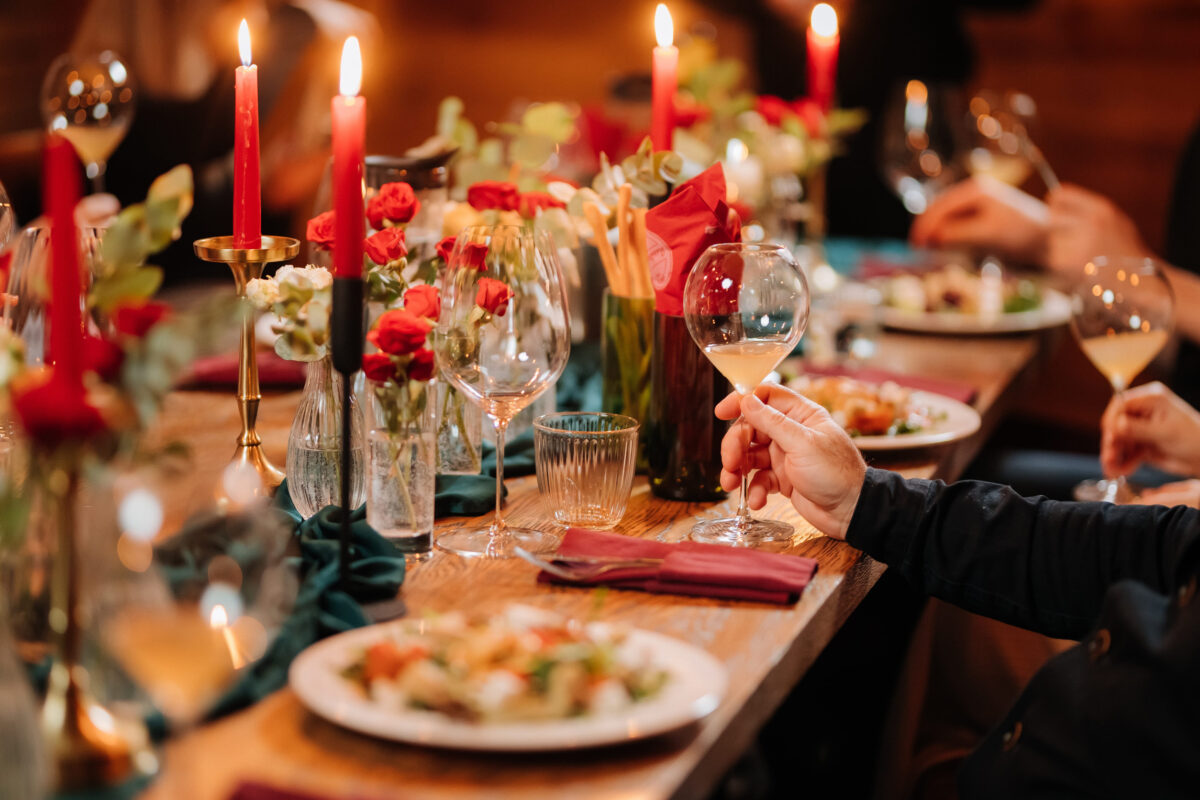
The White House Correspondents’ Dinner has long symbolized the relationship between presidents and journalists, but Trump’s appearance showed how fragile that relationship has become.
For decades, the White House Correspondents’ Dinner has served as a rare opportunity for political figures and members of the press to share an informal setting.
Presidents from both parties have used the event to make jokes, recognize journalists, and temporarily step away from the intensity of daily political battles.
However, the relationship between Trump and the media has followed a different path. Throughout his political career, Trump has frequently accused some news organizations of unfair coverage, while journalists have defended aggressive reporting as part of their responsibility.
That tension was visible throughout the evening.
Trump praised journalism as an important profession while arguing that certain reporters had not treated him fairly. The message reflected a broader national debate about media trust and political accountability.
The White House Correspondents’ Dinner became a symbol of that debate. The room represented two institutions that depend on each other but often remain deeply suspicious of one another.
History provides similar examples of complicated presidential relationships with the press. Presidents have often criticized journalists while also recognizing the importance of public communication through the media.
The difference today is the speed and intensity of political disagreement. Social media, constant news coverage, and partisan audiences have transformed presidential interactions with journalists into moments that can immediately influence national conversations.
Trump’s appearance demonstrated that the White House Correspondents’ Dinner is no longer only an entertainment event. It has become a stage where larger debates about democracy, accountability, and political communication play out.
The “Trump 2028” Moment Created Questions Beyond the Joke
A red campaign-style hat turned one moment of humor at the White House Correspondents’ Dinner into a broader conversation about Trump’s political influence.
Near the end of his speech, Trump introduced a “Trump 2028” hat while joking about running for another term.
The moment was presented as humor because the Constitution limits presidents to two elected terms. However, the symbolism immediately attracted attention because Trump remains one of the most influential figures in American politics.
Political symbols often carry meaning beyond their immediate context. A phrase, image, or gesture can shape conversations about a leader’s future, even when presented as entertainment.
The White House Correspondents’ Dinner has historically included memorable presidential jokes and dramatic moments. However, Trump’s use of political imagery reflected how closely entertainment and political messaging have become connected.
The moment also highlighted questions about the future of Trump’s movement. Regardless of individual opinions about his presidency, his influence within Republican politics remains a significant factor in national discussions.
The hat was not a formal campaign announcement. It was a reminder of Trump’s ability to generate political attention through carefully chosen moments.
In modern politics, visibility itself has become a powerful tool. The White House Correspondents’ Dinner provided a national platform, and Trump used that platform to reinforce his continued presence in political conversations.
Security Concerns Changed How Washington Approaches Public Political Events

The return of the White House Correspondents’ Dinner demonstrated how security has become a central part of modern political gatherings.
Following the April shooting, organizers and security officials approached the rescheduled dinner with increased preparation.
The event moved from the Washington Hilton to the Waldorf Astoria on Pennsylvania Avenue, requiring new planning and coordination between organizers and federal agencies.
Secret Service Director Sean Curran said the agency reviewed the response from the earlier incident and used those lessons while preparing for the rescheduled event.
Officials emphasized that security measures were designed to protect both political leaders and ordinary attendees.
Secret Service spokesman Anthony Guglielmi said the agency worked closely with the White House Correspondents’ Association to ensure guests received important information about emergency procedures.
The increased security presence represented a broader trend affecting public events across the United States. Political gatherings, concerts, and major civic occasions increasingly require detailed safety planning due to evolving security concerns.
For attendees returning to the White House Correspondents’ Dinner, the visible security measures served as a reminder of what had happened months earlier.
Yet the decision to continue the event also carried symbolic importance. Organizers wanted to show that public dialogue could continue despite threats.
Washington Finished the Dinner, But the Larger Debate Remains Unresolved
The rescheduled White House Correspondents’ Dinner achieved its immediate goal: the program was completed, attendees returned, and a historic tradition continued after a moment of violence.
But the evening also revealed unresolved tensions within American politics.
Trump’s appearance showed the complicated nature of modern presidential communication. A single speech can recognize shared values while also deepening political disagreements. A room filled with journalists and political leaders can demonstrate both cooperation and conflict at the same time.
The White House Correspondents’ Dinner remains an important symbol because it brings together institutions that often challenge one another. The event’s future significance may depend on whether those institutions can continue sharing space even when agreement remains difficult.
The question left behind by Trump’s return is not only what was said during the dinner, but what the gathering represents. Can traditions built around dialogue survive in an era defined by division, or will every public moment become another chapter in America’s political struggle?