Trump’s Proof-of-Citizenship Voting Rule Hits a Wall as Judge Blocks Election Order
A federal judge has handed President Donald Trump a major legal setback in his effort to reshape American elections, permanently blocking most of his first election executive order and drawing a sharp constitutional line around who controls voting rules in the United States.
The ruling from U.S. District Judge Denise Casper in Boston does more than stop one policy. It challenges a broader presidential push to change how Americans register, how mail ballots are counted, and how states administer elections.
At the center of the fight is Trump’s proposed proof-of-citizenship requirement for voter registration. The idea sounds simple on the surface. Only U.S. citizens can vote in federal elections, so voters should prove citizenship before registering.
But in practice, the rule could have created a new paperwork barrier for millions of eligible Americans who lack easy access to passports, birth certificates, naturalization papers, marriage certificates, or other documents that prove citizenship.
That is why this ruling lands with force. It is not only about election security. It is about state power, presidential limits, voting access, federal funding, mail ballots, and the future of election law as we head into another tense national election cycle.
A Federal Judge Blocks Trump’s Election Order
Judge Casper permanently barred the Trump administration from implementing key parts of the president’s first executive order on elections. The order sought to require documentary proof of citizenship when people register to vote, limit the counting of certain mail ballots, and pressure states by threatening to withhold federal grants if they refused to comply.
The ruling converts an earlier temporary block into a permanent legal barrier.
The judge rejected the administration’s argument that the lawsuit was premature because the rules had not yet been fully implemented. Instead, she agreed with Democratic state attorneys general who argued that Trump’s order violated the separation of powers.
The core of the ruling is direct. The Constitution gives states and Congress authority over elections. It does not give the president broad power to rewrite election rules by executive order.
That distinction is the heart of the story. Trump can argue for stricter election laws. He can ask Congress to pass them. He can campaign on them. But according to this ruling, he cannot force them into place through the White House alone.

The Real Fight Is Over Who Controls the Ballot
The blocked order turns one question into a national fight: who gets to control the ballot?
In the American system, elections are not run from one central office in Washington. States create and manage much of the voting process. Local election offices handle registration rolls, ballot distribution, polling places, mail voting, voter education, and ballot counting.
Congress can step in for federal elections. It has passed laws that shape voter registration, military voting, election technology, disability access, and voting rights protections.
The president’s role is different. The president executes federal law. The president does not get to invent new election law simply because the White House claims an urgent need.
That is why the court’s decision matters beyond this one order. It tells this administration and future administrations that election integrity cannot be a shortcut around the Constitution.
Why Proof of Citizenship Became So Controversial
Federal law already prohibits noncitizens from voting in federal elections. Voter registration forms already require applicants to affirm that they are U.S. citizens. False registration can carry serious criminal penalties.
Trump’s order attempted to go further. It sought documentary proof.
Supporters say that the requirement would strengthen trust in elections. They argue that voters should have confidence that only eligible citizens are taking part in federal races.
Opponents say the proposal solves a rare problem by creating a very real burden for lawful voters.
That is where the issue becomes more complicated. The debate is not only about who is eligible to vote. It is about how much paperwork an eligible citizen must produce before being allowed onto the registration rolls.
For many Americans, that paperwork is not sitting neatly in a folder. It may be missing, expensive to replace, difficult to obtain, locked in another state, or inconsistent with a current legal name.
A rule that sounds simple in a campaign speech can become a registration maze in real life.
The Paperwork Trap Facing Eligible Voters
The phrase “show proof” can sound harmless until we look at the lives behind it.
A voter may have been born in the United States but may not have a certified copy of a birth certificate. Another may have a birth certificate but no passport. A naturalized citizen may have misplaced a certificate that is costly and slow to replace. A student may have documents stored with parents hundreds of miles away. A rural voter may need to travel far to obtain records. A low-income voter may not be able to pay document fees or take time off work.
The problem is not always citizenship. Often, the problem is access.
A University of Maryland study cited in the election debate estimated that 21.3 million eligible Americans do not have, or do not have easy access to, documents that prove citizenship.
That number changes the political meaning of the rule. It suggests that a proof-of-citizenship requirement could affect far more than the small number of people accused of illegal voting. It could reach millions of citizens who are legally allowed to vote but may struggle to satisfy the paperwork demand.
Why Married Women Could Face Extra Barriers
One of the most overlooked issues is name changes.
Many married women have birth certificates that show one name and current identification that shows another. If a proof-of-citizenship rule relies heavily on birth certificates, those voters may need additional documents to connect the two names.
That can mean a marriage certificate, divorce decree, court order, or another official record. For some voters, one document would not be enough. They would need a document chain.
This is the kind of detail that often gets lost in national political arguments. A rule can be written in neutral language and still create uneven burdens for people whose lives do not fit a clean paperwork model.
A voter who is unquestionably a citizen could still face delays, confusion, or rejection because the documents do not line up neatly.
Kansas Already Showed the Risk
The proof-of-citizenship debate is not just theory. Kansas tried a similar requirement years ago, and the result served as a warning to election officials across the country.
The Kansas rule blocked the registrations of more than 31,000 U.S. citizens who were otherwise eligible to vote before courts halted the law.
That history matters because it shows what can happen when the demand for documents collides with the messy reality of recordkeeping. The question is not always who is a citizen. Sometimes, the question is who can prove it quickly enough and in the right format before the registration deadline closes.
Kansas gave voting-rights advocates a powerful example. It showed that proof-of-citizenship laws can catch real citizens in the net.
Mail Ballots Are Another Major Flashpoint
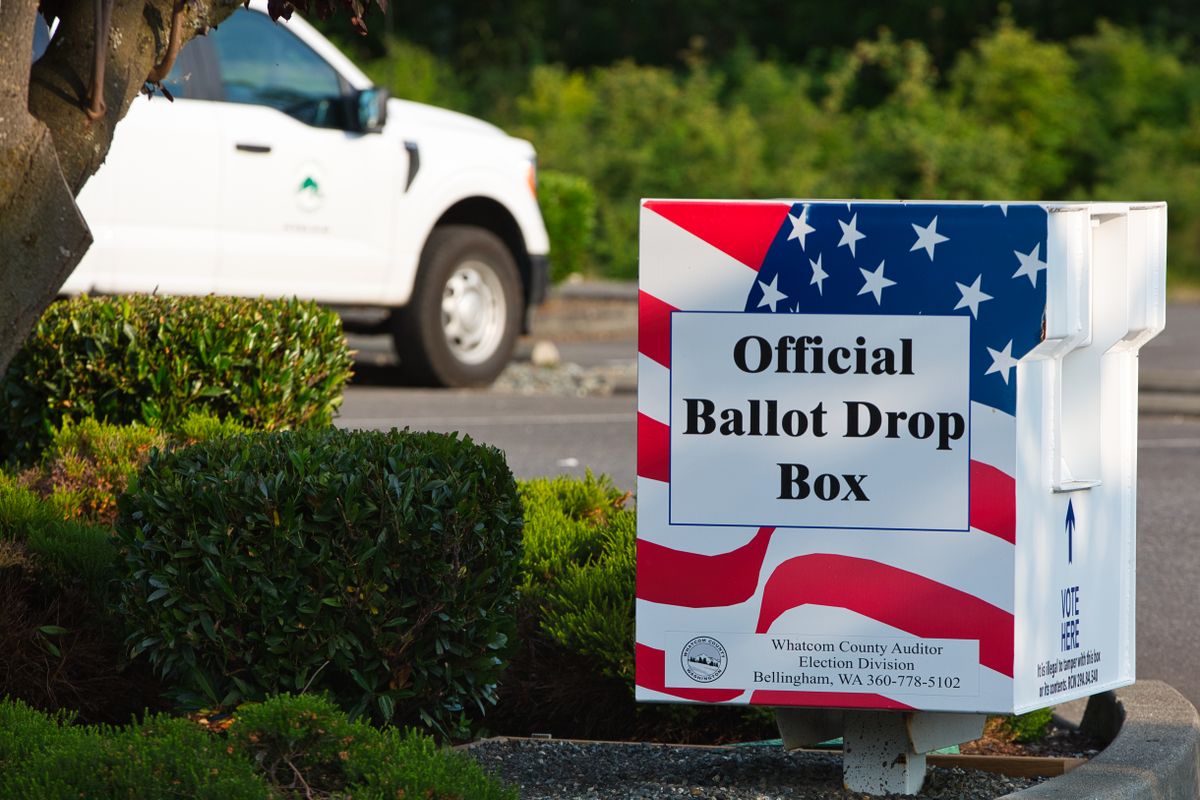
Trump’s executive order did not stop at voter registration. It also targeted mail ballots that arrive after Election Day, even when they are postmarked by Election Day.
Some states allow these ballots to be counted if they arrive within a specific grace period. The purpose is to protect voters from postal delays beyond their control.
Trump’s order sought to pressure states toward stricter rules. Ballots would need to arrive by Election Day to count.
That issue may sound technical, but it can decide real votes. A voter can follow the rules, mail a ballot on time, and still lose that vote if the postal system delivers it late.
Military voters, rural voters, older voters, disabled voters, students, and voters living far from election offices could be especially affected by strict receipt deadlines.
The court’s ruling says the president cannot force states into that change by executive order.

Federal Funding Threats Raised Another Alarm
One of the most aggressive parts of Trump’s order was its attempt to use federal funding as leverage.
The order threatened to withhold certain federal grants, including funding for election security, from states that did not comply with the administration’s preferred rules.
That raised a major constitutional concern.
Federal grants can come with conditions, but those conditions are usually created by Congress. A president cannot simply rewrite funding rules to pressure states into accepting election policies that Congress did not approve.
This was one reason the lawsuit grew beyond a single registration requirement. The states argued that the White House was trying to use money as a weapon against state election systems.
The court’s ruling reinforces the idea that federal funding cannot be used as a presidential tool to control elections.
Trump’s Next Path Runs Through Congress
The ruling does not end Trump’s voting push. It changes the battlefield.
Trump is also trying to move proof-of-citizenship requirements through Congress. The SAVE America Act has passed the House but remains stalled in the Senate.
That is why the legal and political fights are now moving together. If Trump cannot impose the requirement through executive order, he needs Congress to pass it.
The Senate filibuster has become a major obstacle. Trump has pushed for its elimination as he tries to force movement on the voting bill.
This makes the court ruling even more significant. It does not say Congress has no role. In fact, it reinforces that Congress is one of the proper places for this fight. The court’s message is that the president cannot take that role for himself.
The Housing Bill Delay Shows How Far the Fight Has Spread
The voting fight has now reached beyond election law.
Trump abruptly canceled the expected signing of a bipartisan housing bill and said he would not sign legislation until Congress passed his proof-of-citizenship requirement for voting.
That move shows how central the voting issue has become to his political strategy. A dispute over voter registration is now tied to housing policy, Senate procedure, and the president’s pressure campaign inside Congress.
For voters watching from outside Washington, it can feel like one issue has swallowed many others. Housing affordability, election law, federal power, and partisan strategy are now tangled together.
That gives the story a sharper edge. The proof-of-citizenship fight is no longer confined to election offices and courtrooms. It is becoming a bargaining chip in broader governing decisions.

The Supreme Court Could Still Reshape Mail Voting
Even with Judge Casper’s ruling, the mail ballot issue is not settled.
The U.S. Supreme Court is expected to rule on a major voting case involving whether mail ballots must arrive by Election Day. That decision could affect states that currently allow grace periods for ballots postmarked by Election Day.
If the Supreme Court imposes a stricter rule, states may be forced to change mail ballot procedures regardless of what happened in the Boston case.
That is why the ruling should be seen as one major piece of a larger election-law storm. Trump’s executive order has been blocked, but fights over ballot deadlines, voter registration rules, citizenship checks, and state authority are still moving through courts and Congress.
Election officials now face a difficult task. They must prepare voters for upcoming elections while legal rules keep shifting around them.
The White House Frames the Fight as Election Security
The Trump administration says the executive order is designed to protect elections and increase public confidence.
That argument should not be ignored. Many Americans do worry about election integrity. Trump and his allies have built a powerful political message around the idea that voting systems need stricter safeguards.
But the court’s ruling separates political messaging from legal authority.
A president can believe a rule is necessary. A president can argue that the rule would increase confidence. A president can ask lawmakers to pass it. But belief and urgency do not create constitutional power.
That is the court’s central answer to the White House.
Election security may be a legitimate policy debate. It still has to move through legitimate legal channels.
Democrats Frame the Order as a Power Grab
Democratic officials who challenged the order say the ruling confirms what they argued from the beginning: Trump’s directive was an unconstitutional attempt to seize control of elections.
New York Attorney General Letitia James praised the court for blocking what she described as an attack on voting rights. California Attorney General Rob Bonta said the ruling reaffirmed the principle that states and Congress set election rules.
Their argument is both legal and political.
Legally, they say the order violates the separation of powers. Politically, they say the proof-of-citizenship requirement could make voting harder for eligible Americans.
That combination makes the issue explosive. It allows Democrats to present the case as both a defense of the Constitution and a defense of voter access.
Why This Ruling Matters Before the Midterms
The timing matters.
The ruling comes as the country approaches the 2026 midterm elections. Sudden changes to registration rules or mail ballot deadlines could create confusion for voters and election officials.
Election systems need time. States must update forms, train staff, test technology, publish instructions, answer voter questions, and coordinate with counties.
A major rule change close to an election can produce mistakes, delays, and legal challenges.
By permanently blocking key parts of Trump’s executive order, the court provides states with greater stability. It does not remove all uncertainty, but it prevents the administration from forcing immediate changes through the executive order at issue in this case.
For voters, the practical message remains simple: election rules are still largely state-specific, and voters should check their own state deadlines and registration requirements.
The Bigger Story Is Presidential Power
The most important part of this ruling may be what it says about the presidency.
In recent years, presidents from both parties have used executive orders to push policy when Congress was slow, divided, or unwilling. But elections sit in a special constitutional space.
The president is not just another policymaker when the subject is voting. The president is also a candidate, a party leader, and the head of the executive branch. That makes unilateral presidential control over election rules especially sensitive.
Judge Casper’s ruling pushes back against the idea that a president can reshape the election system alone.
That principle could matter for many years. A future president from either party could try to change election rules through executive action. This ruling gives states and voting-rights groups a legal argument against that kind of move.
It says the machinery of voting cannot be controlled by decree.
What Happens Next
The Trump administration can appeal the ruling.
The administration can also continue defending related election actions in other courts. Trump can keep pressuring Congress to pass the SAVE America Act. Republicans can continue to argue that proof-of-citizenship rules are necessary to protect elections. Democrats can continue to argue that those rules would block eligible voters.
The legal fight is not over. The political fight is not over either.
But this ruling changes the ground beneath both sides.
Trump’s executive order has hit a serious constitutional wall. If he wants a national proof-of-citizenship requirement, the strongest path now runs through Congress, not the Oval Office.
The Bottom Line
The ruling does not erase the debate over election integrity. It does not stop Congress from considering new voting laws. It does not end court fights over mail ballots or voter registration.
But it does deliver a clear message.
The president may argue about election rules. The president may campaign on election rules. The president may demand action from Congress.
But under this ruling, the president cannot take control of the ballot by executive order.
That is why this case matters. It is not only about documents. It is not only about mail ballots. It is not only about Trump.
It is about the line between election security and voter access. It is about the balance between state authority and federal pressure. Most of all, it is about the constitutional limits on presidential power in the one system that decides who holds power next.