U.S. Suspends Avocado Inspections in Michoacán After Security Threat Disrupts Major Supply Route
A security alert in western Mexico has interrupted the inspection stage at which harvested avocados are transformed into shipments bound for the United States.
On August 5, the United States halted its government operations in Michoacán following the identification by authorities of a threat to American interests as described by the U.S. Embassy.
The order provides for a stop to the mandatory inspections by the U.S. Department of Agriculture at authorized avocado packing facilities.
Exporters would be unable to certify new shipments coming from the largest avocado-producing state in Mexico for entry into the United States if those checks were not in place.
It is necessary to separate the immediate facts from the more dramatic implication that all Mexican avocados have suddenly been banned.
The security measure relates to U.S. government activities in Michoacán and does not extend to every avocado already in the American market or to every avocado-producing area in Mexico.
What the United States Actually Suspended in Michoacán
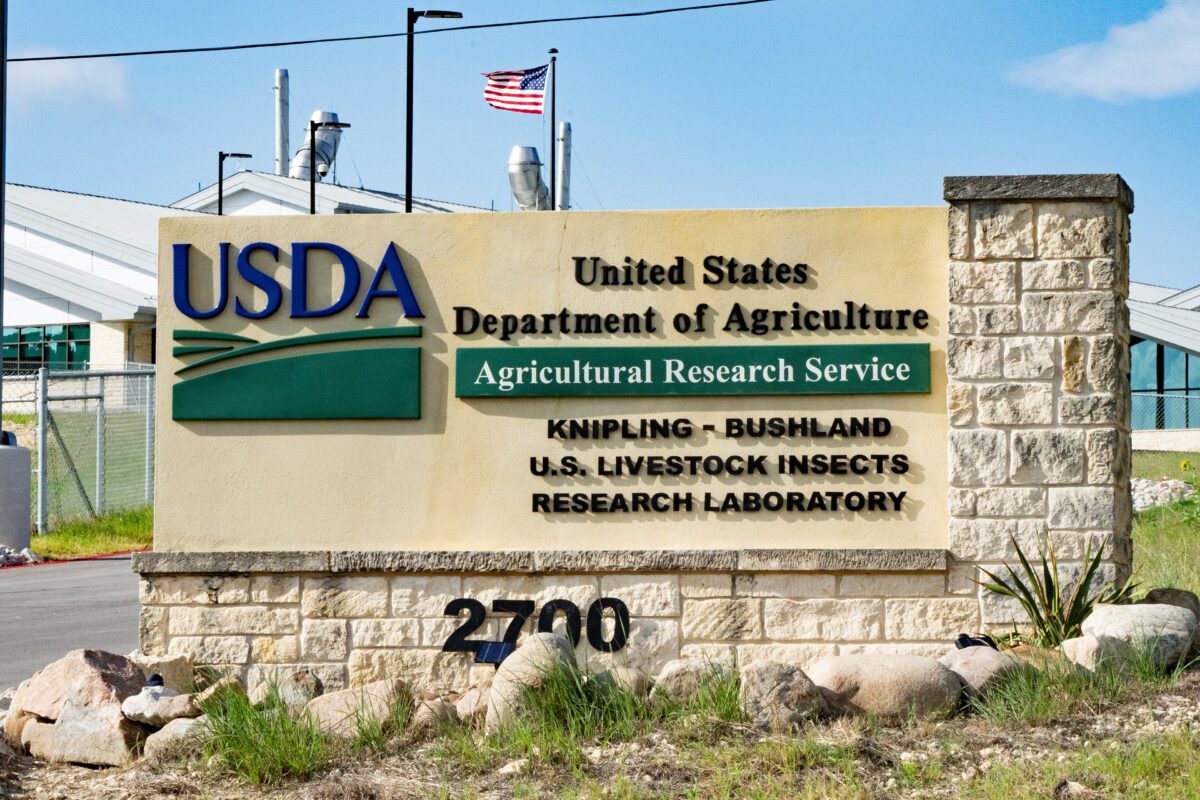
The U.S. Embassy stated that all government activities in Michoacán had been suspended due to a security threat which was not specified.
It also served to remind Americans that the State Department has listed the country as a Level 4 “Do Not Travel” destination due to the risks involved, such as crime and kidnapping.
For the avocado industry, the most important aspect of the order is the fact that USDA regulatory staff will be withdrawn. These officials work at approved packing plants, where they check that the avocados comply with the requirements concerning operation and plant health for export.
The measure is therefore more accurate than a nationwide ban on Mexican avocados since the USDA records show that Michoacán and Jalisco are the two Mexican states currently approved to supply avocados to the U.S. market.
The security announcement of August 5 was specific to Michoacán and, according to the most recent reports, there had been no nationwide suspension announced.
This distinction exists because Michoacán has a dominant position in the trade, even though it does not represent the whole of the approved Mexican export system.
Why USDA Avocado Inspections Cannot Simply Be Skipped
Mexican Hass avocados enter the United States via a system that is jointly managed by Mexico’s National Service for Agrifood Health, Safety and Quality, SENASICA, and the USDA’s Animal and Plant Health Inspection Service.
SENASICA checks and issues certificates for the orchards that take part, and then USDA inspectors examine the fruit at the approved packing stations before it can get export clearance.
The aim is to minimize the chance that agricultural pests will enter the United States via commercial shipments.
The inspection is not a voluntary quality check that an exporter can put off or substitute with paperwork; it is one of the necessary stages in the export process.
If the USDA staff cease working, the fruit that has just been received will not be able to move normally from the packing plant to an authorized shipment bound for the United States.
That is the reason why a security threat directed at people or American interests can have an immediate commercial effect even if there is no reported issue with the avocados themselves.
New Avocado Shipments Were Put on Hold
APEAM, the association of Mexico’s avocado producers and packers, advised its members that avocado fruit could only proceed to processing if it had been received on August 4 in the presence of a USDA regulatory officer.
Fruit that was received or unloaded on the 5th could be stored, but it wasn’t allowed to be processed for export as part of the regular program. The association had instructed that no U.S.-bound export shipments should be authorized that Wednesday.
The packing companies had to decide for themselves whether harvesting should go on while inspections were unavailable, and that decision had financial consequences along the whole chain.
Avocados are perishable, so orchards cannot keep mature fruit for long; packing facilities require a steady flow of fruit; and transport companies rely on scheduled shipments.
A short break might result in a manageable backlog, while a longer halt could force growers and packers to redirect fruit, slow harvesting, or accept losses.
The Exact Security Threat Has Not Been Publicly Detailed
The U.S. Embassy employed general terms, stating that the suspension was in response to a threat directed at American interests.
The source of the threat was not made public, nor were details about a specific message given, and it also did not state that an inspector had been attacked.
The governor of Michoacán, Alfredo Ramírez Bedolla, called the action a preventive measure aimed at safeguarding personnel after arrests linked to extortion.
According to Antonio Cruz, who is the Secretary of State Security, the authorities were not aware of any direct incident involving the avocado inspectors.
The authorities still sent in about 300 security personnel to the Los Reyes area.
That area is located in the part of Michoacán where avocados are produced and has come under the influence of criminal groups which raise funds by means of extortion as well as are involved in drug trafficking.
A recent arrest was that of Alfonso Fernández Magallón, known as “El Poncho,” whom Michoacán authorities have described as a local criminal boss operating in the area of Los Reyes.
The United States had set up a reward of up to $5 million for information that would result in his arrest, and U.S. Ambassador Ronald Johnson welcomed the operation in public.
It does not follow from those developments that the arrest caused the embassy alert. The embassy has not given out sufficient information to prove that there is a connection between the two.
All that can be established is that state officials inserted the suspension during a time of increased concern after carrying out actions against people accused of extorting businesses and producers.
Why Michoacán’s Avocado Trade Matters to the United States
Michoacán is not a supplier of minor importance that could be ignored without consequences.
Mexico supplies about 80 percent of the avocados that the United States imports, and the American market takes in almost 90 percent of Mexico’s avocado exports in terms of volume.
The USDA predicts that Mexico will export a record 1.31 million metric tons of avocados worldwide in 2026, about 1.2 million metric tons of which are expected to go to the United States.
In 2025, Mexico exported 1.22 million metric tons of goods worldwide, of which 1.08 million metric tons were sent to the U.S. market. The sales of these goods to the United States amounted to about $3.65 billion.
The avocado industry is also important in Michoacán, since avocado cultivation is said to provide 200,000 jobs in the state, connecting the crop with farmworkers, truck drivers, packing staff, agricultural technicians, exporters, and other businesses in the area.
The disruption caused by the cessation of inspections does not stay within government offices; it affects orchards, warehouses, refrigerated transport systems, and retail supply chains on both sides of the border.
Will U.S. Avocado Prices Rise?
That is not a reason to conclude that grocery prices will rise immediately.
The effect on retail is mainly determined by the length of the suspension, the amount of inventory that has already been cleared, and whether shipments from other approved or international suppliers can fill part of the gap.
A brief interruption will have only a small visible impact on consumers, since distributors normally look after the fruit at various stages of transit, ripening and storage.
The risk goes up if the inspectors stay away for a long time so that backlogs in the packing house build up and normal shipment volumes decrease.
Since Michoacán has such a major share of the U.S. market, there is little scope for a full replacement. Although Jalisco is also authorized to export to the United States, American buyers get their avocados from other countries as well as from domestic producers.
Those other options, on the other hand, do not necessarily correspond to Michoacán’s total production volume over the entire year or its existing transportation network.
It must therefore be stated with qualification that the longer USDA avocado inspections remain suspended, the greater the chance of a tighter wholesale supply, delayed deliveries, and higher retail or restaurant costs.
At the time the announcement of the suspension was made, there was no nationwide avocado shortage or any confirmed increase in prices.
Security Has Interrupted Avocado Exports Before
Michoacán has not been experiencing threats or acts of violence for the first time that have brought the certification process to a halt.
In February 2022, inspections were put on hold because U.S. security officials judged the threat involving APHIS personnel to be credible.
Before the operations resumed, the American and Mexican authorities collaborated with APEAM on security procedures.
In June 2024, there was another disruption when two inspectors came across a security incident during a community road blockade. As a result, the United States suspended its inspections of avocados and mangoes while the authorities looked into the safeguards for personnel.
These incidents show a persistent weakness. Since the avocado trade relies on technical agricultural methods, those methods in turn depend on inspectors being able to travel and work safely.
The value of the system has increased because of export growth, yet organized crime has made it more difficult to protect certain sections of that system.
Every time a shutdown takes place, it serves as a reminder to both producers and buyers that physical security has now become an integral part of the cost of keeping the international food supply going.
What Must Happen Before Inspections Resume
Officials from Michoacán said they were in contact with the U.S. Embassy and coordinating with both Mexican and American security agencies to set up conditions that will enable USDA employees to return safely.
A restart will likely have to wait until a security assessment has been completed rather than on a set deadline. During previous suspensions, inspections got underway after the authorities had put in place extra safeguards and decided that staff could go back to work.
We need to look out for an official notice from the U.S. Embassy, the USDA, APEAM, or the Mexican agricultural authorities.
Although statements made by politicians might indicate that the negotiations are advancing, exporters need concrete evidence that the inspectors have come back and that the new fruit can once again be processed and certified.
The industry will then have to deal with a second problem: clearing up any backlog that had built up during the stoppage. Simply reopening the packing facilities will not mean that harvesting that had been delayed, the fruit that had been stored, the transportation schedules that had been missed, and the loads that had not been processed are all erased.
The Avocado Supply Chain Now Depends on a Security Decision
The fact that production was suspended in August demonstrates how closely an everyday item in American grocery stores is linked to security conditions that lie hundreds of miles from the U.S. border.
An avocado might be regarded as just a simple kind of fruit. Yet getting it from an orchard in Michoacán to a supermarket involves certified farms, protected packing plants, federal inspectors, refrigerated transport, and cooperation between countries.
At the moment, the confirmed disruption still applies to the inspection and export-authorization stage; the United States has not stated that avocados that are already circulating in the country are unsafe, and the suspension does not constitute a food recall.
The main issue is how long it lasts. A quick security agreement could ensure that the commercial effects remain limited.
If the interruption continued, it would place increasing pressure on the producers in Michoacán and on the American companies which rely on a continuous supply of Mexican avocados.
Until USDA inspectors return, one of the world’s busiest avocado routes remains partially frozen by a threat authorities have not fully explained.