Trump’s Kennedy Center Rebrand Backfires as His Name Is Scrubbed From the Website
The Kennedy Center’s website no longer carries Donald Trump’s name, and the quiet digital change says more than any loud political statement could. A name once affixed to one of America’s most famous cultural landmarks has now begun to disappear from the institution’s official identity after a federal judge ruled that the venue cannot be renamed without Congress.
We are not looking at a simple website edit. We are watching a public institution pull itself back from a branding fight that turned the nation’s premier performing arts center into another battlefield over power, memory, and political ownership. The question now is bigger than Trump’s name on a page. It is about whether America’s public landmarks still belong to the public.
The Website Changed First, but the Fight Is Bigger Than a Logo

The first visible rollback happened online. The Kennedy Center’s website reverted to its familiar name, The John F. Kennedy Center for the Performing Arts, removing the Trump-linked branding that had sparked legal and political backlash. That digital shift matters because websites now function as the front door of major institutions. Before visitors buy tickets, donors read updates, artists check schedules, or reporters search for official details, they see the name at the top of the page.
That is what makes this moment so pointed. Online, Trump’s name was gone. Yet the larger battle over signage, documents, official templates, and institutional messaging was still unfolding under a court-ordered deadline. The website became the first public sign that the rebrand had hit a legal wall.
Congress Named the Kennedy Center, and the Court Said That Still Matters
The ruling cuts straight through the political noise. The Kennedy Center was not treated as private property that could be renamed by whoever controlled the board. The court said its name was created through federal law, which means only Congress has the authority to change it.
That detail gives the story its sharpest edge. A president can appoint allies, push policy, and shape institutions in many ways. But a congressionally named memorial is different. The judge’s ruling effectively said that the name of a national cultural landmark cannot be rewritten through branding, loyalty, or political muscle.
Joyce Beatty Turned a Branding Fight Into a Courtroom Test
A stronger version of this story should not focus only on Trump. Rep. Joyce Beatty’s legal challenge is central to the rollback. As an ex officio Kennedy Center trustee, she argued that the rebrand violated the law and that the board could not simply attach Trump’s name to an institution Congress had already named.
That angle gives the article a clearer human structure. Trump’s allies pushed the rebrand. Beatty challenged it. The court sided with the argument that law, not boardroom force, controlled the name. That makes the case more than another Trump controversy. It becomes a test of institutional limits.
Trump’s Branding Instinct Finally Met a Public-Law Barrier
Trump has spent decades attaching his name to buildings, businesses, products, and political movements. That history makes the Kennedy Center dispute especially revealing. His name has long been part of his power, but the Kennedy Center showed that public law can still limit personal branding.
That is the deeper irony. A private tower can carry a name because the owner controls the property. A national performing arts center created by Congress is not the same kind of asset. The ruling turned a familiar Trump strength into a vulnerability: the brand was powerful, but the law was stronger.
Artists and Audiences Were Pulled Into the Political Storm
The Kennedy Center cannot survive on legal documents alone. It needs performers, ticket buyers, donors, staff, and public trust. Once the rebrand became controversial, the institution faced more than a courtroom problem. It faced a credibility problem.
Artists do not want their performances swallowed by political spectacle. Audiences do not want every ticket purchase to feel like a partisan statement. Donors do not want cultural institutions to look unstable. That is why the name dispute mattered beyond Washington insiders. A performing arts center loses power when people stop seeing it as a shared stage.
The Bigger Warning for America’s Public Landmarks
The Kennedy Center fight points to a larger national anxiety. Americans are watching schools, libraries, museums, courts, monuments, universities, and arts institutions become political battlegrounds. The question is no longer only who runs them. The question is whether they can remain public spaces at all.
That is what makes this story more powerful than a normal Trump headline. It shows how quickly a public institution can become a political trophy when leadership, branding, and power align in the same direction. It also shows that courts can still stop that process when federal law draws a clear boundary.
The Renovation Shutdown Made the Case Even More Explosive
The name fight was only one part of the ruling. The judge also blocked a planned closure of the Kennedy Center tied to major renovations. That added a deeper layer because the dispute was no longer only about what the building should be called. It was also about who gets to decide the building’s future.
That makes the story more compelling for readers. A name change may sound symbolic, but a shutdown affects performances, workers, audiences, schedules, revenue, and public access. The case pulled two questions into the same courtroom: who controls the Kennedy Center’s identity, and who controls its future?
Kennedy’s Memory Became the Emotional Center of the Fight
The Kennedy Center is not just another venue in Washington. It is a living memorial to President John F. Kennedy, whose name still carries civic weight more than six decades after his assassination. That makes the attempted rebrand feel more emotionally charged than a normal institutional change.
For many Americans, Kennedy’s name represents youth, public service, tragedy, and an unfinished promise. Placing Trump’s name beside or over that legacy turned the building into a political symbol overnight. Removing that name now does more than restore old branding. It reasserts the original memorial purpose.
The Rebrand Backfired Because It Made the Institution Look Smaller
The Kennedy Center is meant to feel larger than any one president, board, party, or administration. That is why the Trump branding backfired. Instead of making the institution feel grander, the rebrand made it look like it was captured by the politics of the moment.
The rollback now leaves the center with a harder task than removing names from signs. It must rebuild trust with the public, artists, donors, staff, and lawmakers. A website can be corrected quickly. Institutional damage takes longer to repair.
The June 12 Deadline Turned the Rebrand Into a Scramble
The court order did not leave the Kennedy Center with vague instructions. Staff were told to remove references to Trump from official materials by June 12, covering everything from email signatures and letterhead to brochures, web pages, templates, signage, and internal documents.
That deadline gives the story movement. This was not a symbolic defeat that could be quietly ignored. It became an administrative scramble across one of Washington’s most visible cultural institutions. Every folder, form, banner, page, and public-facing label became part of the cleanup.
The Building Itself Became the Last Visible Argument
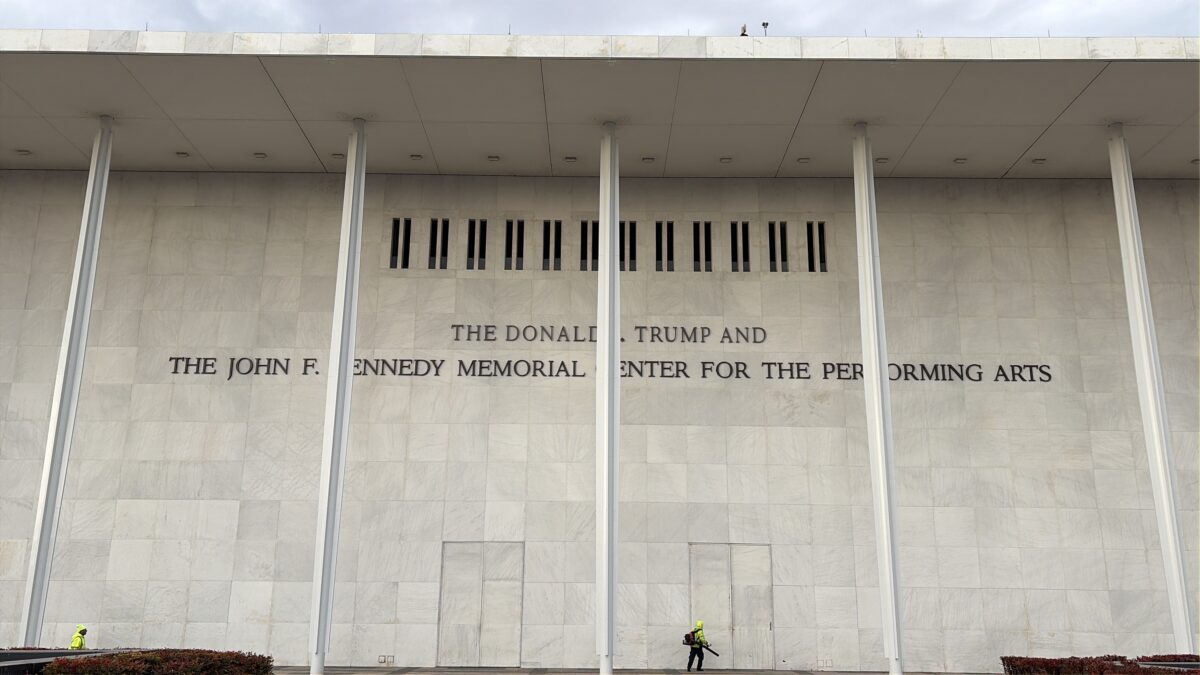
The website could change quickly, but the physical building tells a slower story. Reports indicated that while the online branding had dropped Trump’s name, exterior signage still carried it as the deadline approached. That contrast creates one of the most striking images in the entire story.
Online, the Kennedy Center was already trying to return to its old identity. Outside, the dispute could still be seen by passersby. The split between screen and stone made the rollback feel unfinished, almost like two versions of the institution existed at once.
What Happens Next at the Kennedy Center
The immediate question is compliance. The Kennedy Center must continue removing Trump references from official materials covered by the court order. The physical signage, internal documents, promotional templates, and public-facing materials all matter because the ruling was not limited to one homepage.
The larger question is whether the center can move past the turmoil without becoming a permanent symbol of political overreach. The website has changed, but the public memory of the fight will remain. Trump’s name may be coming down, but the bigger debate over who owns America’s cultural institutions is far from over.
Trump’s name disappearing from the Kennedy Center website may look like a small digital correction, but it carries a larger message. Public landmarks are not empty walls waiting for the next powerful name. They carry history, law, memory, and public trust.
The Kennedy Center’s rebrand backfired because it turned a national arts institution into a test of political ownership. The court’s answer was blunt: Congress named it, and branding cannot rewrite that fact.