US House $1.15 Trillion Military Bill Deepens Questions Over Iran, Israel and Pentagon Accountability
Washington has approved another historic expansion of American military power, but the size of the check is only part of the story. The US House $1.15 trillion military bill would increase defense commitments while the Pentagon struggles with financial oversight, the Iran war continues to grow more expensive, and Congress debates deeper military integration with Israel. The narrow vote shows how quickly national security policy has become entangled with domestic politics, election rules, public distrust and unresolved questions about war.
The House passed the fiscal year 2027 National Defense Authorization Act on July 22, 2026, by a vote of 216 to 212. Most Republicans supported the legislation, while most Democrats opposed it, although a small group crossed party lines in both directions. The four-vote margin reflects a broader conflict over whether the United States is strengthening its defenses or committing itself to a larger and less accountable military system.
Supporters argue that the measure responds to real threats, depleted weapons stockpiles and rising pressure on American forces. Critics counter that Congress is authorizing record military resources before lawmakers receive a complete accounting of the Iran war, unresolved civilian harm investigations or reliable Pentagon financial records. The US House $1.15 trillion military bill therefore represents more than an annual defense package because it tests how much scrutiny Washington will demand before approving another vast expansion.
Four Votes That Could Reshape American Military Power
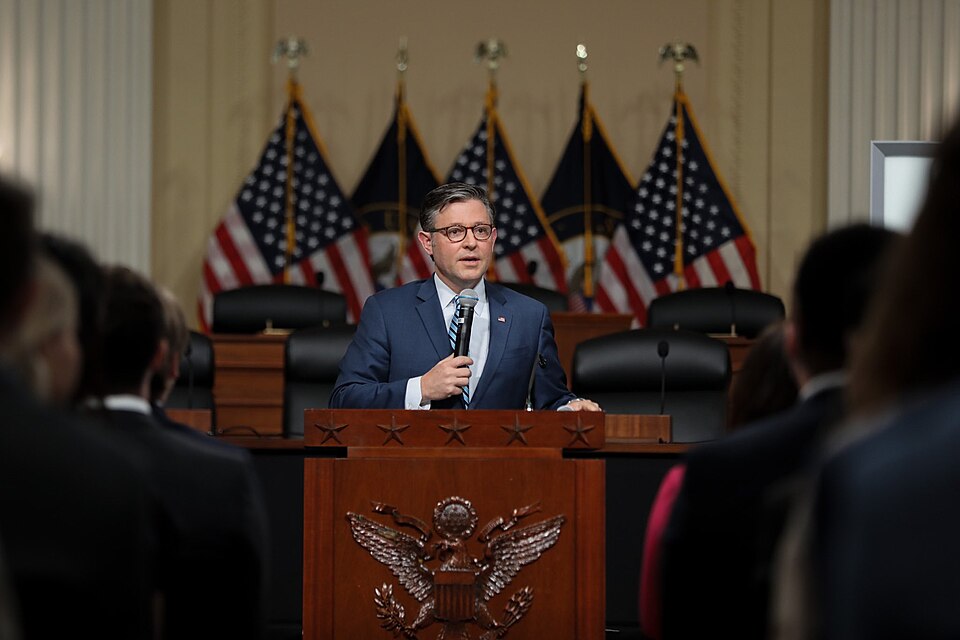
The National Defense Authorization Act sets military policy, authorizes programs and establishes spending limits for personnel, weapons, construction and national security operations. It does not automatically release every dollar because separate appropriations bills must still provide much of the funding. Even so, the US House $1.15 trillion military bill creates the political and legal framework for the largest defense authorization in American history.
Republican leaders describe the package as a response to an unstable world. The United States faces strategic competition with China, continued Russian aggression in Europe, missile threats from North Korea and an active conflict with Iran. Supporters believe the military cannot meet those challenges without larger inventories, more ships, stronger missile defenses and faster development of artificial intelligence and autonomous systems.
The bill also contains measures intended to help military families. It would increase pay for some service members, invest in housing and support health care, education and childcare programs. Those provisions have broad appeal because many military households have struggled with rising living costs, housing shortages and repeated deployments.
Yet the size of the legislation remains politically explosive. President Donald Trump has requested total military resources reaching roughly $1.5 trillion when mandatory and discretionary spending are combined. That proposal would represent a dramatic increase over the previous year and would push military funding toward levels usually associated with major periods of national mobilization.
The debate is sharpened by federal budget pressures. The United States continues to run a large deficit, while domestic agencies face demands for spending reductions and tighter eligibility rules. Critics argue that Washington applies strict fiscal discipline to health, education and social programs but treats military expansion as an unavoidable national obligation.
That contrast has become central to opposition against the US House $1.15 trillion military bill. Lawmakers are not simply debating how many ships or missiles the military needs. They are deciding which forms of government spending deserve sacrifice and which receive protection from ordinary budget restraints.
The Iran War Is Growing Faster Than Its Public Accounting

The bill moves forward as the United States conducts military operations against Iran, a conflict that began in February 2026. Pentagon estimates have placed the cost of current and projected operations through the end of the fiscal year at tens of billions of dollars. Those figures include weapons use, aircraft operations, logistics, force protection and the replacement of equipment consumed during combat.
Military leaders argue that the conflict has placed unusual pressure on American stockpiles. Air defense interceptors, precision weapons and other high-demand systems are expensive to produce and difficult to replace quickly. The US House $1.15 trillion military bill seeks to expand production capacity while providing the Pentagon with the resources needed to maintain operations.
The problem is that Congress still lacks a complete public accounting of the war. The legislation itself requires the Defense Department to produce a report detailing the total financial cost of military operations in Iran. That requirement suggests lawmakers are authorizing additional resources before they fully understand the price of the campaign already underway.
War costs often extend far beyond the initial combat phase. The wars in Iraq and Afghanistan demonstrated how early estimates can fail to capture long-term medical care, equipment replacement, interest payments and support for veterans. A conflict that appears manageable in its opening months can create obligations that last for decades.
Public skepticism has also grown as Americans confront higher household costs and uncertainty about the war’s objectives. Voters may support protecting American forces and preventing attacks, yet many remain wary of another open-ended Middle Eastern campaign. The more the conflict expands, the harder it becomes for the administration to explain what victory would look like.
The US House $1.15 trillion military bill does not resolve that strategic uncertainty. It provides the tools to continue and potentially widen operations, but it does not establish a clear endpoint. That imbalance raises a difficult question: Can Congress responsibly finance a war without defining the political conditions required to end it?
A Pentagon That Cannot Pass an Audit Wants More
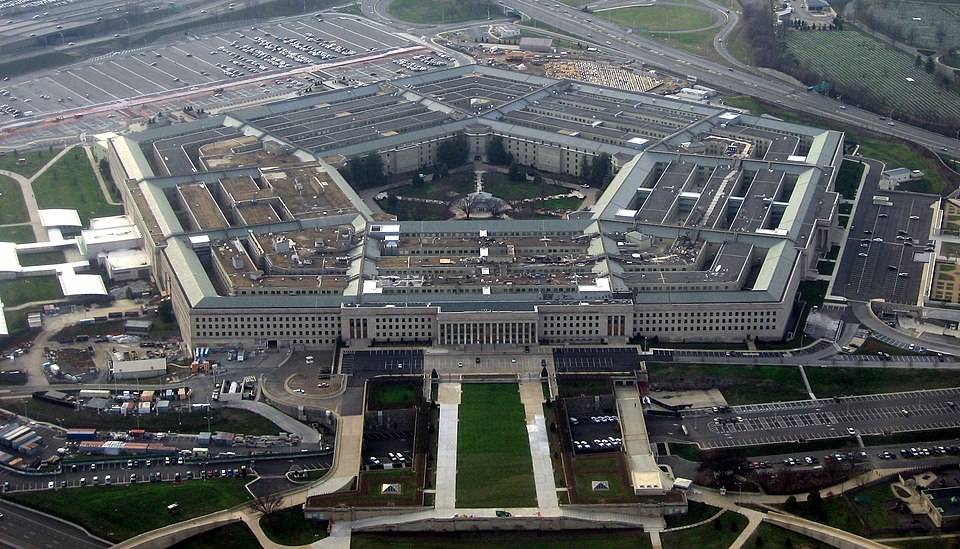
The bill’s most important financial weakness may not appear in its spending tables. The Pentagon has repeatedly failed to secure a clean agency-wide audit because auditors cannot verify large portions of its financial statements and assets. That failure reflects weaknesses in accounting systems, inventory controls, property records and supporting documentation.
The latest review again produced a disclaimer of opinion. Auditors found dozens of material weaknesses and hundreds of new deficiencies, while many older findings remained unresolved. These problems do not prove that every missing record reflects fraud, but they show that the department still cannot provide a complete and reliable picture of its finances.
That record matters because the US House $1.15 trillion military bill asks taxpayers to accept another major increase. Congress can authorize more weapons, bases and technology, but weak internal systems make it harder to determine whether the Pentagon receives full value from those investments. Poor accounting can also hide duplication, waste and programs that continue after their strategic purpose has faded.
The Defense Department operates on a scale that few institutions can match. It manages bases around the world, vast property holdings, complex weapons programs and contracts involving thousands of companies. That complexity makes perfect accounting difficult, but it also makes strong oversight more necessary.
Historical examples show what happens when urgency overwhelms scrutiny. Emergency contracts during past wars produced cost overruns, poorly monitored subcontractors and equipment that failed to meet operational needs. Once a program develops political support and creates jobs across several states, lawmakers often find it difficult to cancel even when performance disappoints.
The Pentagon aims to achieve a clean audit by the end of 2028, but the US House $1.15 trillion military bill arrives before that goal has been met. Congress is therefore increasing the scale of the financial system before fixing its foundation. The decision may strengthen military capacity, but it also increases the cost of every unresolved control weakness.
Israel Cooperation Is Moving From Assistance to Integration
One of the bill’s most consequential provisions would create a formal United States-Israel defense technology initiative. The program would coordinate research, development, testing, manufacturing, and the integration of Israeli technologies into American military systems. It marks a shift from traditional military assistance toward a deeper industrial and technological partnership.
The initiative would cover areas such as missile defense, artificial intelligence, autonomous weapons, counter-drone systems, electronic warfare, cyber defense, and anti-tunnel technology. It would also encourage licensing agreements, joint manufacturing, and collaboration between American and Israeli defense companies. The US House $1.15 trillion military bill could therefore reshape supply chains as well as battlefield cooperation.
Supporters believe Israel offers valuable experience in missile interception, unmanned systems and combat technology. They argue that closer cooperation could shorten development times and help American forces respond to rapidly changing threats. Israel’s experience with rockets, drones and underground military networks has made its defense sector influential far beyond the Middle East.
Critics see a risk of long-term strategic dependence. Once companies, research laboratories and military procurement systems become closely connected, future administrations may find it difficult to reduce cooperation. Economic interests, local jobs and contractual obligations can transform a foreign policy choice into a permanent institutional arrangement.
The bill would also extend American stockpile authorities in Israel and continue joint work on subterranean threats and unmanned systems. These programs could improve readiness, but they also embed Israel more deeply within American military planning. That expansion comes as public debate over American support for Israel remains intensely divided.
The US House $1.15 trillion military bill thus raises a question that extends beyond the current government. Congress is not merely approving assistance for one year. It may be constructing a shared defense infrastructure that could shape American policy for decades, regardless of future elections or changes in public opinion.
Hidden Provisions Reveal the Human and Political Costs
The legislation contains provisions requiring further examination of civilian harm connected to the Iran conflict. One directive seeks information about a military investigation into a February 2026 strike near a school in Minab. The final findings remain important because civilian casualties can damage American credibility and deepen hostility long after military operations end.
The requirement highlights an uncomfortable contrast. Congress can move quickly to replace missiles and approve new weapons, yet investigations into civilian harm often take months. The US House $1.15 trillion military bill advances while the public still lacks complete answers about one of the campaign’s most sensitive incidents.
Civilian harm has strategic consequences as well as moral ones. Images of damaged schools, homes, or hospitals can influence public opinion across the region and strengthen recruitment narratives used by armed groups. Even a legally justified strike can produce lasting political damage when governments fail to explain what happened.
Another unusual oversight provision concerns possible trading activity linked to sensitive war information. Congressional investigators have requested information about complaints involving military personnel, civilian employees or contractors who may have used knowledge of Iran operations to trade on prediction or energy markets. The inquiry does not establish wrongdoing, but it shows that lawmakers consider the allegations serious.
Confidential military information can affect oil prices, commodity contracts and market expectations. A person who knows about an impending strike could potentially profit before the public learns of the operation. Such conduct would create both ethical and operational security risks.
These hidden sections make the US House $1.15 trillion military bill more complex than its headline price. The legislation funds the machinery of war while acknowledging unresolved concerns about civilian deaths, confidential information and personal financial gain. Accountability is present in the text, but it often arrives only after the military action and spending have already occurred.
Troop Pay Has Become Leverage in an Election Law Fight

The House package also includes the SAVE America Act, a measure that would impose new citizenship documentation requirements for federal voter registration. Republicans argue that the proposal would strengthen election integrity and reassure voters that only citizens participate. Democrats and voting rights groups warn that the rules could create difficulties for eligible Americans who lack immediate access to qualifying documents.
The deeper controversy concerns the decision to attach the measure to a defense bill. The National Defense Authorization Act normally carries programs considered essential to military readiness, including troop pay, weapons procurement and housing. Adding election rules forces senators to choose between accepting controversial domestic policy and risking delays in military legislation.
The US House $1.15 trillion military bill therefore functions as a political pressure tool. Lawmakers who oppose the voting provisions may face accusations that they are blocking support for service members. That strategy can help controversial policies advance, but it can also make final passage more difficult.
The Senate has already shown resistance to its own defense legislation. A procedural vote in July failed to reach the 60 votes required to begin full consideration. The House’s addition of the voting measure creates another obstacle to compromise.
The NDAA has become law for more than six consecutive decades because Congress usually treats it as indispensable. That history gives party leaders an incentive to attach provisions that might struggle to pass independently. However, each addition increases the risk that the must-pass bill becomes impossible to pass.
The fate of the US House $1.15 trillion military bill will therefore depend on what negotiators remove as much as what they preserve. The Senate may reject the voting language, revise the Israel initiative, or demand stronger Iran restrictions. Any final version must pass both chambers in identical form before reaching the president.
Washington Is Redefining What Permanent War Looks Like
The legislation reflects a broader change in American military policy. The United States is investing in larger weapons stockpiles, advanced missile defenses, autonomous systems and a more expansive industrial base. These are not temporary programs designed for one campaign because they assume a long era of repeated military competition.
The bill even includes language linking references to the Department of Defense with the older title Department of War. The symbolic change does not affect readiness, but it reveals a more direct understanding of the institution’s purpose. Language matters when governments shape public expectations about conflict.
For much of the post-Cold War period, American leaders described military operations as limited interventions or counterterrorism campaigns. Yet the wars in Iraq and Afghanistan lasted for years, cost trillions of dollars, and reshaped a generation of service members. The US House $1.15 trillion military bill suggests that Washington is again building for endurance rather than restraint.
Supporters may argue that preparation prevents war by convincing adversaries that the United States cannot be defeated. That logic has guided military policy for decades and has sometimes helped preserve stability. However, a larger military structure can also create pressure to use the capabilities that taxpayers have financed.
The central concern is not whether the United States should defend itself or support its troops. It is whether military expansion can continue without equally strong expansion in oversight, diplomacy and constitutional debate. Weapons can deter threats, but they cannot define political goals.
The US House $1.15 trillion military bill now moves into an uncertain Senate process, carrying the weight of multiple unresolved debates. It promises stronger forces, better pay and faster technology, yet it also exposes financial failures, strategic ambiguity and political manipulation. The final question is not simply how much America will spend on war, but how much accountability it will require before the next check is written.