“We Can’t Let That Happen”: Donald Trump Warns Democrats Could Overturn His Transgender Sports Ban
President Donald Trump is placing transgender participation in women’s sports back at the center of the national political fight, warning supporters that Democrats would reverse his administration’s restrictions if they gain control of Congress in November.
Speaking at the Red Rock Casino in Las Vegas on Wednesday, August 5, Trump presented the midterm elections as a choice between preserving his second-term policies and allowing Democrats to dismantle them. The president moved rapidly between taxes, immigration, social policy and sports, arguing that the opposition party would undo what he described as major victories for American workers and female athletes.
“They will overturn it if they take over,” Trump said. He then included “men in women’s sports” among the policies he claimed Democrats would restore, using his administration’s preferred description of transgender women competing in female sports categories. “We can’t let that happen,” he added.
Trump turns sports policy into a midterm warning
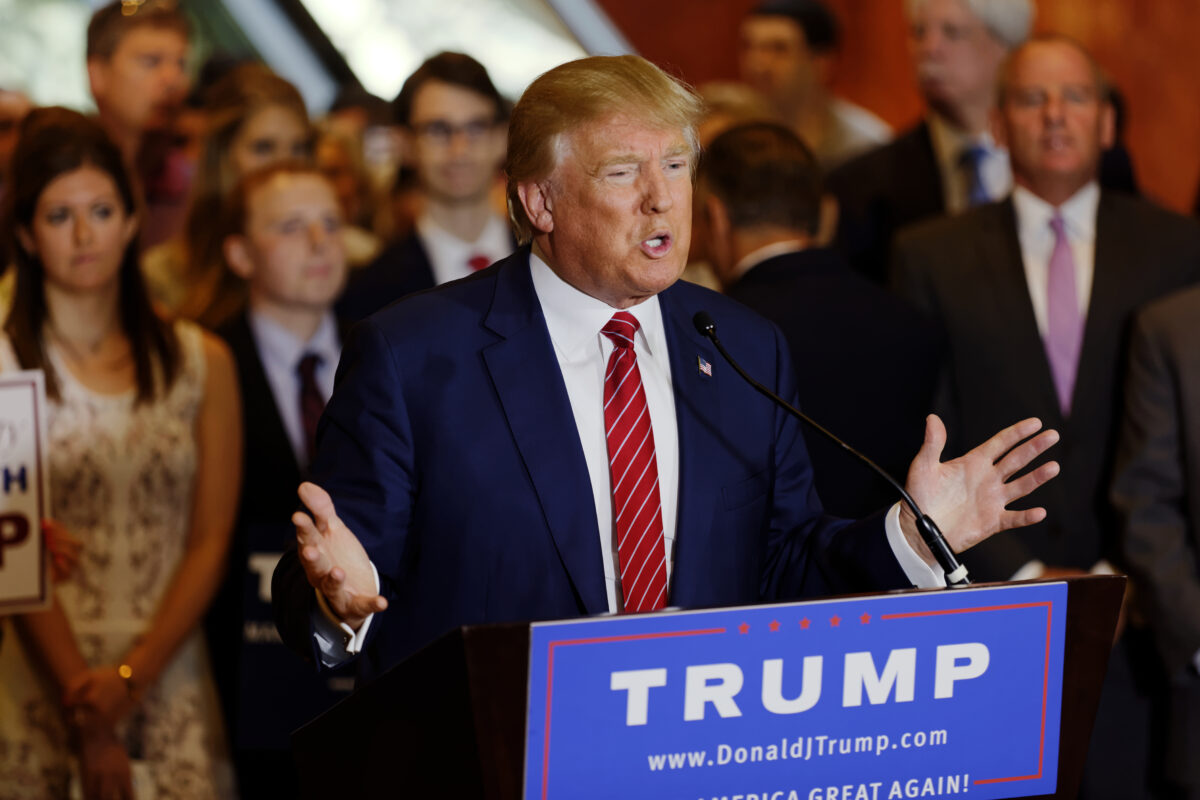
Trump’s comments were not delivered as a detailed policy announcement. They formed part of a broader campaign argument designed to convince voters that Democratic victories in the House and Senate would threaten his administration’s achievements.
The president also claimed Democrats would reverse tax benefits covering tipped income, overtime pay, Social Security benefits and interest paid on some vehicle loans. Democrats opposed the larger Republican tax and spending package containing those measures, arguing that its overall structure favored wealthy Americans while reducing support for programs such as Medicaid and food assistance. Their votes were not necessarily separate votes against each individual tax provision Trump listed.
His transgender sports warning followed the same political pattern. Trump did not identify a specific Democratic bill, congressional resolution, or announced leadership plan to reverse his executive order. Instead, he used the issue to draw a sharp cultural dividing line before the November elections.
There is also an important legal distinction behind his claim. A Democratic congressional majority would not automatically cancel an executive order issued by Trump. Congress could pass legislation limiting the order, change funding rules or block money used to implement parts of it. However, Trump could veto such legislation, forcing Congress to secure two-thirds support in both chambers to override him. A future president could more easily revoke or replace the order through another executive action.
That means control of Congress would give Democrats more influence over hearings, budgets and legislation, but it would not hand them a simple switch for erasing the policy while Trump remains in office.
The executive order reshaped college sports
Trump signed the order titled “Keeping Men Out of Women’s Sports” on February 5, 2025. It directed federal agencies to interpret Title IX protections according to sex assigned at birth and threatened enforcement action against federally funded educational institutions that permit transgender women and girls to compete in female sports categories.
“With this executive order, the war on women’s sports is over,” Trump declared during the White House signing ceremony.
The order instructed the Department of Education to prioritize Title IX investigations and called for federal funding to be withdrawn from educational programs that the administration determines have denied women and girls fair athletic opportunities. It also directed federal officials to pressure national and international sporting organizations to adopt sex-based eligibility rules.
One day later, the NCAA changed its transgender participation policy. The organization restricted competition on women’s teams to athletes assigned female at birth, while allowing athletes assigned male at birth to practice with women’s teams and receive certain team benefits. The NCAA said the revised rules covered more than 1,100 colleges and universities and approximately 530,000 student-athletes.
The NCAA’s action gave Trump an immediate institutional victory. It also ensured that a dispute affecting a relatively small number of athletes would remain one of the country’s most visible political and cultural arguments.
Supporters of the restrictions say sex-based categories protect competitive fairness, scholarships, records and safety for female athletes. Opponents argue that broad bans discriminate against transgender students, exaggerate the scale of transgender participation and turn young athletes into political symbols.
Sophie Cunningham brings the argument into the WNBA
Trump’s warning arrived as Indiana Fever guard Sophie Cunningham was drawing renewed attention to the debate.
Cunningham has publicly argued that transgender women should not compete in women’s sports, saying her position is about protecting opportunities for girls and female athletes rather than expressing hostility toward transgender people. Her statements have attracted conservative supporters, protests outside WNBA games and criticism from fans and figures within women’s basketball.
The controversy followed Cunningham across several cities. Supporters organized rallies, some spectators carried transgender pride flags, and Cunningham was booed during appearances. Minnesota Lynx coach Cheryl Reeve publicly supported transgender children, although Cunningham later said the two had a respectful private conversation despite their disagreement.
Cunningham has since urged reporters to return their attention to basketball. But the political momentum surrounding her comments has made that difficult. Her position has been embraced by conservative activists and praised by administration figures, tying a professional basketball debate directly to Trump’s midterm campaign.
That connection explains why Trump raised the subject in Las Vegas. The transgender sports issue allows him to combine two messages that have long energized his supporters: protecting women’s athletic competition and resisting progressive policies involving gender identity.
His latest warning does not prove that Democrats could quickly overturn the order after winning Congress. It does show that Trump intends to make the possibility a major part of his campaign.
For voters, the argument is no longer only about who can step onto a court, track or playing field. Trump is turning it into a test of which party should control the rules, the federal funding behind them and the direction of American cultural policy after November.